“We can make it gluten-free” is a useful opening. Your next question might be: “Could you explain how you would prepare this particular dish?” That gives staff something concrete to check, especially when the same kitchen handles bread, noodles or battered foods.
The most useful questions about restaurant gluten cross-contact follow your meal from preparation to serving. You do not need to ask about every appliance in the building. Choose a dish, identify the equipment and handling it involves, and follow up on the gaps that matter to your requirements.
For choosing a venue, contacting the right branch and arranging a backup meal, start with planning a gluten-free restaurant visit in Indonesia. This guide focuses on the conversation about preparation.
Start with someone who can check the kitchen
Ask: “Who can confirm the ingredients and preparation arrangements for this order?” A server may know the menu but need a chef or manager to answer equipment questions. Give them time to check rather than expecting an immediate answer.
Describe your actual dietary requirement, including celiac disease or a separate allergy where applicable. Do not invent a diagnosis to make the request sound more serious. You can explain your practical concern plainly: “I need to check both the ingredients and whether gluten-containing food could come into contact with my meal during preparation.”
Cross-contact means gluten can transfer to food through handling or preparation, rather than being deliberately included in the recipe. The NIDDK dietary guide explains its relevance to people with celiac disease. These questions support communication; they cannot determine your individual medical requirements.
Confirm the ingredients before discussing equipment
Ask: “Has any part of this dish already been marinated, coated, seasoned or mixed with sauce?” An ingredient added earlier cannot necessarily be omitted when you order.
For a meal in Indonesia, ask staff to check the actual kecap, bumbu mix, stock powder, coating and garnish involved. Their names alone do not settle whether they contain gluten. If a packaged ingredient is unclear, ask whether someone can read its current ingredient list. The separate guide to reading food labels for gluten in Indonesia covers that task.
Then ask: “If those ingredients are suitable, how would you prepare my portion?” Keeping those two questions separate helps prevent a recipe answer from being mistaken for an explanation of handling.
See others: Allergen Cross-Contact Control in Commercial Kitchens: From Ingredients to Service
Ask where preparation begins
A useful opening is: “Where would you prepare my meal, and how would that area be cleaned before use?” Follow with: “Would the board, knife, bowl and other utensils be clean before preparation starts?”
The Celiac Disease Foundation’s dining guidance specifically recommends asking about cleaned or separate preparation spaces, cookware and utensils. A shared kitchen needs an explanation of its arrangements; the presence of shared equipment alone does not describe how your order will be handled.
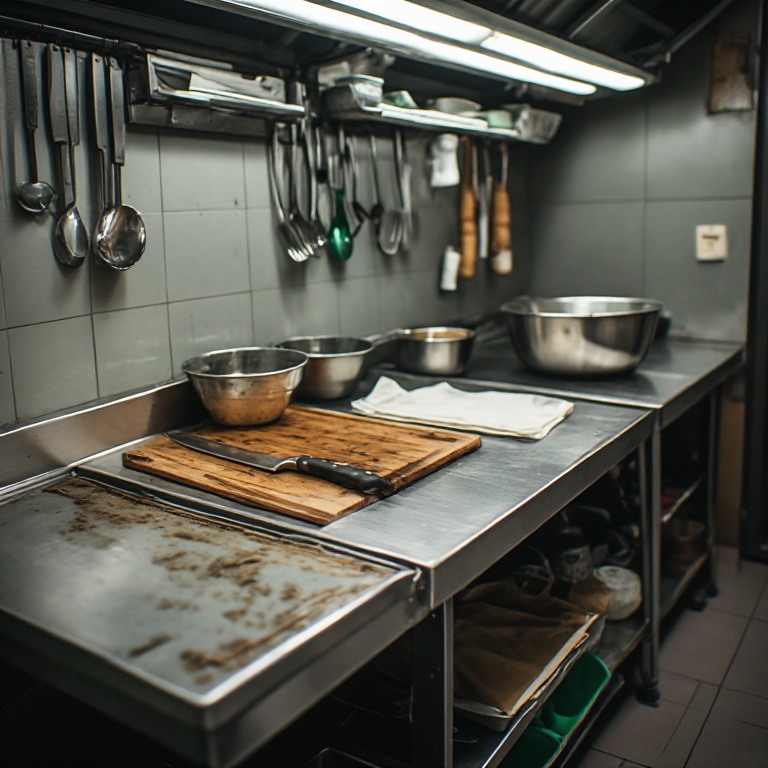
If staff say they will use gloves, ask about the rest of the process: “Will the person handling my food also use clean utensils and a cleaned preparation area?” A reply about gloves leaves those questions open.
Where bread or dough is prepared nearby, ask: “Will loose wheat flour be handled near the area while my food is being prepared?” Ask the kitchen what separation it can actually provide rather than proposing a distance or waiting time yourself.
Follow the cooking method your dish needs
Use the questions relevant to your order. A bowl of noodles and a grilled fish dish require different follow-ups.
| Cooking step | Question to ask | Detail to clarify |
|---|---|---|
| Deep-frying | “Is this fryer and its oil also used for battered or breaded foods containing gluten?” | Whether the kitchen has a separate arrangement for your order |
| Boiling noodles or pasta | “Will you use fresh water in a clean pot, with clean draining equipment?” | Whether water, a basket or a strainer is shared with wheat noodles or pasta |
| Grilling | “What else cooks on this surface, and how would you prepare my portion?” | Cleaning and whether another cooking method is available |
| Stir-frying or pan cooking | “Will the wok or pan and utensils be cleaned before my order?” | The pan, spatula and any ingredients added during cooking |
| Toasting or warming bread | “Would this use equipment that also holds ordinary bread?” | Whether a suitable alternative arrangement is available |
For fried food, “we use vegetable oil” answers the type of oil, not what has cooked in it. Ask about its use. Coeliac UK’s cross-contact guidance recommends clean oil or a separate fryer for gluten-free frying.
For a shared grill, ask whether the kitchen can use a clean pan instead if it cannot explain a suitable grill arrangement. Treat that as an option for staff to confirm, not an instruction you assume they can follow.
A hypothetical grilled-chicken order illustrates the sequence: first check the marinade and basting sauce, then the cooking surface and tongs, then the garnish. A clear answer about the chicken’s ingredients still leaves the later steps to discuss.
Include the final steps before serving
Ask: “Which utensils will be used to plate my meal, and what toppings or sides will be added?” Include sauce ladles, garnish tongs and anything added at the service counter.
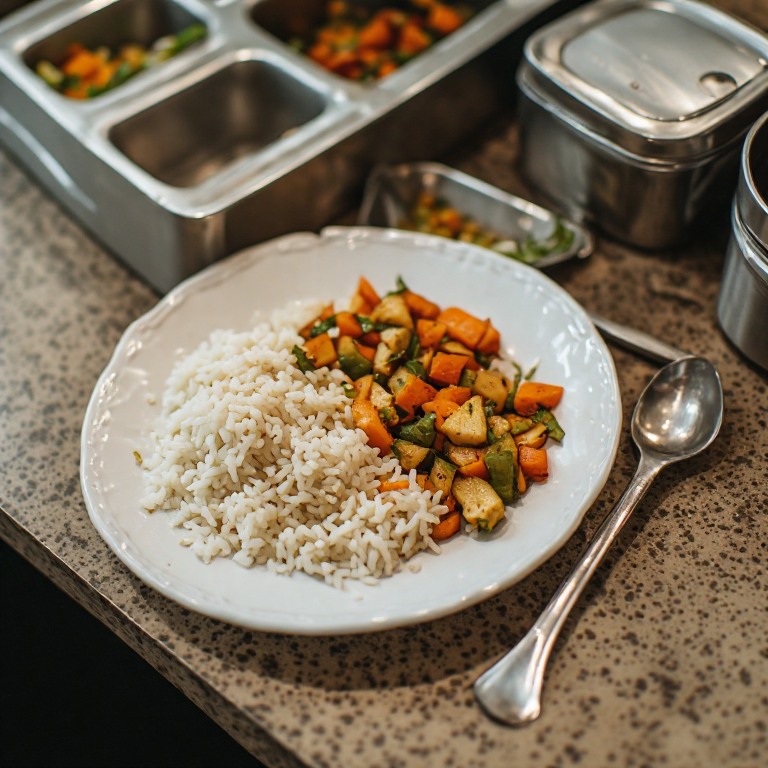
Make an omission request specific. If a garnish needs to be left off, ask that it not be added during plating. If the meal arrives with that garnish, pause and ask what happened before accepting it. Lifting it off does not explain whether contact has already occurred.
Also ask: “How will the kitchen and server identify my order?” This matters when several similar plates are being prepared. If food is shared at the table, clarify which serving utensils belong to your dish and explain the arrangement to companions.
Buffet handling raises additional questions after food leaves the kitchen. The approved companion guide, Ordering Gluten-Free at a Buffet: What to Check Before Serving Yourself, covers that separate setting.
Turn general reassurance into a specific answer
A friendly reply can still leave information missing. Follow up on the unresolved point rather than repeating “Is it gluten-free?”
- “There is no flour.” Ask: “Have the sauces and seasonings been checked too, and how will the meal be prepared?”
- “The fryer is very hot.” Ask: “Is the oil also used for gluten-containing battered or breaded food?”
- “We always clean everything.” Ask: “Could you confirm which surface and utensils will be cleaned before this order?”
- “We cannot guarantee anything.” Ask: “Could you explain which preparation arrangements you can provide and which you cannot?”
A broad disclaimer does not tell you the kitchen’s procedures. Equally, a detailed explanation is information about the proposed arrangement, not proof of zero cross-contact.
If two staff members give different answers, ask one person who can check the current kitchen practice to resolve the specific difference. For that situation, see When Restaurant Staff Give Conflicting Gluten-Free Answers.
Keep a short version ready
Once you have chosen a possible dish, this English message can start the exchange:
Could someone from the kitchen help me check this dish? I need to confirm its ingredients and how you would prevent contact with gluten-containing food during preparation. Which preparation area, utensils and cooking equipment would you use? Please tell me if any part of the arrangement cannot be provided.
An Indonesian starting version is:
Apakah saya bisa bertanya kepada staf dapur tentang hidangan ini? Saya perlu memastikan bahan-bahannya dan bagaimana makanan ini disiapkan agar tidak bersentuhan dengan makanan yang mengandung gluten. Area persiapan, peralatan, dan alat masak apa yang akan digunakan? Mohon beri tahu jika ada bagian dari permintaan ini yang tidak dapat dipenuhi.
These are conversation examples, not medical translation cards. Add your actual requirements and ask follow-up questions suited to the dish. If a term is unfamiliar, describe the ingredient or equipment involved.
Decide from what has been explained
Before ordering, bring the answer back to the meal: the dish, agreed ingredient changes, preparation arrangement and serving method. Ask whether the staff working that service can provide what was discussed earlier.
Coeliac UK’s eating-out guidance recommends discussing requirements with staff, checking cooking methods and confirming the order before eating. An earlier conversation is a useful record, but it does not replace communication during your visit.
If a material question remains unanswered, you can pause, consider a different dish whose preparation can be explained, or use your backup meal arrangement. You do not need to turn an unknown into a reassuring assumption to finish the conversation.
The useful endpoint is a description you can understand: what will be cooked, with which equipment, and how it will reach your plate. Whether that arrangement meets your needs remains an individual decision, informed by appropriate healthcare guidance where relevant.