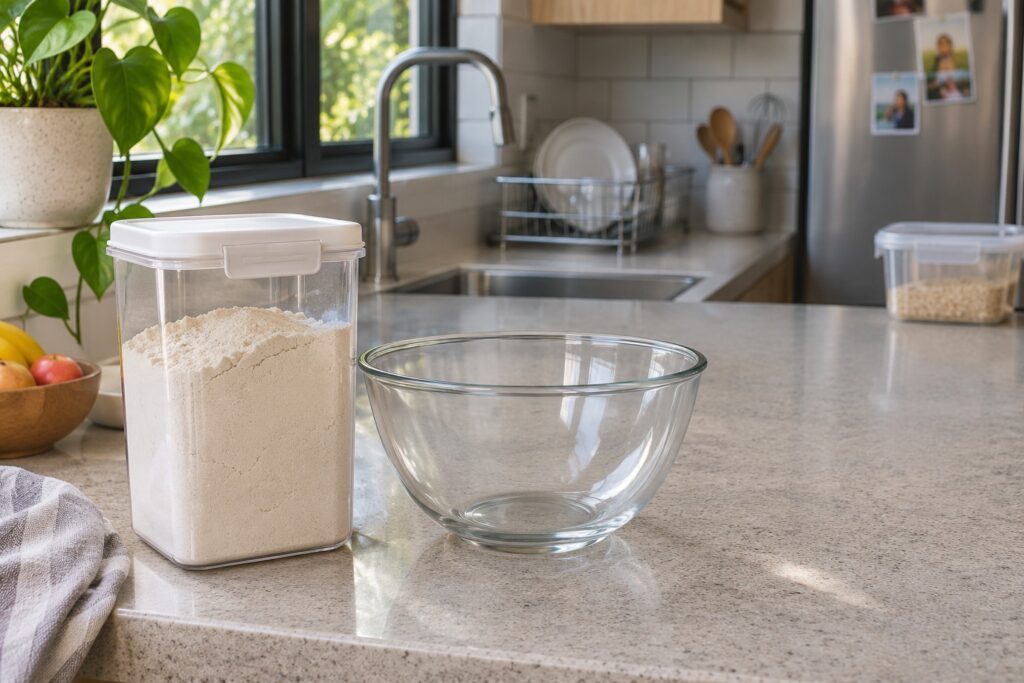
A bag of wheat flour is open for baking while someone else is about to prepare a gluten-free lunch. Even if the two meals use different bowls, flour can spread as it is poured, mixed or dusted over a worktop. The useful question is how the whole activity will fit around the other food, from opening the bag to putting clean equipment away.
A workable plan separates loose-flour work from gluten-free preparation, protects food and tools, and gives the household a clear cleanup handover. It cannot promise zero cross-contact. For the broader storage, cooking and serving arrangements, see managing gluten cross-contact in a shared home kitchen.
Why loose flour needs its own plan
Wheat flour is not confined to the dough once a bag is opened. It can be scattered during measuring, sifting, mixing or dusting, and transferred by hands, utensils and containers. Coeliac UK notes that wheat flour in the air or traces left in storage containers can contribute to cross-contact. The U.S. National Institute of Diabetes and Digestive and Kidney Diseases explains that gluten cross-contact matters for people with celiac disease and can occur during preparation and storage.
The concern is not limited to a visible cloud. A flour-covered hand may open a cupboard, touch a tap or move a clean tray. Those contact points are part of the baking activity too. Looking at the sequence makes it easier to decide what needs protection and what needs cleaning afterwards.
Choose the baking window before opening the bag
Where possible, schedule wheat-flour baking when gluten-free food is not being prepared in the same workspace. A household might prepare and put away a gluten-free meal first, then bake with wheat flour after the food and its utensils are protected. Another might choose a separate baking session and plan a different meal until the kitchen has been reset.
Agree on the beginning and end of that session. Who will use the counter, and who will clean it afterwards? Is another person likely to need the sink, a shared appliance or a meal during baking? A schedule is useful only if everyone knows when the space is occupied and what must happen before it changes use.
There is no universal waiting time or separation distance established here for every home. Kitchen layout, activity and airflow differ. Waiting by itself does not remove flour from surfaces or tools. If the household cannot establish a workable separation and cleanup routine, consider changing the baking time, using another location, or choosing a suitable gluten-free flour for the shared activity after checking the product against individual needs.
Protect food and tools before measuring
Put gluten-free ingredients, prepared food and clean utensils into closed cupboards or containers before wheat-flour work starts. Covering food is a practical precaution, but choose secure storage where possible rather than leaving a loose cover beside active mixing. Keep food that needs refrigeration under appropriate storage conditions throughout the session.
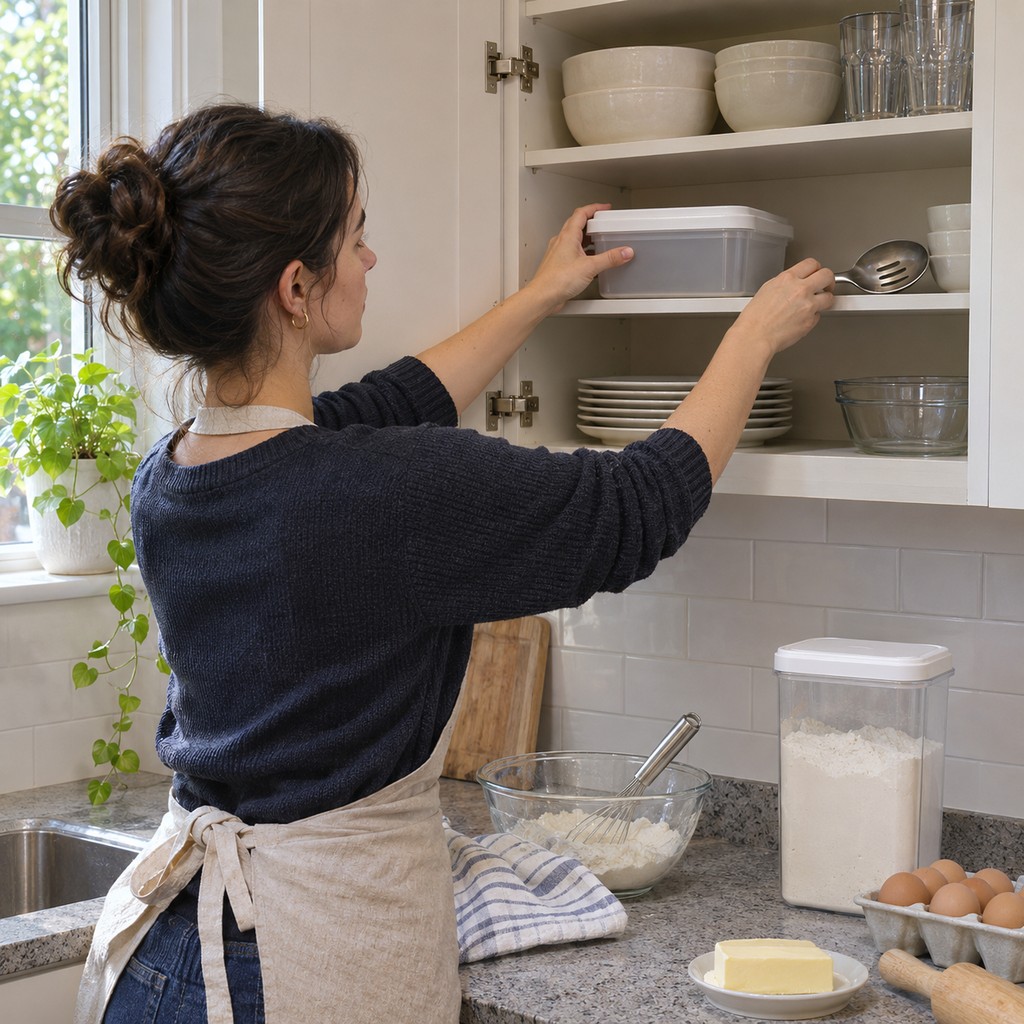
Clear the baking area of items that do not need to be there. Set out the wheat-flour tools and a place for used equipment before opening the bag. Notice shared touchpoints such as cupboard handles, the scale, tap and mixer controls; someone may need to clean them if they are handled during the activity.
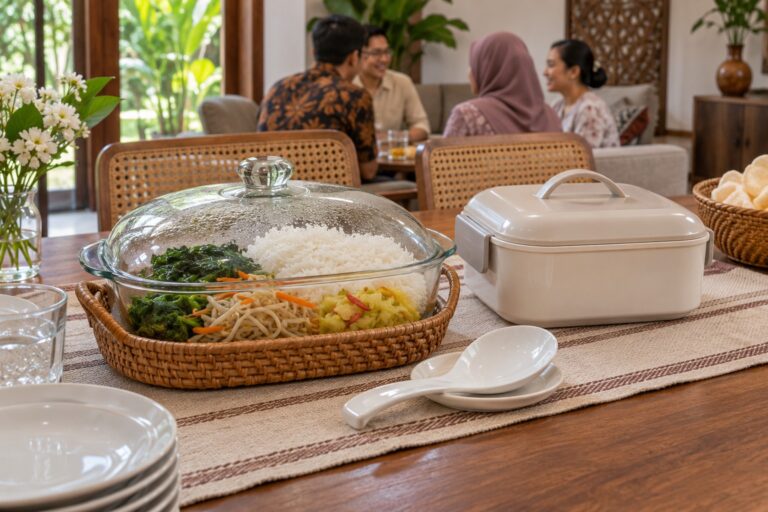
For example, a household making roti might put a prepared gluten-free lunch in a closed container in the refrigerator, store its clean serving utensil separately, and agree that lunch assembly will resume only after the flour work and cleanup are complete. This is a planning example, not a guarantee about the meal.
Handle flour deliberately during baking
Open and pour the flour carefully, keeping the bag and bowl stable. Measure close to the bowl or container rather than carrying a heaped scoop across the kitchen. If the recipe calls for sifting, plan where it will happen and keep other food and equipment protected. Close the flour container between uses instead of leaving it open on a crowded counter.
Use mixing equipment in a way that limits unnecessary scattering: add flour gradually and follow the appliance instructions. Avoid shaking flour from cloths or tipping loose residue into the air. These habits can make cleanup more manageable; they do not establish a measured level of exposure or make simultaneous gluten-free preparation reliable.
Keep track of the tools and surfaces actually used. A tray beneath the flour container may help contain a small spill, but the tray itself then needs cleaning. A mixer bowl may be washable while its attachment, exterior and controls need separate attention according to the manufacturer’s instructions.
Reset the kitchen after the flour work
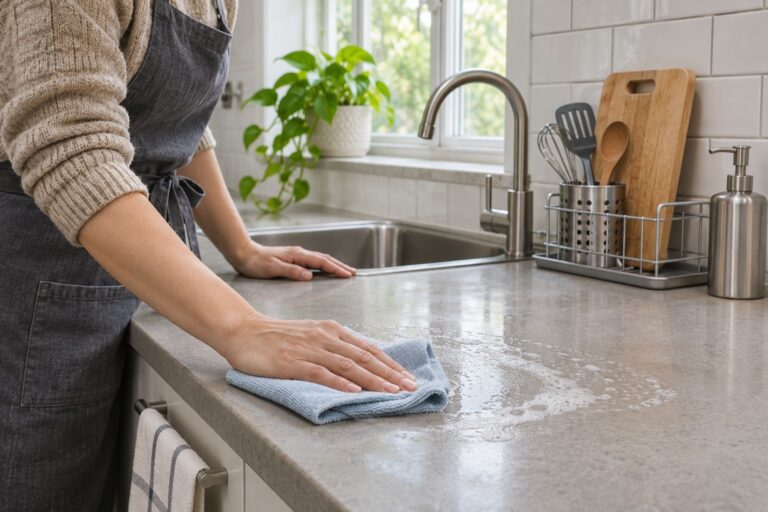
Finish handling the wheat flour and close its container. Move the dough, used tools and packaging out of the preparation area without placing them among clean items. Carefully collect loose flour and dough residue without scattering it onto other surfaces, then wash affected washable surfaces and equipment with warm soapy water, following their care instructions.
Include the places touched during the task, such as the scale, tap and accessible appliance controls. Use clean wiping material as needed and keep washed items separate from those still awaiting cleaning. Wash hands with soap and running water before handling gluten-free food. The FDA’s flour-handling advice also recommends washing hands and kitchenware after working with flour or raw dough.
The detailed sequence for cloths, surface cleaning and the distinction between cleaning and sanitizing is in cleaning shared kitchen surfaces after gluten-containing food preparation. If a sieve, appliance part or damaged surface retains flour where it cannot be cleaned reliably, consider a separate tool or a different arrangement rather than assuming a quick wipe has resolved it.
Once the area has been reset, bring out clean gluten-free tools and ingredients. A useful handover is specific: “The flour is put away, the counter and scale have been cleaned, and the mixer attachment is still waiting to be washed.” Looking clean helps identify obvious residue, but it does not certify the absence of gluten.
If food or equipment may have been exposed
Pause before using the affected food or item. Identify what happened: Was a container open during active flour work? Did a flour-covered utensil touch the food, or was a clean bowl set on an uncleared surface? Keep the item apart while the household decides what to do; removing visible flour alone does not establish that a food is suitable for someone’s needs.
If the food’s handling is uncertain, use an alternative meal or ingredient that meets your needs rather than trying to judge suitability by appearance. Clean affected washable equipment before its next use. For individual questions about celiac disease, wheat allergy or other dietary precautions, consult an appropriate healthcare professional; the same household plan may not address every condition.
Keep raw-flour food safety in view
Gluten cross-contact and the foodborne illness risks associated with raw flour are separate concerns. The FDA advises against tasting raw flour, dough or batter intended to be cooked, and recommends keeping raw ingredients away from ready-to-eat foods. Follow the recipe and package cooking instructions, and wash hands, utensils and surfaces after handling raw mixture.
A shared-kitchen plan works best when it is easy to explain before baking starts: food is protected, flour work has its own time and place, and the next cook knows when cleanup has been completed.