A clean pan is ready for dinner, but the spatula beside it was just used for wheat noodles. Someone has checked the ingredients in a spread, yet a knife carrying toast crumbs has already gone back into the jar. These are the small handovers that a shared kitchen needs to manage.
Managing gluten cross-contact in a shared kitchen means following food through storage, preparation, cooking and serving. A designated shelf helps, but it cannot compensate for a serving spoon that moves between dishes. The most useful household plan connects those steps and makes the routine understandable to everyone who cooks.
This guide offers a practical framework for homes in Indonesia where gluten-free and gluten-containing foods are both prepared. Individual medical needs should guide the final arrangements; no general kitchen plan can promise zero cross-contact.
Understand what you are trying to prevent
Cross-contact happens when gluten-containing food or ingredients come into contact with gluten-free food. It can occur during storage, preparation or serving, not only when an obvious ingredient is added. The U.S. National Institute of Diabetes and Digestive and Kidney Diseases explains why this matters for people with celiac disease and recommends separating gluten-free storage and preparation from gluten-containing foods.
Think in terms of a transfer route: a source of gluten, something that carries it, and food that receives it. Bread, a knife and a shared spread form one route. Wheat noodles, cooking water and another portion of noodles form another. Looking for that route makes a vague instruction such as “be careful” much easier to act on.
The arrangements discussed here concern gluten management. If someone also has wheat allergy or another food allergy, ask their healthcare professional which additional precautions apply rather than assuming the same plan answers every need.
Map the meals your household actually makes
Start with an ordinary day. Where does breakfast happen? Who prepares lunch? Does someone make fried snacks while another person portions dinner? Include relatives, children, guests and anyone who helps with cooking or cleaning.
Write down the points where foods or tools change hands. A household that mostly cooks rice and separate dishes may need a different setup from one that regularly bakes with wheat flour. The aim is to identify recurring decisions before buying equipment or rearranging every cupboard.
For example, a hypothetical household might agree that bread preparation happens at one end of the counter, gluten-free ingredients stay in a closed storage box, and the cook sets aside a gluten-free portion before adding a different sauce to the remaining food. Those are household arrangements to discuss, not evidence that a particular meal is suitable.
Make responsibilities explicit. Decide who clears the work surface, who checks ingredients when a familiar product changes, and who explains the routine to a visiting family member. A system that depends on one person silently watching everything is difficult to maintain.
See others: How to Reduce Allergen Cross-Contact at Shared Preparation Stations
Give ingredients and prepared food a clear home
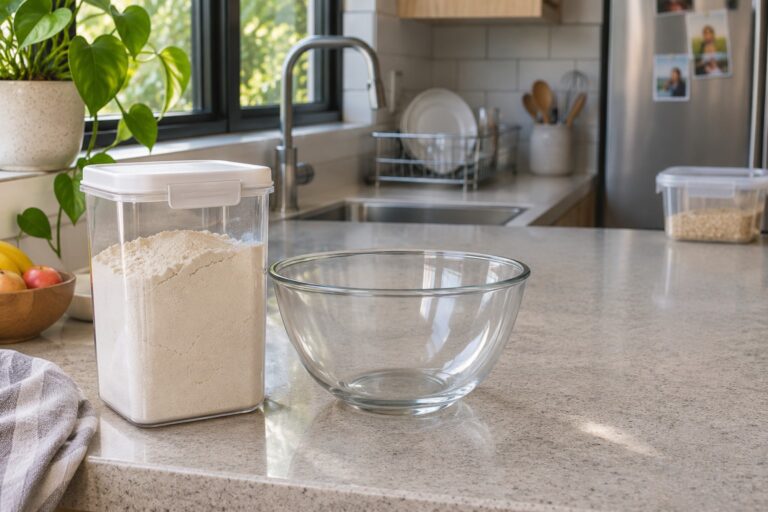
Use a recognizable storage area for gluten-free ingredients and keep opened foods in closed containers. Leave enough space to remove a container without brushing it against open bread bags or baking supplies. If you transfer an ingredient from its original packaging, retain the information needed to identify it.
Color coding can make the arrangement easier to follow, but explain what the color means. A blue lid might mean “reserved for gluten-free preparation”; it should not imply that the contents have been tested or certified. Make the distinction clear to everyone who puts groceries away.
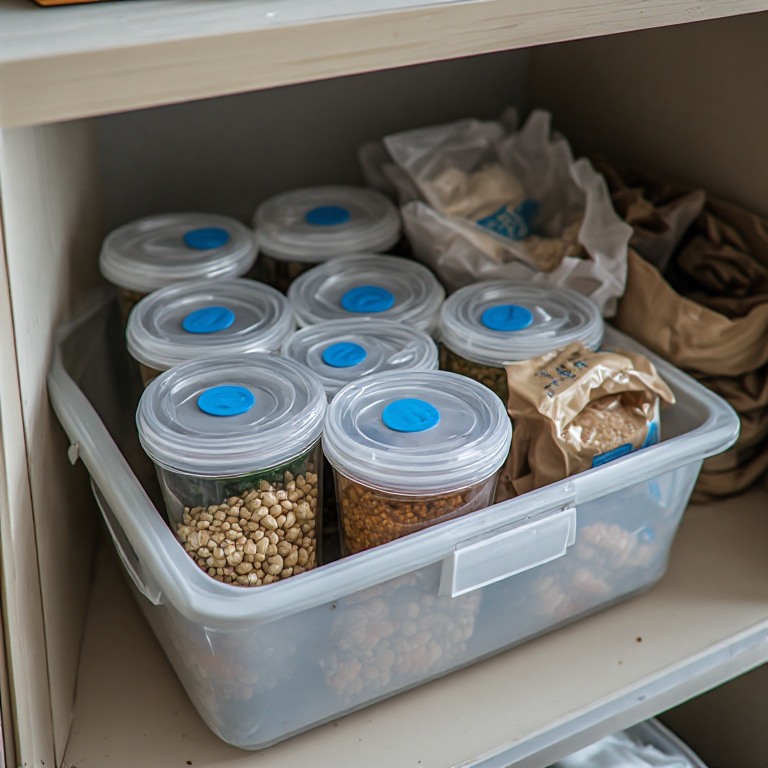
Shared spreads deserve a specific agreement. Either reserve separate containers or portion a spread with clean cutlery before it touches bread. Coeliac UK’s home cross-contact guidance recommends separate condiments or clean cutlery to avoid introducing breadcrumbs into shared butter, jam and spreads.
For the detailed storage and serving arrangements, see organizing shared condiments and food storage for gluten-free meals.
Ingredient suitability remains a separate question. A carefully stored sauce still needs an appropriate ingredient check. For packaged products, use the current pack and follow the approach in reading food labels for gluten in Indonesia. Do not assume that a familiar food name, including kecap or a seasoning mix, settles the decision.
Make cleaning a defined step before preparation
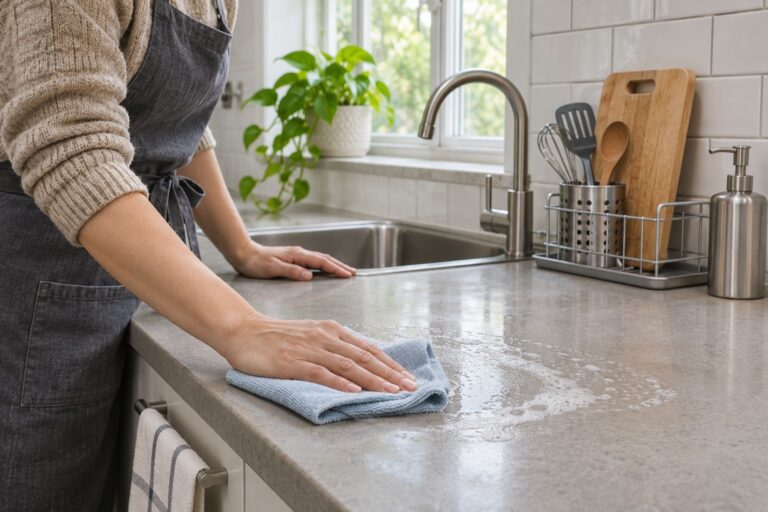
Build a clear transition between the previous kitchen task and gluten-free preparation. Clear away food and used tools, clean the work surface, and bring out the equipment needed for the next meal. Wash hands with soap and water before handling gluten-free food, including after handling gluten-containing ingredients.
Cleaning should remove food residue. Coeliac UK advises cleaning surfaces, pots, pans and utensils with hot soapy water and says standard washing-up liquid or a dishwasher can remove gluten. This supports sharing suitable equipment after effective cleaning; it does not mean every difficult-to-clean appliance can be treated in the same way. See its practical cleaning guidance.
Keep clean equipment away from the pile waiting to be washed. A tray or drying area can make that boundary visible in a small kitchen. Before starting, check that the knife, board and mixing bowl came from the clean area rather than being set down there after use.
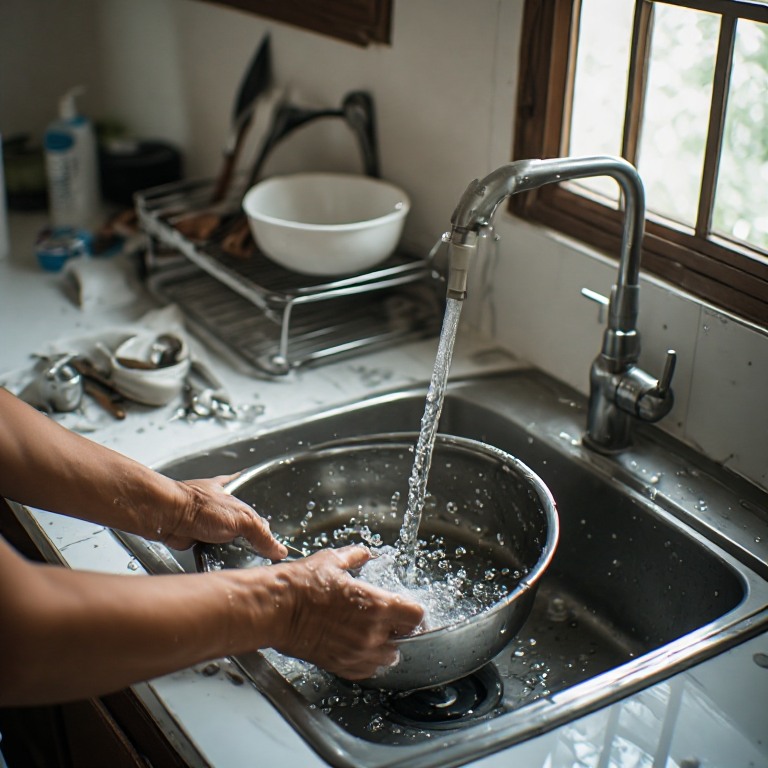
Handwashing is also part of the transition. The Celiac Disease Foundation’s discussion of kitchen research emphasizes washing hands and cleaning kitchenware with soap and water. The research is preliminary, so it should not be used to dismiss individual guidance from a celiac care team.
Decide which equipment can be shared
Assess equipment by how it is used and whether food-contact areas can be cleaned effectively. A smooth pan presents a different cleaning task from a crumb-filled toaster. Buying duplicates of everything can add expense while leaving the actual transfer routes unchanged.
| Equipment or situation | Practical planning decision |
|---|---|
| Washable pots, pans and ordinary utensils | Establish cleaning before gluten-free use and a place to keep cleaned items. |
| Toaster used for wheat bread | Consider a separate toaster or suitable toaster bags, following product instructions. |
| Bread boards and cutting boards | Decide whether a reserved board makes the household routine clearer; clean shared boards thoroughly between uses. |
| Colanders and flour sieves | Plan separately for retained food in holes and mesh rather than assuming a quick rinse is sufficient. |
| Appliance with inaccessible food residue | Clarify cleaning instructions and consider a dedicated alternative if reliable cleaning is impractical. |
Coeliac UK specifically suggests toaster bags or a separate toaster and notes that separate bread boards may help. Its food preparation booklet also recommends separate flour sieves and pasta strainers.
Keep appliance decisions specific. A clean removable bowl does not answer questions about other food-contact parts. Follow the manufacturer’s instructions for cleaning, heat and any liners; improvised barriers should not create an appliance hazard.
The companion guide to shared toasters, colanders and cutting boards covers the equipment decision in greater depth.
Separate cooking tasks, water and oil
Before the stove is on, decide which food is being prepared in each pot and which utensil belongs to it. Give each utensil a distinct resting place so that a spoon used for one dish does not drift to another during a busy moment.
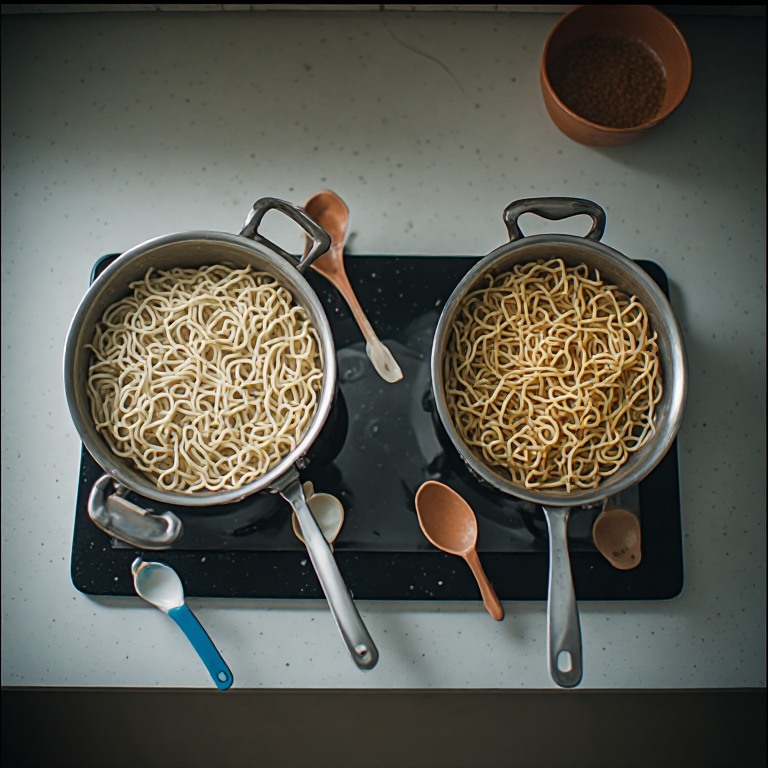
Use fresh cooking water for gluten-free food rather than water already used for wheat pasta or noodles. Likewise, do not fry gluten-free food in oil previously used for gluten-containing battered or breaded food. Beyond Celiac’s cross-contact guidance identifies shared cooking water, frying oil and cooking surfaces as routes of gluten transfer.
Heating a pan is not a substitute for cleaning it. Beyond Celiac’s kitchen guidance explains that heat does not eliminate gluten. If residue or a shared cooking medium is the problem, turning up the temperature does not resolve the transfer route.
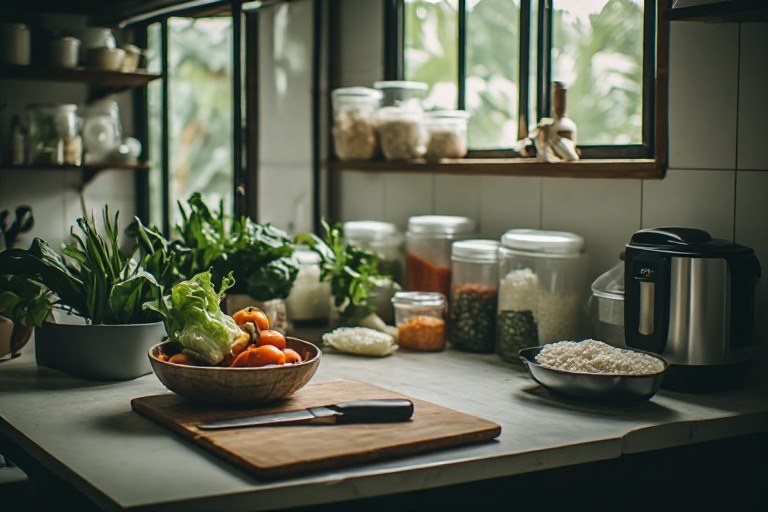
For an Indonesian meal, trace the whole preparation rather than stopping at the rice. Ask which pan cooked the accompanying dish, which sauce was added, whether the frying oil had another use, and which spoon moved the food to its serving bowl. These questions help locate missing information without assuming that every traditional dish contains gluten.
Read more: Planning a Gluten-Free Restaurant Visit in Indonesia.
When two versions of a meal are needed, choose a sequence that household members can follow consistently. The procedural guide to preparing gluten-free and gluten-containing meals in the same kitchen develops that mixed-meal workflow.
Treat loose wheat flour as a separate activity
Loose flour requires planning beyond the bowl. Coeliac UK notes that wheat flour in the air or traces left in storage containers can cause cross-contact in its guidance on grains and flours.
Avoid scheduling gluten-free preparation alongside active wheat-flour mixing or dusting in the same workspace. Keep gluten-free food and tools covered or stored away during that activity, then clean affected preparation areas before bringing them out. Discuss whether using a suitable gluten-free flour for shared baking would simplify the household routine.
Do not rely on an invented waiting period after flour use. This guide does not establish a universal number of minutes or hours after which a kitchen becomes suitable. Frequent flour handling in a small space is a useful issue to discuss with a dietitian familiar with celiac disease.
Carry the arrangement through serving and leftovers
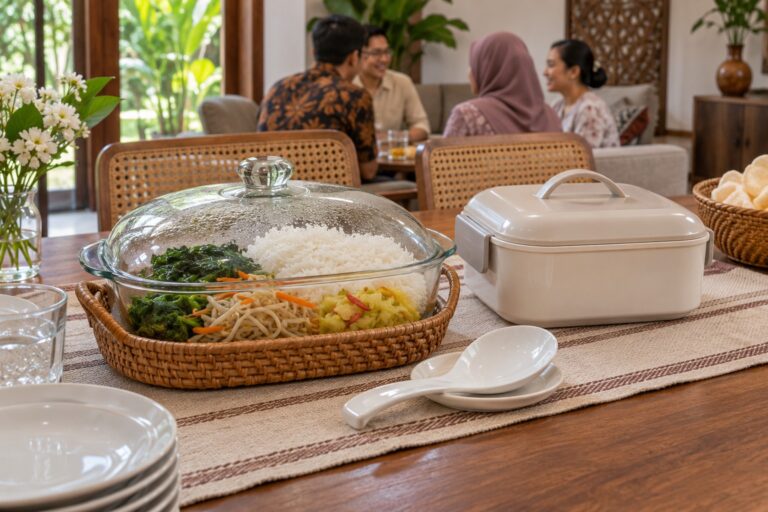
Give every dish its own serving utensil and explain which portions are reserved. Keep bread and other gluten-containing additions away from the reserved food. At a family-style meal, describe the action you need: “Please leave this spoon with this bowl” is more useful than an unexplained warning.
Once food has been served, avoid returning leftovers from different plates to a reserved container. Put suitable leftovers into identifiable containers using the agreed utensils, and keep normal food-storage requirements in place. Gluten management does not replace general food hygiene.
If a utensil mix-up happens, pause and explain exactly what touched what. Do not quietly remove visible crumbs and promise that the remaining food is gluten-free. Use a separate, suitable backup meal when the uncertainty cannot be resolved within the person’s established dietary plan.
Make the routine easy to explain
A short household note can record where reserved ingredients live, which equipment is separate, how spreads are served and what to do after a mistake. Use the language everyone who prepares food understands. Demonstrating the routine once may be clearer than relying on labels alone.
Encourage people to report uncertainty promptly. “I used the wrong spoon” gives the household something concrete to address. A blame-heavy response can make the next mistake harder to discuss.
If the same problem keeps recurring, change the arrangement that makes it easy to repeat. Move the reserved utensil, simplify the meal sequence or choose a shared ingredient that meets the relevant needs. Bring unresolved equipment questions or concerns about exposure to an appropriate healthcare professional.
A workable kitchen plan lets another person explain how food moves from the cupboard to the plate. Clear storage, effective cleaning and consistent handovers make that plan easier to follow every day.