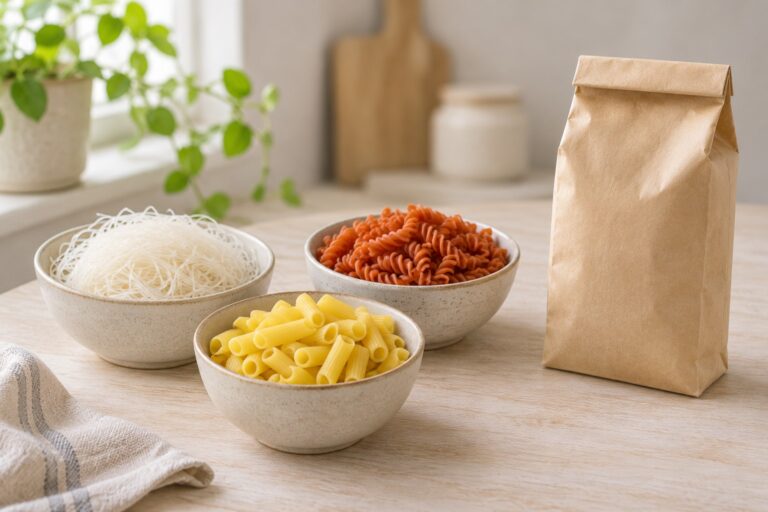
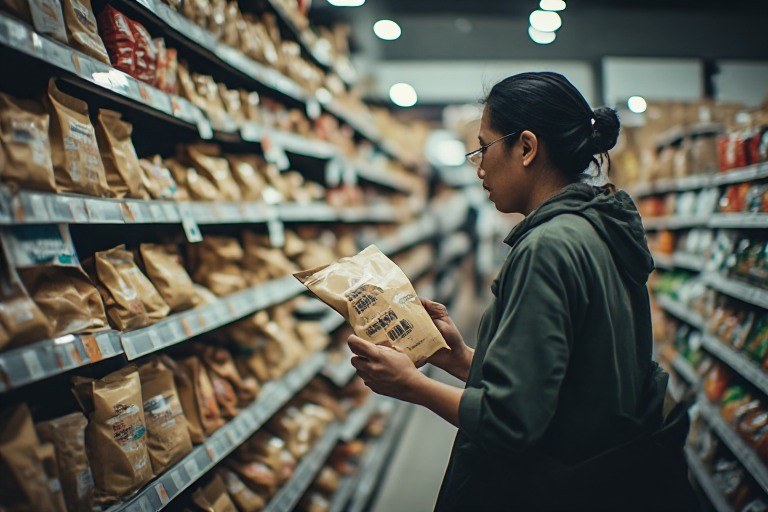
A rice-based snack catches your eye, but the seasoning ingredients are difficult to interpret. An imported cereal has a gluten-free statement on the front and an Indonesian sticker on the back. A familiar sauce now comes in different packaging. Each situation raises the same practical question: do you have enough information to choose this particular product?
Reading food labels for gluten in Indonesia works best as a sequence. Identify the exact pack, read its ingredients, check allergen information, assess any gluten claim, and clarify gaps that matter to your needs. The food’s name or the largest message on the front should not carry the whole decision.
This guide focuses on packaged-food decisions in Indonesia. It does not certify products or determine an individual’s medical requirements.
Start with the exact pack you are buying
Before interpreting a claim, make sure the information belongs to the product in your hand. Check the product name, flavour, manufacturer or importer, and any identifying details. Two packages with similar branding should be checked separately when their variants or market labels differ.
Read every relevant panel, including supplementary stickers. If an online listing shows only the front, ask for a clear photograph of the ingredients and allergen information. A seller’s description can help you locate a product, but it does not answer questions that the current package leaves unresolved.
Keep a useful record when you need to follow up: photographs of the front and back, the barcode, and the batch or production code if available. These details help the manufacturer identify what you mean. They also make it easier to notice whether a reply describes another flavour, an older pack, or a different market version.

A manageable shopping habit is to check familiar products again when you buy them. You do not need to remember every label you have ever read; you need information that matches the pack you intend to use.
Read the ingredient list before relying on the food name
Gluten occurs in wheat, barley and rye, including ingredients made from these grains. Wheat varieties and related names can also appear on packaging. The NIDDK guide to eating with celiac disease identifies these sources and recommends careful label reading.
For an Indonesian shopping context, the following vocabulary helps you navigate a label. It is a reading aid, not a complete list of every ingredient name.
| Label wording | What to check |
|---|---|
| Gandum or wheat | A wheat ingredient or a statement identifying wheat |
| Tepung terigu | Wheat flour |
| Barley or jelai | Barley and ingredients derived from it |
| Rye | Rye, even if the rest of the label is Indonesian |
| Spelt, durum or semolina | Wheat-related names that may appear on imported packs |
| Malt or malt extract | The grain source; barley-derived malt is relevant to gluten avoidance |
| Oat or oats | Gluten-free information and suitability for your individual dietary plan |
| Komposisi or daftar bahan | The ingredient list |
| Mengandung | A statement that the product contains the named substance |
Read the whole list rather than stopping at the main ingredient. If a package lists a seasoning, coating or sauce with ingredients in parentheses, read those details too. A prominent reference to rice or cassava does not answer what else is in the finished food.
Treat ambiguous wording as a specific information gap. If the label says only “flour,” ask which flour. If a malt ingredient has no grain source, ask about that source. This is more useful than assuming every unfamiliar ingredient contains gluten, or assuming that an unclear term is harmless.
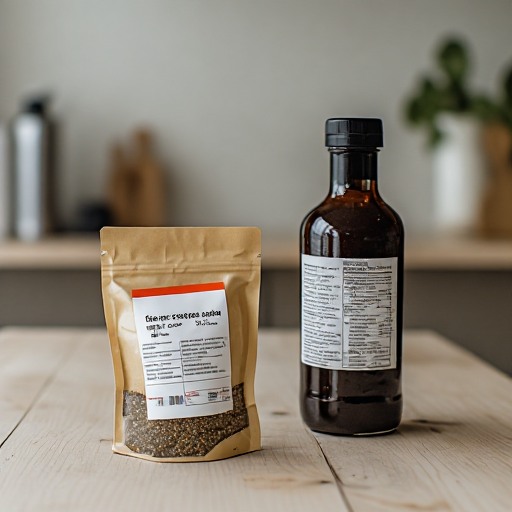
The same approach applies to kecap, sauces and seasoning mixes: inspect the actual formulation rather than deciding from the product name. Ingredient-specific questions belong in checking soy sauce, kecap and seasoning mixes for gluten.
Use allergen information as a separate check
After reading ingredients, locate the allergen statement and any warning about shared production equipment. These parts of the label provide another view of the product, so read them together rather than using one as a substitute for the other.
BPOM’s processed-food label guidance addresses allergen information for products containing listed allergens or made using the same production facilities as allergen-containing foods. Its cereal grouping includes wheat, rye, barley, oats, spelt and hybrid strains; it also describes exemptions for certain highly refined derivatives.
For a shopping decision, distinguish the wording you actually see:
- A contains statement identifies a named allergen in the product.
- A shared-equipment or production warning raises a handling question beyond the recipe.
- A gluten-free claim makes a different claim about gluten and must be assessed in its regulatory context.
If a gluten-free statement appears alongside wheat-related information, do not resolve the apparent conflict by choosing the statement you prefer. Ask the manufacturer to explain the ingredient, processing and basis of the claim. This is particularly important if you also need to avoid wheat for an allergy-related reason.
Likewise, an ingredient list without obvious gluten sources does not, by itself, establish the product’s handling conditions. Cross-contact can occur during processing, storage or preparation, as explained by NIDDK.
For a closer treatment of these distinctions, see what gluten-free claims and allergen statements each tell you.
Understand the Indonesian gluten claim
Indonesia has a specific regulatory framework for gluten claims on processed foods. Appendix VI of BPOM Regulation No. 1 of 2022 sets requirements for eligible products and distinguishes the following claims:
| Indonesian claim | Gluten requirement in Appendix VI |
|---|---|
| Bebas gluten | No more than 20 mg/kg |
| Rendah gluten | 21–100 mg/kg |
The appendix also specifies the raw-material categories to which these claims apply. These figures come from the regulation text hosted by the Ministry of Industry. BPOM’s legal record lists the regulation as in force when checked for this guide.
The practical distinction is straightforward: rendah gluten and bebas gluten are different claims. Do not use a low-gluten statement as if it were a gluten-free statement. Also, the regulated gluten-free threshold is not a statement of absolute zero gluten or a guarantee of suitability for every individual.
Read the claim on the package itself. If an online seller calls something gluten-free but the available pack photographs do not show that claim, ask where the description comes from. A manufacturer may be able to explain its product information, but a retailer’s wording alone leaves the basis unclear.
Other packaging messages should be checked for their own purpose. Halal, vegan, organic, or a registration number should not be used as substitutes for a gluten-specific assessment. For this decision, return to ingredients, allergen information and the actual gluten claim.
Give oats an additional check
An oat product deserves more attention than a quick search for the word wheat. NIDDK advises people with celiac disease to discuss oats with their doctor or dietitian and to choose gluten-free oats, because contact with gluten-containing grains is common.
If oats are relevant to your medically advised diet, check the current product’s gluten-free information and ask about unclear handling details. Do not assume that every oat cereal or oat drink has the same suitability. The medical guidance is available in the NIDDK dietary guide.
Keep imported-label questions tied to the market version
An imported product may present information across its original packaging and an Indonesian supplementary label. Read both. Check whether the product name, ingredients and claim refer to the same variant, and note anything that appears inconsistent or incomplete.
Avoid transferring a rule from another country simply because a package uses English. First establish which market version you have and what claim is being made. If you cannot connect the information to that exact pack, contact the importer or manufacturer before relying on it.
Translation tools can help you locate an ingredient or understand ordinary wording. If the translation changes a crucial ingredient name, or the photograph is too blurred to read, obtain clearer information rather than treating the translated result as confirmation.
Detailed troubleshooting is covered in checking imported food labels when information is incomplete.
Ask a question the manufacturer can answer precisely
When the label leaves a meaningful gap, describe the product and the uncertainty. “Is this safe?” invites a broad response. A narrower question makes it easier to see whether the reply actually addresses your concern.
A starting message could be:
I am checking the gluten information for this product sold in Indonesia. The attached photographs show the product name, variant, ingredients and batch code. Could you clarify the source of the ingredient marked in the photograph, whether this exact product carries a gluten-free claim, and what information you can provide about shared equipment and gluten cross-contact controls?
Adjust the message to the gap. You may only need the source of one ingredient. In another case, the question may concern a claim that appears on a website but not on the pack. Keep the first request focused enough that the answer can be assessed.
When a reply arrives, check whether it identifies the exact variant and market, addresses the ingredient you asked about, and explains any limits. A response saying “no wheat added” still leaves unanswered any questions you raised about other gluten sources or shared equipment.
A shared facility does not tell you every detail of the production process. Ask what controls apply to the product rather than treating the facility statement alone as a complete assessment. Equally, do not fill missing details with assumptions about testing or cleaning.
For the full correspondence process, use contacting a food manufacturer about an unclear gluten label.
Turn the information into a decision
The following is an editorial decision aid, not a product certification system.
| What you have established | Practical next step |
|---|---|
| A clearly identified gluten-containing ingredient conflicts with your dietary requirements | Choose another product consistent with those requirements |
| Ingredients are readable, and the gluten claim and other statements are consistent | Assess the product against your individual needs and any professional guidance |
| No obvious gluten ingredient is listed, but a relevant ingredient source or handling detail remains unknown | Clarify that specific gap |
| The label and manufacturer information conflict | Ask for an explanation tied to the exact pack |
| Essential information is missing and cannot be clarified before purchase | Use an alternative with information you can assess |
For example, imagine a rice snack whose seasoning lists an unspecified malt extract. The useful next step is to establish the malt’s grain source and review any gluten claim. Calling the snack rice-based does not settle that question. This is a hypothetical label scenario, not a finding about a particular brand.
Another hypothetical example is an imported cereal with a gluten-free message in a seller’s listing, but only an unreadable photograph of the package. Requesting a clear label is the next step; the listing has not yet provided enough detail for the assessment.
If you have celiac disease, a wheat allergy or another medically managed dietary requirement, follow the guidance appropriate to your condition. This article does not diagnose conditions or replace that guidance. Our Medical Disclaimer explains the publication’s boundaries.
A repeatable shopping routine
Before putting a packaged food in your basket, check:
- Identity: Does the information match this exact product, flavour and pack?
- Ingredients: Have you read the complete list and relevant compound ingredients?
- Allergens: Have you checked contains statements and production warnings?
- Claim: Is there a gluten-specific claim, and have you distinguished bebas gluten from rendah gluten?
- Gaps: Is anything important still unclear, and can it be clarified before you use the food?
The useful endpoint is a decision supported by information you can explain. Sometimes the label provides that information. Sometimes one precise question resolves the gap. When it does not, choosing an alternative lets you finish shopping without turning uncertainty into an unsupported assurance.