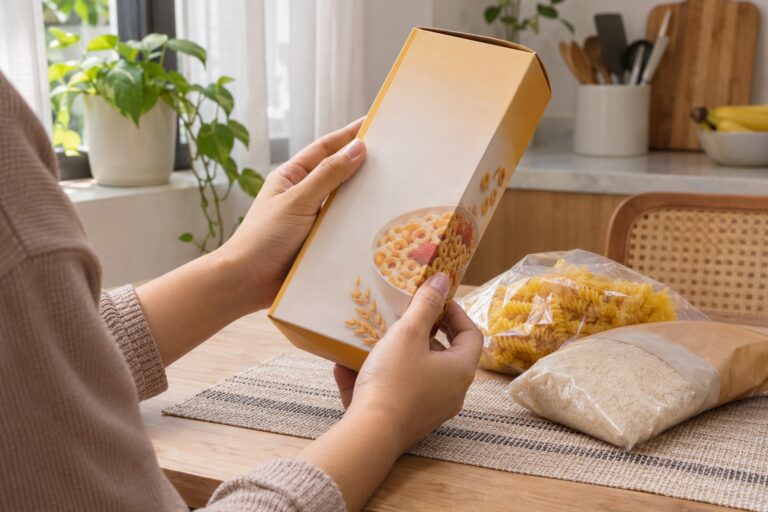
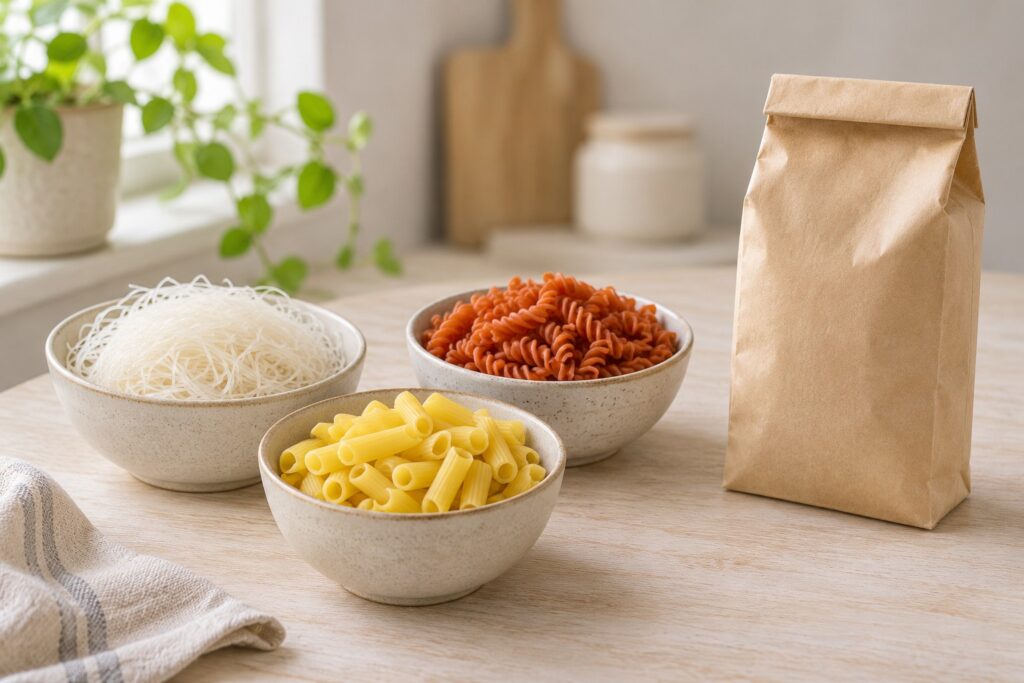
A packet says “rice noodles,” another highlights buckwheat, and a third contains lentil pasta with a separate sauce sachet. Those descriptions help identify possible alternatives, but they leave different questions to answer before you buy.
When choosing gluten-free pasta and noodle alternatives, check the exact finished product: its full ingredient list, gluten-free claim, allergen information and any included seasoning. Once those details are clear, compare the cooking instructions and whether the product suits the meal you want to make.
Start with the whole product, not the headline ingredient
Rice, corn, buckwheat and beans can provide gluten-free flour ingredients. That does not establish the formulation of every noodle made with them. NIDDK’s dietary guidance identifies these alternatives and recommends checking food labels and gluten-free labeling.
Turn the packet over before comparing shapes or prices. Read all the flours and starches listed, rather than stopping when you find the ingredient pictured on the front. Look for wheat, barley and rye, including wheat terms such as semolina and durum.
For shopping in Indonesia, words such as komposisi and bahan can help you locate ingredient information; tepung terigu identifies wheat flour. If you cannot understand part of an imported label, obtain a readable translation or a product-specific explanation rather than guessing from the photograph.
A hypothetical comparison shows why this matters. One packet might list rice flour and water, while another rice-based noodle includes wheat flour. Both could emphasize rice in their presentation. The useful comparison is between their complete formulations and claims.
Compare alternatives by the question each raises
The main ingredient helps you decide which products to investigate. It should not become a shortcut that replaces checking the packet.
| Alternative | What to check before buying | What to compare once gluten information is clear |
|---|---|---|
| Rice noodles or rice pasta | All ingredients, the finished-product claim and any included sauce | Whether the instructions suit soaking, boiling, soup or stir-frying |
| Corn or rice-and-corn pasta | The complete flour blend and gluten-free labeling | Shape, cooking directions and suitability for your planned dish |
| Lentil, chickpea or other legume pasta | Whether it is entirely legume-based or a blend; other ingredients and allergens | The actual nutrition panel, portion information and preparation directions |
| Buckwheat or soba noodles | Whether wheat is included alongside buckwheat | The product’s intended preparation and serving method |
| Glass noodles or starch-based noodles | The named starch sources and all additional ingredients | Whether they need soaking, boiling or another preparation method |
Buckwheat deserves particular attention because its name and the word “soba” can cause confusion. The Celiac Disease Foundation’s gluten-source guide flags soba made with only a proportion of buckwheat flour among noodles that can contain gluten. Read the blend instead of assuming that a buckwheat description settles the question.
Likewise, “glass noodles” describes a product category you still need to investigate. Their translucent appearance does not tell you the complete ingredients. Terms such as bihun, soun or vermicelli can help you find a style of noodle, but the exact pack must supply the purchasing information.
Do not rank alternatives by an assumed health advantage. If protein or fibre matters to your meal planning, compare the actual nutrition panels using the same basis, such as per 100 grams of dry product. A legume name on the front is less informative than the figures for the finished pasta.
Read the gluten-free claim alongside the other label information
Look for a gluten-free statement on the actual product version you intend to purchase. A shelf label, marketplace filter or seller’s headline should lead you to the packet information, rather than stand in for it.
Read the claim together with the ingredients and any allergen or precautionary wording. If they appear inconsistent, keep that question open until the manufacturer explains it. Do not simply ignore whichever statement makes the decision less convenient.
“Wheat-free” also leaves a different question from “gluten-free”: barley and rye remain relevant gluten sources. The Celiac Disease Foundation explains this distinction in its gluten-source guide. Separately, if you have a wheat allergy, communicate that requirement explicitly rather than assuming a gluten-free purchasing decision answers it.
For imported products sold in Indonesia, identify which market version you are viewing. A foreign claim or certification needs its own context; this guide does not apply a foreign labeling threshold as an Indonesian rule. If a certification mark influences your choice, identify the organization and whether its listing covers the exact product.
Our article on oats and gluten-free labels explores a related distinction between the main ingredient and the information about the product built around it. Here, the important detail is the noodle’s complete blend and the scope of its claim.
Check the sachets, sauce and toppings too
An instant noodle pack is more than its noodle block. Read the information for the broth powder, sauce, seasoning oil, garnish and any other included component.
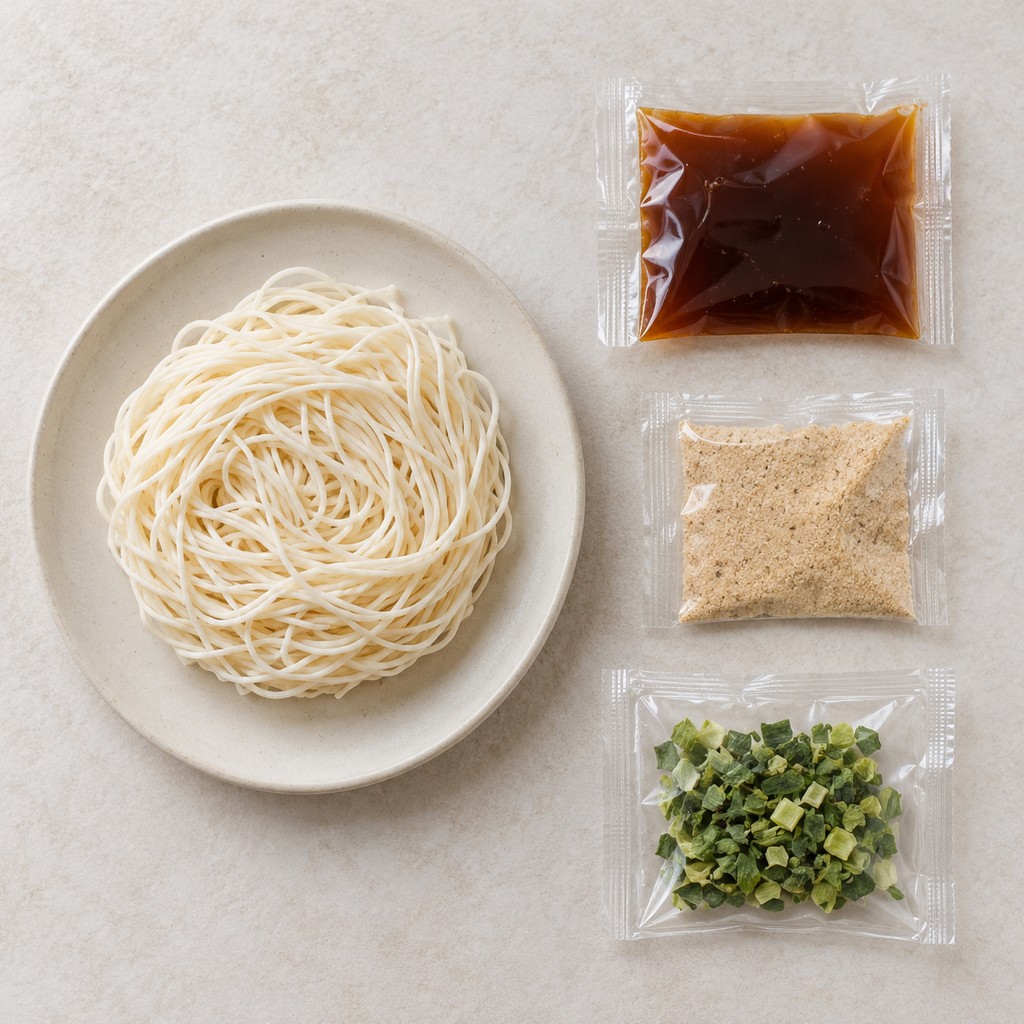
Ask what the gluten-free wording actually covers. Does it describe the entire kit, or only the noodles? If the packaging does not make that clear, request an answer about the complete product. The Celiac Disease Foundation identifies traditional soy sauce and some sauces as potential gluten sources, so a rice noodle base does not settle the sauce question.
For example, imagine a meal kit whose front says “made with rice noodles,” with a separate kecap-based sauce inside. You need the sauce ingredients and the kit’s labeling information before treating it as a gluten-free purchase. The rice description alone is insufficient.
Leaving out a sachet should not be an improvised solution to unclear information. First establish whether the components are separate, what the noodle portion contains and what handling information applies. If the company only confirms the plain noodles, do not extend that answer to the whole kit.
This also helps you compare value. A plain noodle pack and a complete meal kit serve different purposes. If you cannot use the included sauce, compare the cost of the usable portion and the additional ingredients you would need, rather than the headline pack price alone.
Resolve the missing detail with a specific question
When buying online, request current photographs showing the complete ingredient list, gluten-free claim, allergen information and any supplementary label. Make sure the photographs concern the flavour, size and version that will actually be dispatched.
If a significant question remains, contact the manufacturer with the product name, barcode, market of sale and photographs. Include the batch number if you already have the pack or the enquiry concerns a particular batch.
A focused message could read:
I am considering buying [product and pack size] in Indonesia. Could you confirm whether the gluten-free claim covers the complete product, including every seasoning sachet and topping? Please clarify the flour or starch blend and explain the controls addressing gluten cross-contact during production. Does your answer apply to the market version shown in these photographs?
Read the reply against your original question. “Rice is naturally gluten-free” explains the ingredient but leaves the finished product unresolved. “We offer gluten-free products” does not identify whether this particular noodle is one of them. Ask for the missing connection rather than treating a general reassurance as product confirmation.
You do not need to collect a technical dossier for every purchase. The aim is a clear answer about the detail that affects your choice. If that detail remains unresolved, choose an alternative with clearer information or postpone the purchase.
Buy for the meal you can actually prepare
After checking the label, read the cooking directions before committing to a large pack. Establish whether the noodles need soaking or boiling, whether a sauce must be added and whether the preparation fits your available equipment. Avoid assuming that every alternative can replace wheat pasta using the same method.
Keep preparation in view as well. NIDDK explains that gluten cross-contact can occur during processing, storage, preparation or serving. Buying a suitable packet is one step; using it with shared cooking water or equipment introduces a separate handling question.
Before buying, bring the decision back to the exact pack: you can understand its ingredients, identify what its gluten-free claim covers and account for every component you intend to eat. Keep useful product information after opening, and read the current label when replacing it. That gives your next purchase a concrete basis instead of relying on the colour of the packet or a remembered brand name.