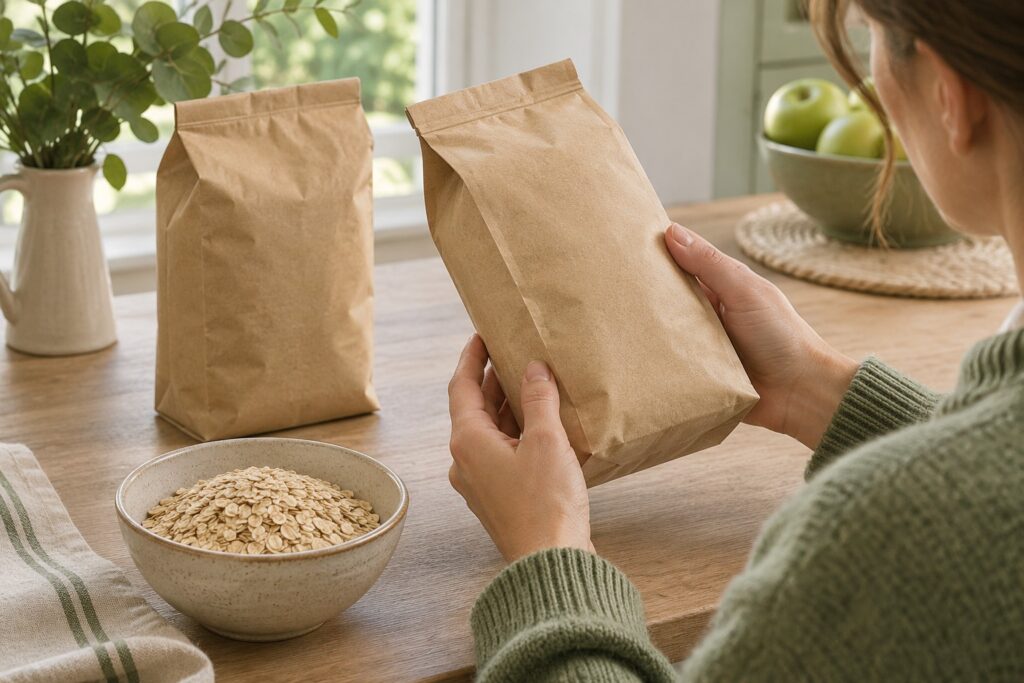
Two bags of plain oats can look almost identical. Both may list a single ingredient, yet only one carries a gluten-free claim. The difference worth investigating is how the oats were sourced and handled, rather than whether one bag looks more natural.
When checking oats and gluten-free labels, start with the exact product you intend to buy. Look for a gluten-free claim, read the complete ingredients and check any handling information. For celiac disease, whether oats belong in your diet is also a question to discuss with your doctor or registered dietitian.
Why an oats-only ingredient list is not the whole answer
Oats can come into contact with wheat, barley or rye before reaching the packet. Health Canada’s guidance on gluten-free oats explains that growing, harvesting and transporting oats alongside these grains can introduce them into ordinary oat supplies.
That creates two separate purchasing questions: what was deliberately included, and what controls address contact with other grains? An ingredient list helps with the first. “100% oats” does not, by itself, answer the second.
Words such as organic, wholegrain or plain describe other product characteristics. Likewise, rolled, instant and steel-cut identify types of oat products; they do not establish gluten-free handling. Use those descriptions to choose the texture or cooking method you want after checking the gluten information.
For example, imagine choosing between plain rolled oats without a gluten-free claim and another pack explicitly labeled gluten-free. Their ingredient lists might both say “oats.” That similarity is not a reason to treat their gluten-related information as equivalent.
Read the claim on the exact pack
Look for a gluten-free statement on the package itself. Check the flavor, pack size and product version in your hand, rather than relying on a claim attached to another item from the same brand.
For online purchases in Indonesia, compare the seller’s description with available photographs of the actual packaging. If the listing says gluten-free but the pack images do not show the claim, ask for a clear current photograph or confirmation from the manufacturer. A marketplace search category is not product-specific evidence.
Imported packaging also needs context. A foreign labeling rule explains a claim within that regulatory system; it does not automatically establish the requirements applicable to sale in Indonesia.
For example, the U.S. FDA’s gluten-free labeling guidance says oats bearing a gluten-free claim must contain less than 20 parts per million of gluten. It also states that third-party certification is not required to make that claim under its rule. These are U.S. requirements for FDA-regulated foods, rather than a universal definition for every imported pack.
If a certification mark appears, identify the organization and check whether its information covers the exact product. Certification and a manufacturer’s gluten-free claim are different forms of information. An unfamiliar symbol should prompt a question rather than an assumption about what was assessed.
Check everything added to the oats
Move beyond the main grain when buying flavored porridge, granola, oat flour blends, snack bars or oat drinks. The relevant decision concerns the finished product, including its additional ingredients.
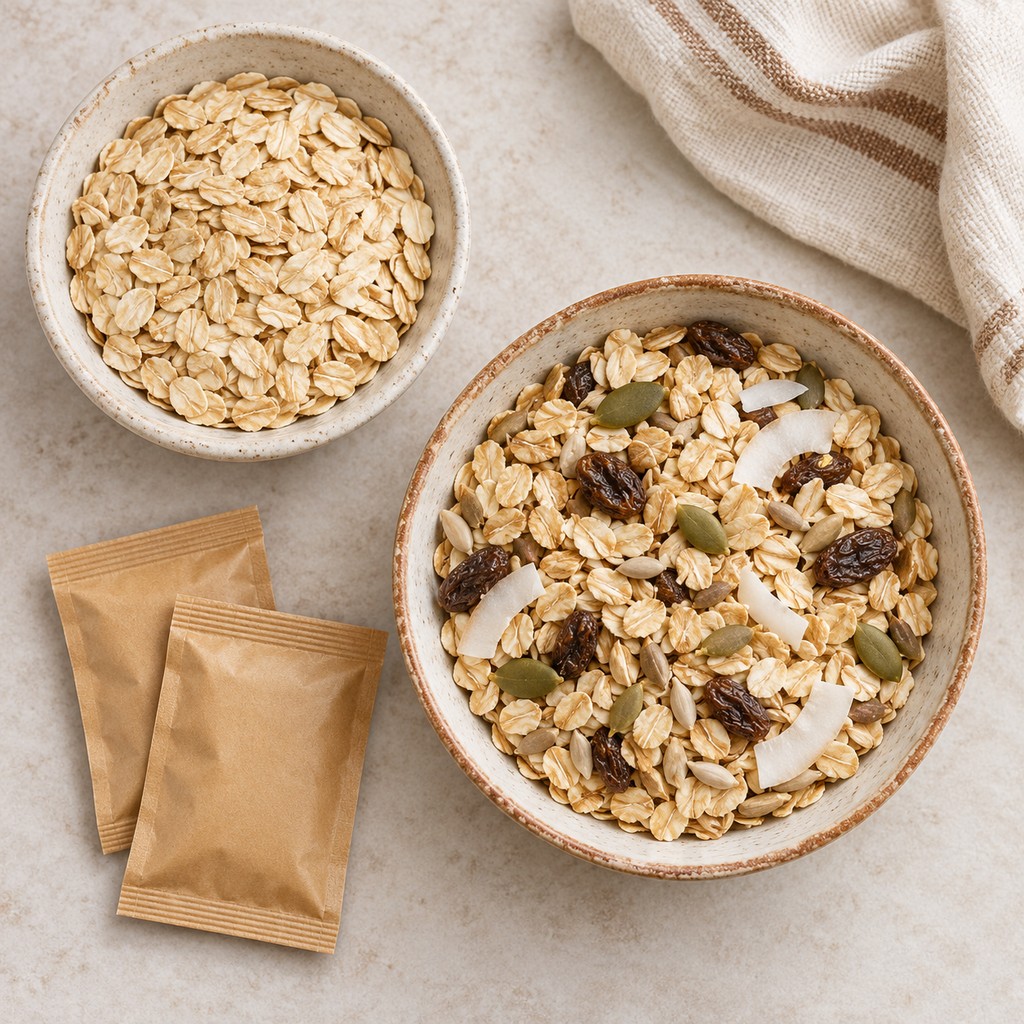
Read the full list, including any separately listed sachet, topping or mix-in. Wheat, barley and rye need attention; barley malt or barley malt extract is particularly relevant in cereal-style products. NIDDK’s dietary guidance identifies these grains and barley-derived malt ingredients as gluten sources.
A statement that a product uses gluten-free oats answers a question about those oats. Continue reading to establish what is claimed about the complete food. If the front claim and ingredient information seem inconsistent, ask the manufacturer to explain the exact product before buying.
Keep allergy information in view too. Read any “contains,” “may contain” or shared-facility wording alongside the gluten-free claim. If the combination is unclear, ask what each statement means for that product. Do not resolve an apparent conflict by ignoring the less convenient part of the label.
The broader distinction between claims and allergen information is covered in Gluten-Free Claims and Allergen Statements: What Each Tells You.
Ask about the product when handling information is unclear
A useful manufacturer enquiry identifies the exact oats and the missing information. Include the product name, pack size, barcode and market of sale, plus the batch or lot number if you already have the packet. Clear photographs help distinguish similar versions.
Ask focused questions:
- Does this exact finished product carry a gluten-free claim, and which market’s requirements does that claim address?
- What controls address wheat, barley and rye during sourcing, processing and packing?
- What gluten testing supports the claim, and does the answer concern the finished product or only its oat ingredient?
- Does your reply apply to the pack version and batch shown in these photographs?
You can adapt this message:
I am considering buying [product name and pack size] in Indonesia. The barcode is [number], and I have attached photographs of the label. Could you confirm whether this exact finished product is labeled gluten-free and explain the sourcing, handling and testing information supporting that claim? Please clarify whether your answer applies to this market version and identify anything you cannot confirm.
Read the reply for what it actually establishes. “Oats are naturally gluten-free” does not explain this product’s handling. “Our supplier tests the oats” leaves open whether the answer covers the finished food. A shared facility statement also needs context about the controls used; the facility description alone is incomplete information.
You do not need to interpret a laboratory report yourself to make an ordinary shopping decision. The aim is to obtain a clear, product-specific explanation. If the company cannot resolve an important gap, choosing another product or postponing the purchase is reasonable.
For help structuring that exchange, see Contacting a Food Manufacturer About an Unclear Gluten Label.
Keep the label decision separate from individual tolerance
A gluten-free claim addresses the product’s gluten-related labeling requirements. It does not determine whether oats suit every individual’s medical circumstances.
NIDDK advises people with celiac disease to discuss whether to include oats, and how much, with their doctor or registered dietitian. Its guidance notes that many people with celiac disease can eat moderate amounts of gluten-free oats, while emphasizing the importance of avoiding cross-contact.
If you have been told to avoid oats, a different label does not replace that advice. If symptoms occur after eating an oat product, this article cannot establish their cause or tell you whether to change your treatment. Take the product details and your questions to an appropriate clinician.
A separate wheat allergy also needs its own assessment. Communicate that requirement explicitly rather than assuming a gluten-free purchasing routine answers every allergy question.
Make the purchase from the information you have
Before putting the oats in your basket, bring the decision back to four points: the exact product, its gluten-free claim, its complete ingredients and any unresolved handling information.
A plain oat product without a gluten-free claim should not be treated as equivalent to labeled gluten-free oats merely because its ingredient list is short. For an oat-based mixed food, check the whole product rather than stopping at the oat ingredient. Where the label is unclear, seek a specific answer before relying on it.
Keep the packet information available after purchase, and read it again when you buy a replacement. A familiar brand name does not confirm that a different flavor, market version or revised pack has the same formulation and claims.
You can use the wider framework in Reading Food Labels for Gluten in Indonesia: A Practical Decision Guide for other packaged foods. With oats, the useful habit is to check both the grain and the product built around it, leaving medical decisions with the professional who understands your circumstances.