The sandwiches are finished, but crumbs remain beside the chopping board and a sticky patch marks where dough was kneaded. Before the next meal starts, someone reaches for the cloth beside the sink. What that cloth has already touched matters as much as the counter it is about to wipe.
Cleaning shared kitchen surfaces after gluten-containing preparation means removing food residue, managing the tools used to remove it, and protecting the area until the next task begins. A quick sweep of visible crumbs leaves parts of that transition unfinished.
This guide focuses on that cleaning handover. For storage, cooking equipment and serving arrangements across the household, see managing gluten cross-contact in a shared home kitchen.
Clear the previous task before cleaning
Move bread, flour containers, used boards and utensils out of the area you intend to clean. Put away or cover food that should not be exposed during cleanup, and leave equipment awaiting washing somewhere separate from clean equipment.
Define the actual workspace. After making toast, that may include the counter beneath the board and the place where a knife rested. After kneading dough, inspect the surrounding working area and any handles touched with flour-covered hands. Follow what happened during preparation rather than wiping the same small rectangle every time.
Remove loose crumbs and larger food deposits carefully into the waste. Use a suitable scraper or disposable paper where useful, avoiding scattering residue onto another preparation area. This is the clearing step; follow it with washing.
For example, in a hypothetical household preparing roti before a rice-based meal, clearing the dough bowl does not finish the job. The cook also needs to address the working surface, used tools and any nearby contact points involved before setting out the next ingredients.
Wash, remove residue and finish the surface
Coeliac UK’s home guidance recommends hot soapy water for surfaces and washable kitchenware, and says ordinary washing-up liquid or a dishwasher can remove gluten. A specialist gluten-removal product is therefore not a prerequisite for routine cleaning of suitable washable items.
For a washable counter, turn that advice into a deliberate sequence:
- Choose an appropriate cleaner. Use a product suitable for the surface and its food-contact use, following the product and surface-care instructions.
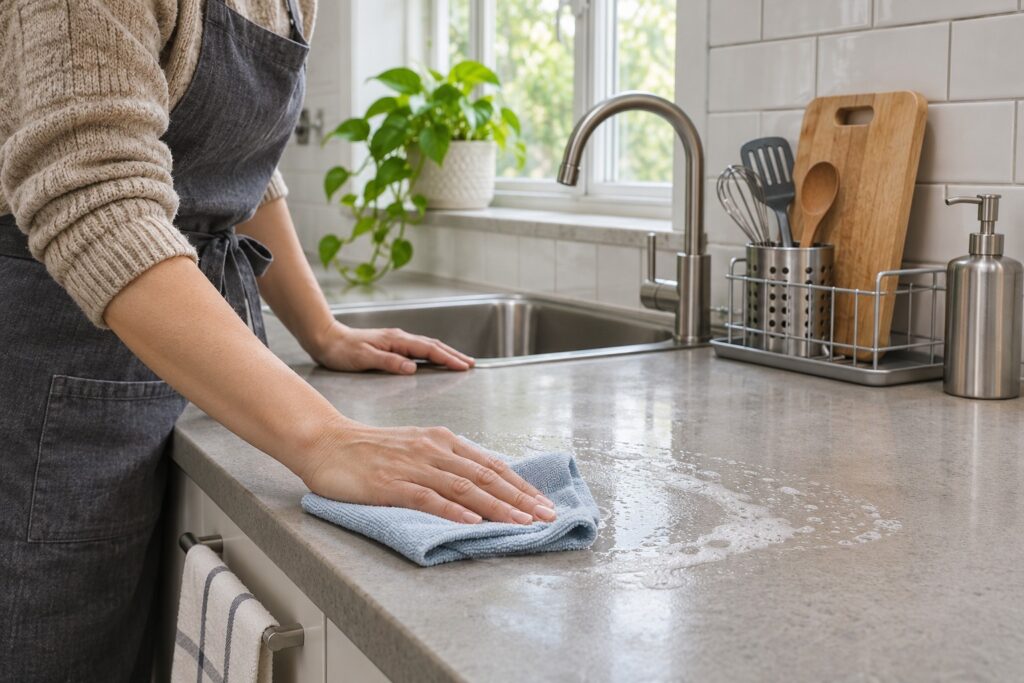
- Wash the working area. Work over the places where food was prepared or tools rested, paying attention to edges and accessible joins. Loosen and lift sticky deposits rather than wiping around them.
- Remove loosened food and cleaning residue. For a fixed counter, use clean water and fresh wiping material as needed, following the cleaner’s rinsing instructions. Do not repeatedly spread the same dirty liquid over the area.
- Finish drying appropriately. Let the surface dry or use a clean drying material suitable for the task. Keep the towel used during bread preparation out of this finishing step.
Wash removable boards, trays and utensils separately using an appropriate handwashing method or a dishwasher where the item’s instructions permit it. Do not submerge an appliance or flood a surface that is not designed for that treatment.
Before bringing food back, look for remaining crumbs, dough or sticky patches. Finding residue means more cleaning is needed. Finding none is a useful observation, but it does not certify the surface as free of gluten.
If a groove, damaged join or inaccessible part repeatedly retains food, address that specific limitation. A clean, suitable board on a cleaned workspace may simplify the next task, while damaged equipment may need repair or replacement. Buying a second item without changing how it is handled leaves the underlying problem unresolved.
Give the cloth or sponge a clear next step
A cloth can collect food successfully and still become a poor choice for the next wipe. After removing a pile of crumbs or dough, pause before taking it across the rest of the counter or into a clean drying area.
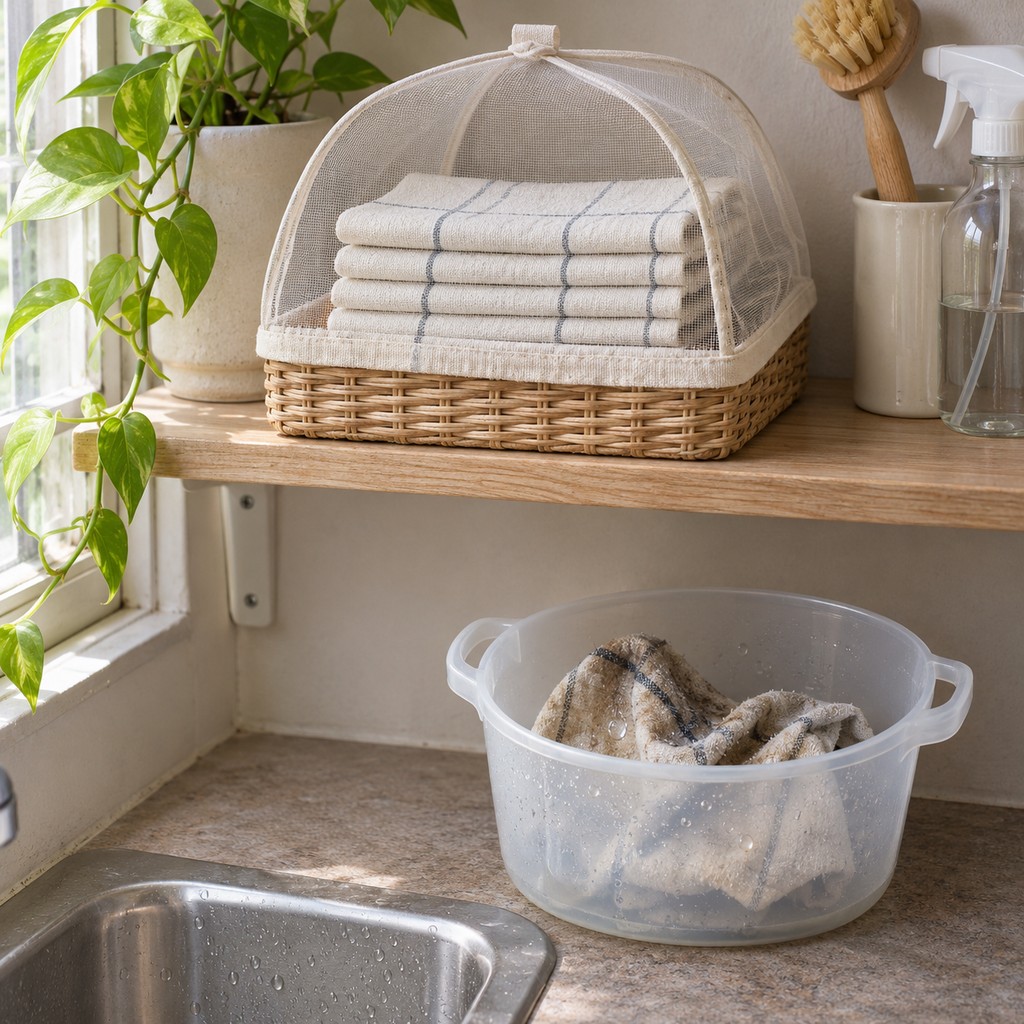
Coeliac UK says separate cloths or sponges are not required for gluten management. You can nevertheless reserve an identified cleaning tool if that makes your household routine easier to follow. Treat that as an organizational choice, rather than a requirement to duplicate every cleaning item.
The practical question is whether the tool is suitable for its next use. If it is carrying food deposits, has been used for an unrelated dirty task, or has an unclear history, obtain a clean replacement. Put reusable cloths through the household’s appropriate washing and drying process before returning them to the clean supply; discard single-use material after its task.
There is supporting evidence for paying attention to wiping tools, although it needs careful interpretation. FDA research on surface wiping and allergen cleaning found that food residue, wiping material and surface characteristics affected removal and transfer. That study used peanut-, milk- and egg-containing foods, so it does not establish a gluten-specific household cleaning threshold.
A manageable arrangement is to keep clean replacements in one protected place and used cloths in another. Everyone helping should be able to tell which supply is ready for use without guessing from whether a cloth feels dry.
Keep sanitizing separate from residue removal
Cleaning and sanitizing answer different questions. Cleaning addresses food deposits and other soil. Sanitizing addresses microorganisms under the conditions specified for the product and application. A sanitizer claim alone does not establish that gluten-containing residue has been removed.
If the household’s food-hygiene routine calls for sanitizing, complete the cleaning first and then follow the exact food-contact product instructions. Resolve dilution, application, contact time and any required rinse from those instructions. This article provides no universal chemical recipe.
The FDA study found a complete wash–rinse–sanitize–air-dry procedure effective under its tested conditions. It did not demonstrate that spraying sanitizer over food deposits was an equivalent method, nor that one product or procedure guarantees gluten removal in every home.
For everyday decisions, keep two questions visible: “Have we removed the previous food residue?” and “Have we completed any additional food-hygiene steps this task requires?” Answering one does not automatically answer the other.
Protect the cleaned area before starting again
Once cleaning is complete, bring out clean tools and ingredients for the next task. Keep them apart from equipment awaiting washing, and avoid returning the bread board or used wiping cloth to the prepared area.
Make the handover concrete. “This counter has been washed; those utensils beside the sink still need washing” communicates more than “The kitchen is done.” If someone sets a used bread knife on the cleaned workspace, address the affected area before continuing.
For a cooking session involving both versions of a meal, connect this reset to the sequence in preparing gluten-free and gluten-containing meals in the same kitchen. Cleaning establishes the starting point; utensil handling and serving still need their own arrangements.
Loose wheat-flour work deserves a separate plan because the activity can extend beyond the immediate dough surface. Keep this article’s focus on the cleaning handover; the planned guide to baking with wheat flour in a shared kitchen addresses that wider activity. Do not assume that an arbitrary waiting period makes cleanup unnecessary.
The useful endpoint is a workspace whose recent handling you can explain: the previous food was cleared, the area was washed and finished appropriately, and clean tools remained separate from used ones. This is general household guidance, not a guarantee about an individual meal. If you have celiac disease, wheat allergy or additional dietary needs, use appropriate professional guidance for your personal precautions.