Two pans are cooking, dinner is nearly ready, and someone reaches for the nearest spoon. That moment can undo the separation established at the start. A workable mixed-meal routine needs to cover the busy final minutes as carefully as the ingredient checks.
When preparing gluten-free and gluten-containing meals in the same kitchen, decide where the recipes divide, which tools belong to each version, and how the gluten-free portion will reach the table. Preparing that portion first can simplify the work, provided it stays protected while the other food is made.
This guide focuses on one cooking session. For the wider household arrangement, see managing gluten cross-contact in a shared home kitchen.
Decide where the meal needs to divide
Before opening ingredients, identify what everyone can share and what needs a separate preparation route. A common base may reduce the number of handovers, but only after its ingredients and handling have been established as suitable.
For example, a hypothetical household might prepare rice and vegetables for everyone, with a checked sauce used throughout. Another meal might require two noodle types and different sauces. The second arrangement needs separate cooking and draining decisions, even if the finished bowls look similar.
Read the current packages for sauces, stock powders, marinades and garnishes. In an Indonesian kitchen, this includes checking the actual kecap or seasoning mix rather than deciding from its name. Keep any ingredient whose suitability remains unresolved out of the gluten-free preparation until you have an answer.
Choose between three practical arrangements:
- One suitable meal for everyone: useful when it meets everyone’s requirements and avoids unnecessary duplication.
- A shared base with separate additions: useful when the base can be portioned before a gluten-containing ingredient is introduced.
- Two separate versions: useful when the recipes differ from the beginning or reliable portioning would be difficult.
The best choice is the one the cook can follow consistently. A complicated shared-base plan may be less manageable than two clearly separate dishes.
See others: HACCP Basics for Kitchen Teams: Hazards, Controls, and Records
Set up a clean starting point
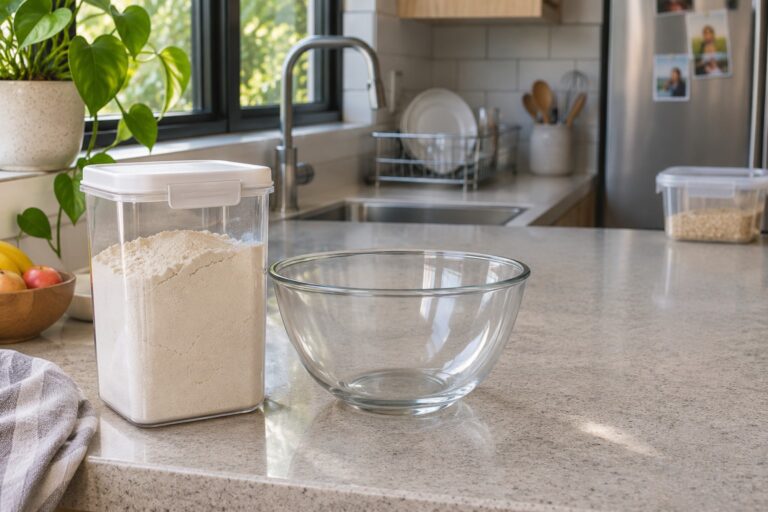
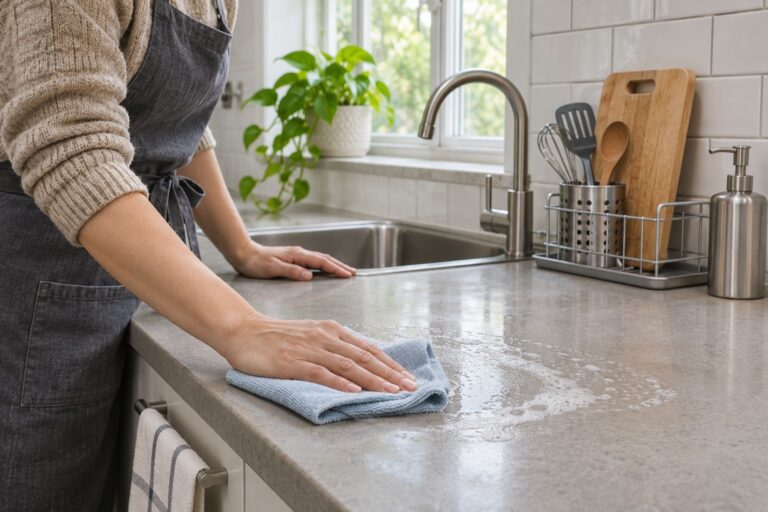
Clear the preparation area before bringing out the gluten-free ingredients. Remove used dishes and food residue, clean the work surface, and place the tools for the next task somewhere distinct from equipment awaiting washing.
Coeliac UK’s home guidance recommends cleaning surfaces, pans and cooking utensils with hot soapy water. It also explains that ordinary washing-up liquid or a dishwasher can remove gluten. Sharing washable equipment therefore depends on effective cleaning between uses; a quick visual inspection alone does not establish that this happened.
Wash your hands with soap and water before starting and after handling gluten-containing food before returning to gluten-free preparation. Set out the clean serving plate, spoon and any container needed for a portion you intend to reserve. Finding these halfway through cooking creates another avoidable handover.
In a small kitchen, a clean tray can hold the gluten-free tools together. Explain its purpose: it is a place for the assigned equipment, not somewhere to put any spoon that needs a resting spot.
Prepare the gluten-free version first when practical
Use the cleared workspace for gluten-free preparation before starting the gluten-containing version. The Academy of Nutrition and Dietetics recommends this order with cleaned equipment and surfaces. Treat it as a way to simplify separation, rather than proof that every later step will remain suitable.
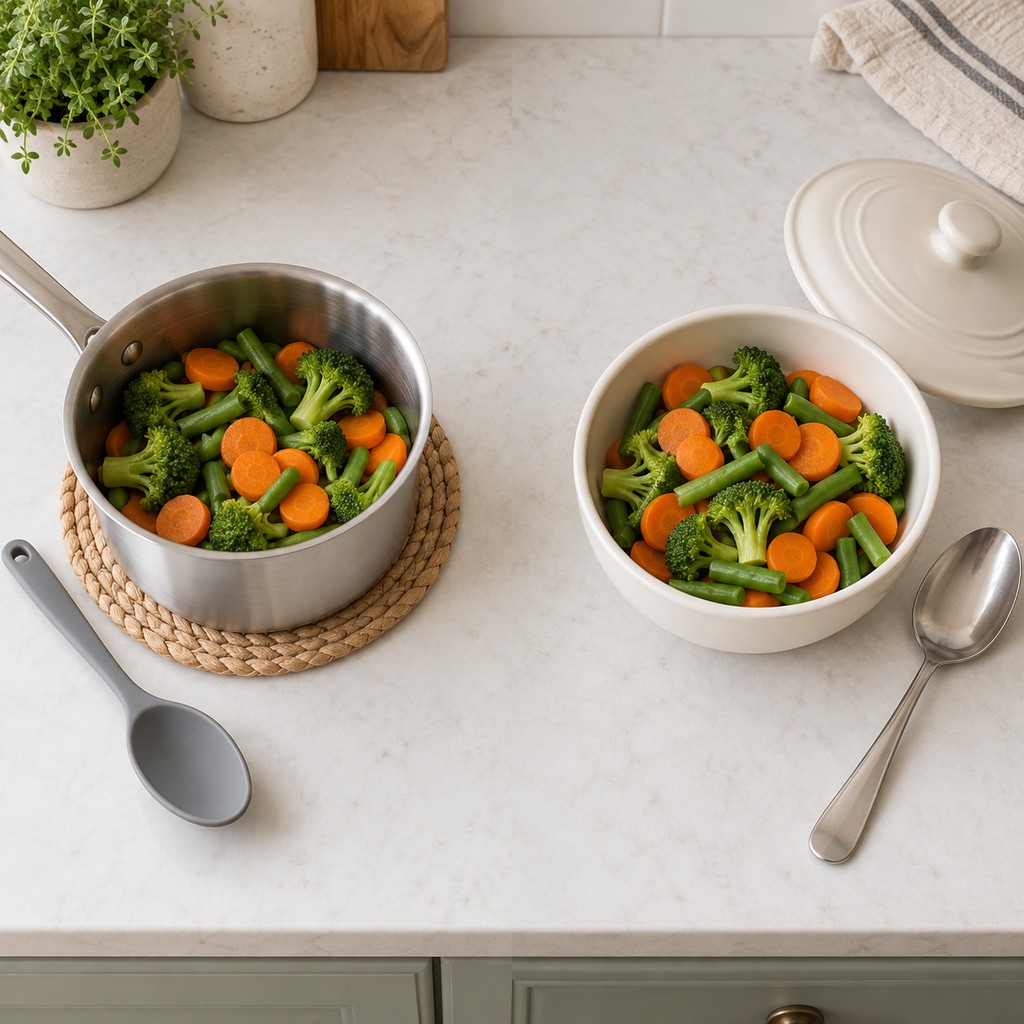
If you are dividing a common base, make the split explicit. Transfer the intended portion with a clean utensil into its own clean pan or container before introducing the gluten-containing addition. Assign a utensil to each version from that point onward.
For example, suppose a checked vegetable mixture will be finished with two different sauces. Set aside the gluten-free portion first, then add each sauce only to its intended pan. Do not add the gluten-containing sauce to the main batch and try to retrieve an unaffected portion afterwards.
Protect the prepared portion while the second version is made. Keep it away from bread preparation and other active tasks. Preparing first does not mean leaving perishable food on the counter throughout a long cooking session; follow appropriate cooking, holding and storage guidance for the particular food.
Where someone will be mixing or dusting with loose wheat flour, schedule that as a separate activity from exposed gluten-free preparation. This workflow provides no universal waiting period after flour use.
Give each pot its own cooking route
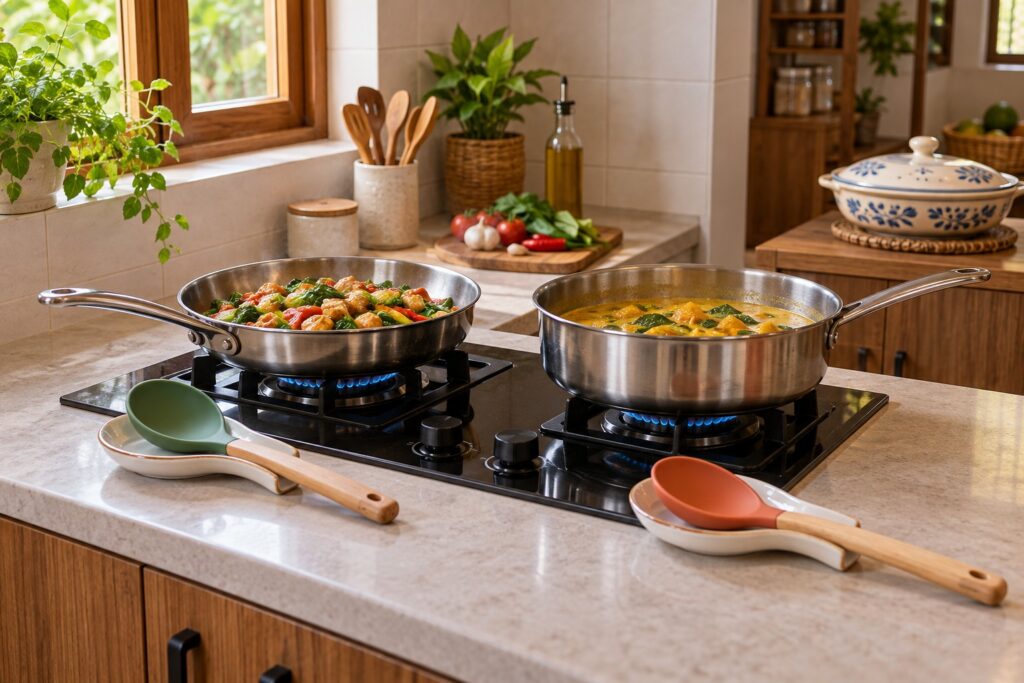
Before cooking begins, assign each pan its food, utensil and resting place. Keep the handles and spoon rests arranged so that you can tell which tool belongs where without remembering which spoon you picked up last.
Use fresh water for gluten-free noodles or pasta, rather than water already used for a wheat-containing version. Plan the draining step too: a separate pot does not resolve what happens when its contents enter a strainer carrying residue from the other batch.
For frying, use clean oil that has not been used for gluten-containing battered or breaded food. Beyond Celiac’s cross-contact guidance addresses shared cooking water and frying oil as transfer routes. It also explains why heating does not eliminate gluten; extra cooking is not a substitute for removing residue or changing the cooking medium.
Keep the sequence manageable:
- Put each assigned utensil beside its own pan before adding food.
- Return it to that resting place after stirring or turning.
- Use a fresh spoon for tasting rather than returning a used tasting spoon to either dish.
- When a tool changes tasks, clean it appropriately before reuse or take another clean tool.
If one person is managing more pans than they can reliably distinguish, cook in stages. Simultaneous cooking is convenient only while the separation remains understandable.
Carry the distinction through plating and serving
Place the gluten-free portion on its own clean plate before shared serving starts, where practical. Keep any bread, toppings or sauces intended for the other version away from that plate and its serving utensils.
Tell anyone helping exactly what remains to be done. “This plate is ready; use this spoon for the vegetables and leave off the shared topping” is more useful than “Be careful with that one.” If another cook takes over, identify the pans and utensils directly instead of relying on appearance.
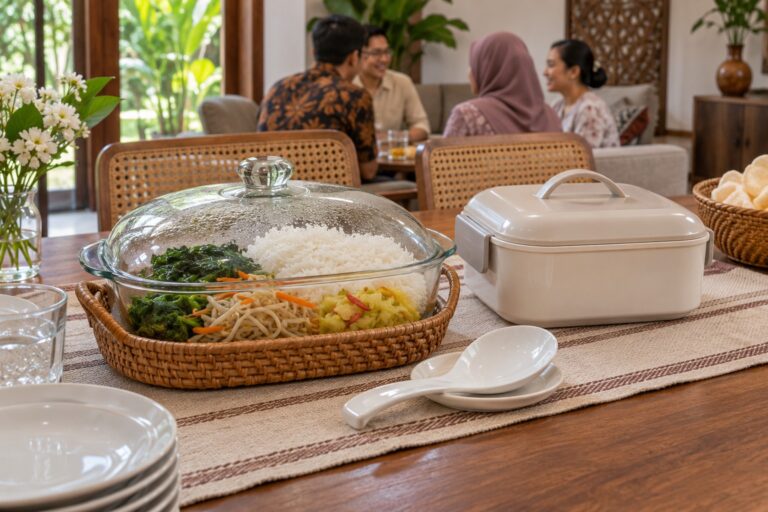
For family-style meals, give each dish its own serving tool. A gluten-free dish can still receive gluten when someone moves a spoon between bowls. Likewise, serving the gluten-free portion first does not protect a second helping after utensils have been exchanged.
If you want to retain a portion for later, set it aside before communal serving rather than reconstructing its handling history afterwards. The companion guide to organizing shared condiments and food storage for gluten-free meals explains the container and shared-spread arrangements in more detail.
Pause at the point where something changes
If the wrong spoon enters a pan, stop and identify which food and tools were involved. Do not quietly return the spoon to its original place and continue as though the distinction remained intact.
Where gluten-containing food has contacted the intended gluten-free portion, use an unaffected alternative or prepare a replacement with cleaned equipment. Removing the visible bread, topping or crumb does not establish that the remaining food is suitable. If the contact history is uncertain, explain that uncertainty to the person whose meal is affected.
A brief, factual handover helps: “This spoon was used in the wheat noodles before it went into this pan; the portion in the separate covered container was already set aside.” Report only what you actually know.
The useful endpoint is a meal whose route you can explain: checked ingredients, a defined preparation order, identified cooking tools and a clear serving handover. If one connection is missing, resolve it before relying on that portion.
This is general household guidance, not an assessment of an individual meal. If you have celiac disease, wheat allergy or additional dietary needs, seek appropriate professional guidance about the precautions relevant to you.