A jar of jam can start breakfast with suitable ingredients and finish it with toast crumbs inside. Moving that jar to a designated shelf afterwards does not undo what happened at the table. Storage arrangements work best when they also explain how food is opened, portioned and returned.
For shared condiments and gluten-free food storage, make three decisions clear: which containers are reserved, how shared food is served, and what happens when someone is unsure about its handling. The aim is a routine that another household member can follow without needing constant supervision.
Separate ingredient checks from handling rules
Before assigning a sauce or spread to your gluten-free supplies, check the current product information. A separate jar does not resolve uncertainty about its ingredients. For products used in Indonesian kitchens, including kecap, sambal and seasoning pastes, make the decision from the actual package rather than the food name alone.
Then consider what happens after opening. The U.S. National Institute of Diabetes and Digestive and Kidney Diseases explains that gluten cross-contact can occur during storage, preparation and serving, and recommends storing and preparing gluten-free food separately from gluten-containing food.
Keep these as two distinct questions: “Is this product suitable?” and “Has this container been handled according to our arrangement?” A homemade gluten-free label should communicate an agreed household practice; it is not evidence of testing or certification.
Choose a serving rule for each condiment
Not every condiment needs the same arrangement. A spread that everyone dips into needs a different routine from a bottle poured directly into a clean bowl. Coeliac UK’s home guidance recommends separate condiments, or clean cutlery when sharing butter, jam and other spreads.
Choose an approach that fits how people actually eat:
| Arrangement | How to use it | What needs explaining |
|---|---|---|
| Reserved jar or tub | Keep one identified container for gluten-free use and use clean utensils | A reserved container still needs protection from used knives and spoons |
| Shared jar with clean portioning | Spoon the amount needed onto a plate or into a small dish before spreading | A utensil that touches bread or other food does not return to the jar |
| Squeeze or pour bottle | Dispense without touching the outlet to food or used utensils | The bottle format does not replace ingredient checks or careful handling |
Celiac Canada includes squeeze bottles and separate condiment containers among its home cross-contact measures. Choose the format because it simplifies the household routine, without treating the packaging as a guarantee.
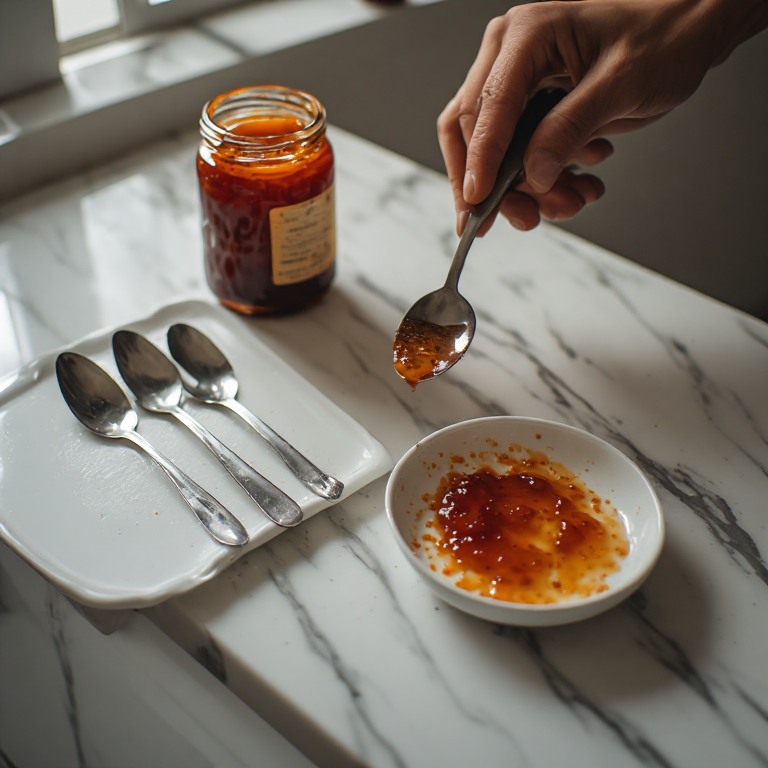
For a shared jar, put out enough clean spoons before breakfast. If someone needs another portion after spreading jam on wheat toast, they take another clean spoon. Asking people to remember a rule is easier when the tools needed to follow it are already within reach.
Where that routine repeatedly breaks down, a separate small jar may be more practical. You do not need to duplicate every condiment automatically; start with containers that regularly receive utensils used on gluten-containing food.
Give gluten-free supplies an identifiable storage space
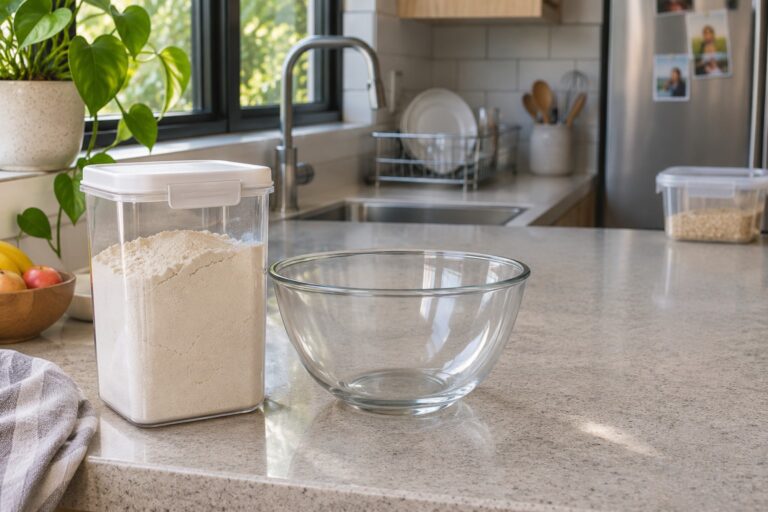
Choose a cupboard section, shelf or closed storage box that people can recognize and reach easily. Keep opened dry ingredients and food packages closed, and avoid an arrangement that requires moving open bread or flour bags to retrieve them.
Celiac Canada recommends separate storage and, where possible, placing gluten-free items above gluten-containing items. Use that as a practical organizing option, while preserving any other food-storage requirements. A gluten-free designation should never override appropriate separation of raw and ready-to-eat foods.
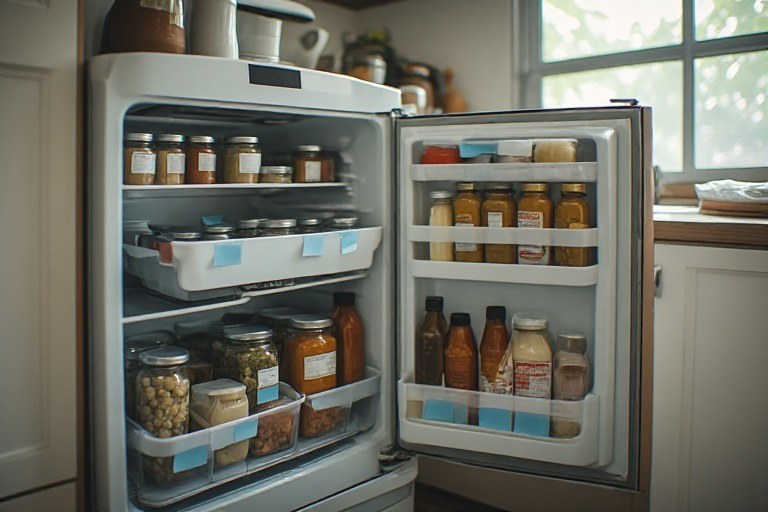
In a small kitchen, a removable box may be easier to maintain than an entire dedicated cupboard. For example, a hypothetical household might keep its reserved spreads together in a refrigerator tray and its dry ingredients in a separate cupboard box. The useful feature is that everyone knows what belongs there and how to handle it.
Choose labels people understand. “Reserved for gluten-free meals—clean utensils only” gives more information than a colored dot alone. If you use color coding, explain it to relatives, guests and anyone who helps put shopping away.
Keep the arrangement convenient enough to use every day. A reserved jar hidden behind several shared containers is more likely to be overlooked than one stored in an obvious, agreed location.
See others: How to Reduce Allergen Cross-Contact at Shared Preparation Stations
Keep containers connected to their contents
When transferring an ingredient, use a clean, suitable food-storage container and retain the original product information. Keep the package, or save a readable photograph that identifies the product and its ingredients. Preserve relevant dates and storage instructions as well.
Avoid topping up a partly filled container with a different product before its identity has been resolved. Similar-looking flours, powders and sauces are difficult to distinguish once the packaging is gone. Emptying and cleaning a container before changing its contents also makes the handover clearer.
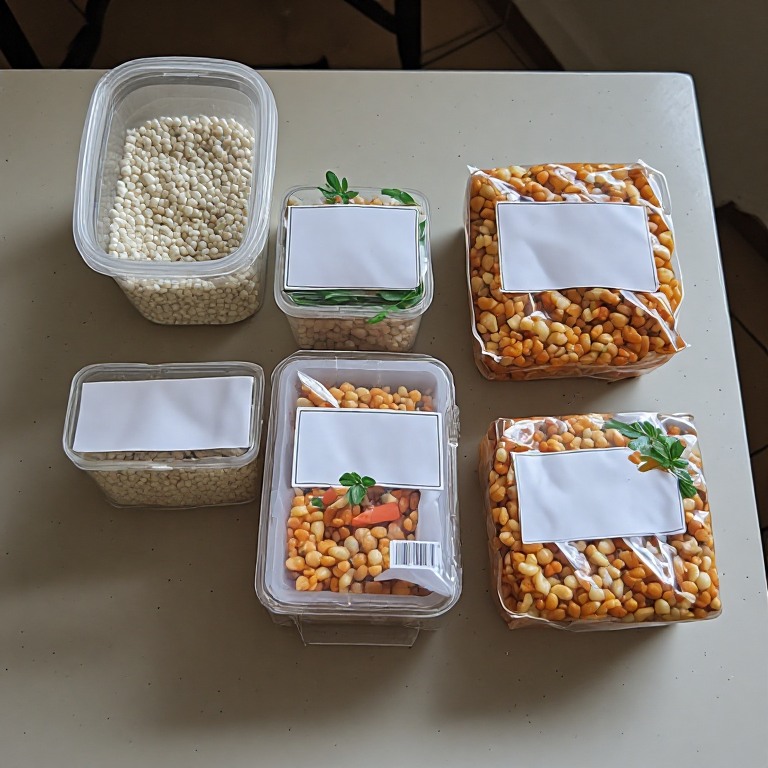
For prepared meals, label the dish, preparation date and any handling distinction that matters to your household. “Rice and vegetables—portion set aside before shared serving” is more informative than an unexplained tick on the lid. Use wording that reflects what actually happened.
Gluten separation does not determine how long food keeps. Follow the product’s storage instructions and appropriate guidance for the particular prepared food; a dedicated container does not extend its storage life.
Carry the arrangement through serving and leftovers
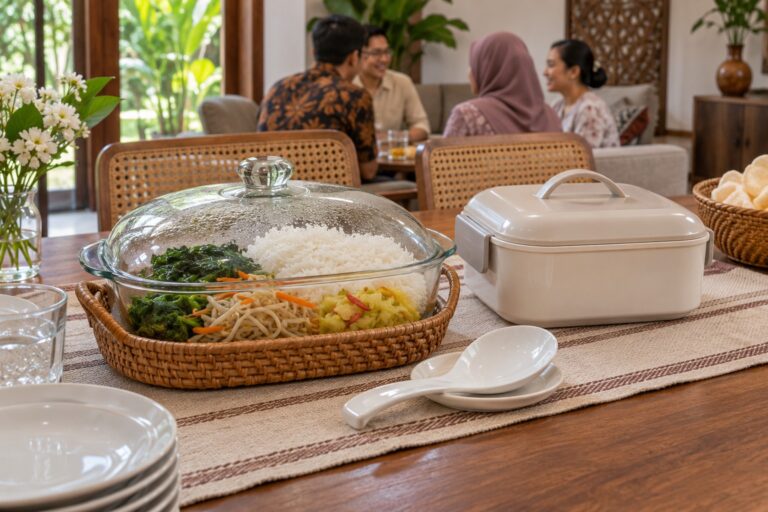
Before putting shared dishes on the table, decide which spoon belongs to each one. Keep the gluten-free portion and its utensil distinguishable rather than relying on everyone to remember which spoon was used first.
If you intend to save a gluten-free portion, consider setting it aside in a clean container before shared serving begins. That gives it a known handling history instead of requiring someone to reconstruct what happened around the table afterwards.
Return stored food with its own clean utensil. Do not scrape leftovers from a plate containing wheat bread into the reserved container, or pour an unused condiment portion back into the original jar after it has been at a shared place setting.
These storage and serving decisions sit within the wider routine described in managing gluten cross-contact in a shared home kitchen. For the sequence of cooking two meal versions, the companion guide to preparing gluten-free and gluten-containing meals in the same kitchen addresses preparation and utensil handovers.
Agree on what to do when the routine breaks
Make it easy for someone to report a mistake. “I put the toast knife back into this jar” gives the household useful information. Quietly removing a visible crumb or returning the jar to its usual shelf leaves the next person unaware of the changed handling history.
If gluten-containing crumbs or a used utensil enter a reserved spread, set that container aside from gluten-free use and identify what happened. Use an unaffected alternative for the gluten-free meal. Do not assume that removing the visible crumb establishes the suitability of the remaining contents.
An uncertain history should remain uncertain. If nobody knows whether a jar was used with bread knives, keep it distinguishable while you resolve the question rather than treating its usual storage position as proof.
For guests or a new household helper, demonstrate the routine once: where the reserved food lives, how to take a portion, and where used utensils go. A short explanation at the moment of use is easier to apply than a long list of kitchen restrictions.
The most useful arrangement is one people can explain in ordinary language: this jar is reserved, this shared jar needs a fresh spoon, and this container is waiting for clarification. Clear handling rules make the shelf labels meaningful.
This is general household guidance, not an assessment of an individual meal or medical need. If you have celiac disease, wheat allergy or additional dietary requirements, seek appropriate professional guidance about the precautions relevant to you.