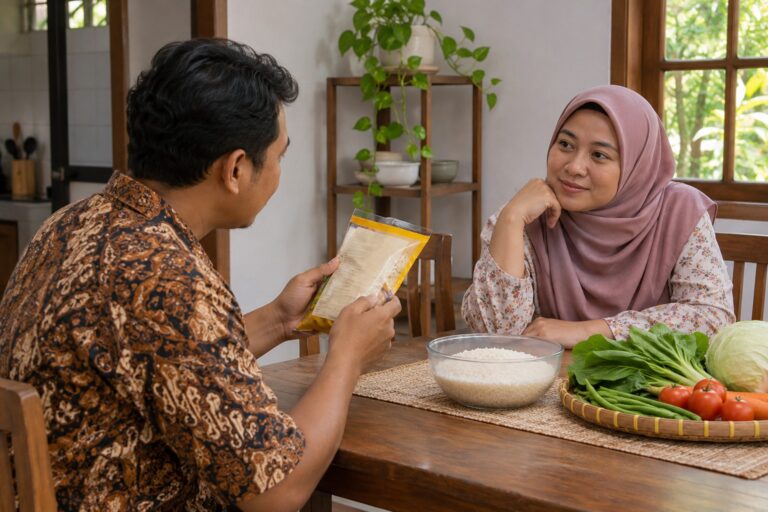
The rice has its own spoon, but someone has left tongs from the neighbouring noodle tray across its rim. A small gluten-free sign does not explain whether staff have noticed, what happened earlier, or whether another portion is available away from the buffet.
Ordering gluten-free at a buffet means checking both the food and its route to your plate. Before serving yourself, speak with someone who can confirm the ingredients, explain the serving arrangements and discuss an alternative if the shared display leaves important questions unanswered.
For choosing a venue and contacting it before your visit, use our guide to planning a gluten-free restaurant visit in Indonesia. Here, the focus is what happens at the buffet itself.
Speak to staff before picking up a plate
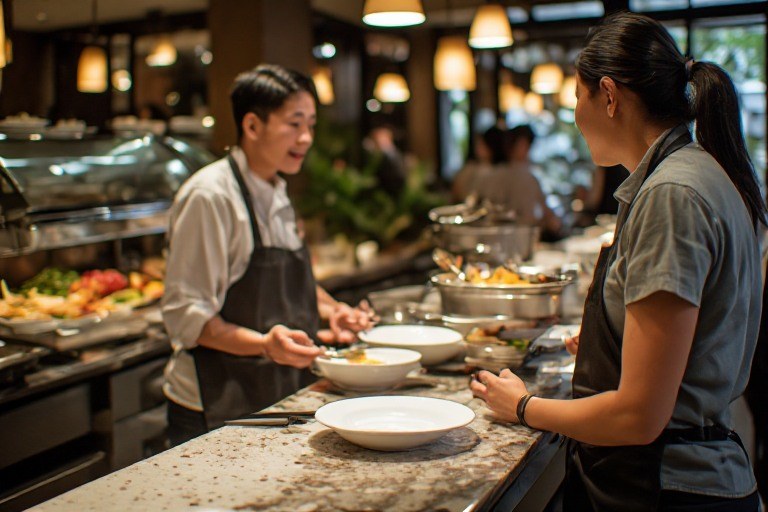
Ask the host or server who can discuss gluten-free requirements for that particular service. A chef or manager may need to check recipes and preparation; the person directing the queue may not have that information.
Explain your actual dietary requirement, including celiac disease or a separate allergy where applicable. Then ask which dishes they can discuss in detail, rather than requesting a quick assessment of everything on display.
A useful opening is: “Could someone help me check the ingredients and handling of a possible meal before I use the buffet? If the shared trays are unsuitable for my requirements, can the kitchen prepare a separate portion?”
Cross-contact can introduce gluten during preparation or serving even when it is not an intended ingredient. The NIDDK dietary guide explains this distinction and recommends discussing ingredients and preparation with restaurant staff. A buffet conversation needs to cover the serving stage as well as the kitchen.
Check a possible meal, including sauces and garnishes
Choose a few candidate dishes and ask staff to trace their components. Plain-looking food still needs an explanation: rice may have added seasoning, vegetables may be dressed, and grilled meat may already be marinated.
At a buffet in Indonesia, questions might include the kecap, bumbu mix, stock powder, sambal, coating or crispy garnish used in that particular dish. These names identify things to investigate; they do not establish whether the kitchen’s actual ingredients contain gluten.
Ask whether the current packaging can be checked when a bottled sauce or seasoning is central to the answer. Clarify whether a topping is added separately or has already been mixed through. Leaving off a final sauce does not resolve an earlier marinade.
Keep recipe information separate from handling information. “The ingredients have been checked” is helpful, but you still need to understand how that food was cooked, transferred and served. Our guide to questions about restaurant gluten cross-contact covers the preparation conversation in more detail.
Look at how the buffet is actually being used
Once staff have identified possible dishes, look at their position and serving tools. The useful question is whether the arrangement keeps those foods separate throughout service, including when guests help themselves.
Notice whether bread or crackers sit over other dishes, whether guests reach across trays, and whether each utensil stays with its intended food. Include condiment bowls and topping stations in the conversation. A separate main dish can still be served with a shared sauce ladle or garnish spoon.
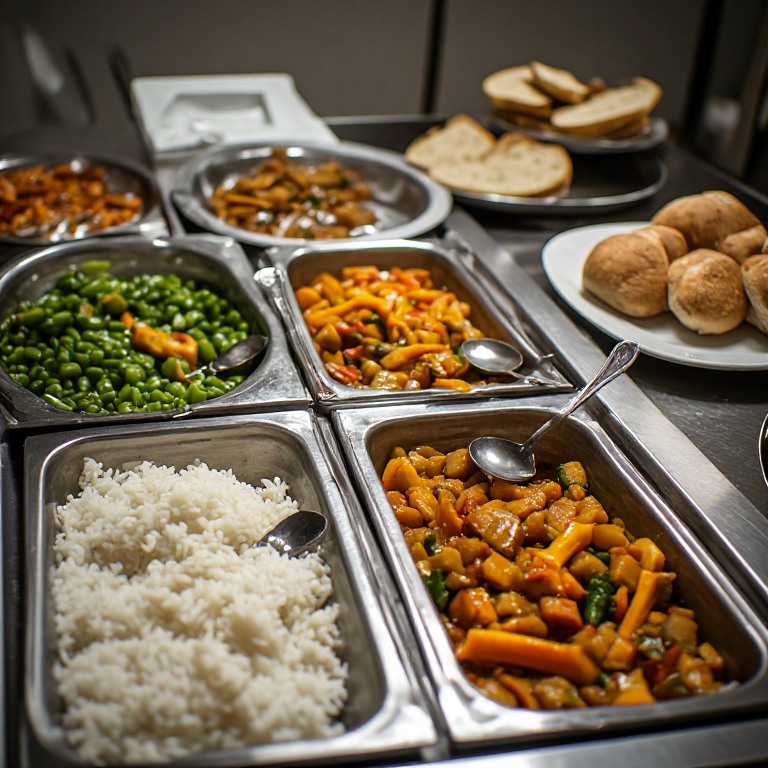
Celiac Canada’s cross-contact guidance specifically flags buffets as a setting with substantial cross-contact concerns and suggests asking for a freshly made gluten-free plate directly from the kitchen. Its advice supports considering another serving arrangement rather than relying only on the display.
Use what you see to ask a precise question:
| What you notice | What to ask |
|---|---|
| A utensil has moved between dishes | “Has this utensil been used in both trays, and is another portion available away from this display?” |
| Bread or crackers share a platter with another food | “Can you provide that food separately, with its ingredients and handling checked?” |
| Sauces or toppings have shared serving tools | “Can my portion be served without using these shared containers?” |
| A separate gluten-free area is available | “How are its utensils and food kept separate during service?” |
A tidy display cannot tell you everything that happened before you arrived. Equally, a separate station is useful information about the layout, not a complete explanation of preparation and handling.
Ask what happens when trays are replenished
The buffet changes as service continues. Ask whether replacement food arrives in a different tray or is added to the existing one, and whether serving utensils are changed too.
If a utensil has been shared between foods, replacing the utensil alone leaves the history of the food unresolved. Ask staff what alternative they can provide rather than trying to select a portion from an apparently untouched corner.
A newly delivered tray also needs context. Was the recipe checked? How was it prepared and transferred? Will it use a separate serving tool? Freshly replenished food is not automatically a confirmed gluten-free arrangement.
Arriving early may give you more time to speak with staff and see the initial setup. Treat timing as a practical opportunity to communicate, rather than a substitute for checking the food and handling.
Discuss a plate prepared away from the shared display
Ask whether the kitchen can prepare and plate a meal before it reaches the guest-accessible buffet. Clarify whether staff mean a separately prepared portion or simply a plate collected from the same open trays.
For a separate portion, confirm the dish, sauces, preparation area, utensils and cooking equipment involved. Ask how it will be identified and delivered to you, and whether garnishes or accompaniments will be added afterwards.
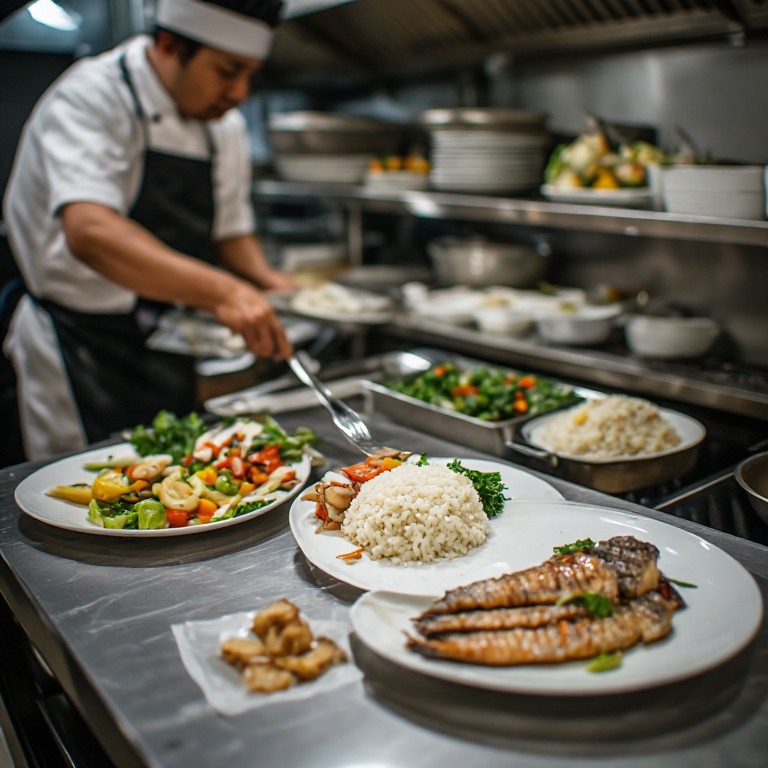
For example, in a hypothetical hotel breakfast conversation, a chef might offer eggs cooked to order. The next questions concern the pan, utensils, added ingredients and plating. “Made to order” describes timing; you still need the preparation details.
If bread is offered, discuss its warming or toasting arrangement separately. If a fried item is proposed, ask what else uses the fryer. Follow the actual meal rather than asking staff to describe every appliance in the kitchen.
Keep a short request ready
You can start the conversation in English with:
I need a gluten-free meal. Could someone check the ingredients and preparation of these dishes, including sauces and toppings? I also need to understand how the buffet utensils and replacement trays are handled. Could the kitchen provide a separate plate before the food reaches the shared display?
An Indonesian starting version is:
Saya memerlukan makanan bebas gluten. Apakah staf dapur bisa memeriksa bahan dan cara menyiapkan hidangan ini, termasuk saus dan topping? Saya juga perlu mengetahui bagaimana alat saji dan penggantian makanan di buffet ditangani. Apakah dapur bisa menyiapkan porsi terpisah sebelum makanan diletakkan di buffet bersama?
These are conversation examples, not medical translation cards. Add your actual diagnosis or separate allergy where relevant, and clarify unfamiliar terms with the person checking your meal.
Choose from the arrangement staff can explain
Before accepting the meal, bring the conversation back to the specific plate: what it contains, how it was prepared, and how it will reach you. If the proposed arrangement changes, ask about the change before eating.
If staff cannot explain an important ingredient or handling step, you can pause, request another meal whose preparation they can describe, or use your backup option. For a group booking or hotel stay, discussing alternatives before paying can make that choice easier.
A buffet does not require you to make a decision about every tray. You need enough information about one workable meal. Where that information remains incomplete, keep the uncertainty visible instead of treating a label, clean spoon or fresh tray as the missing answer.