
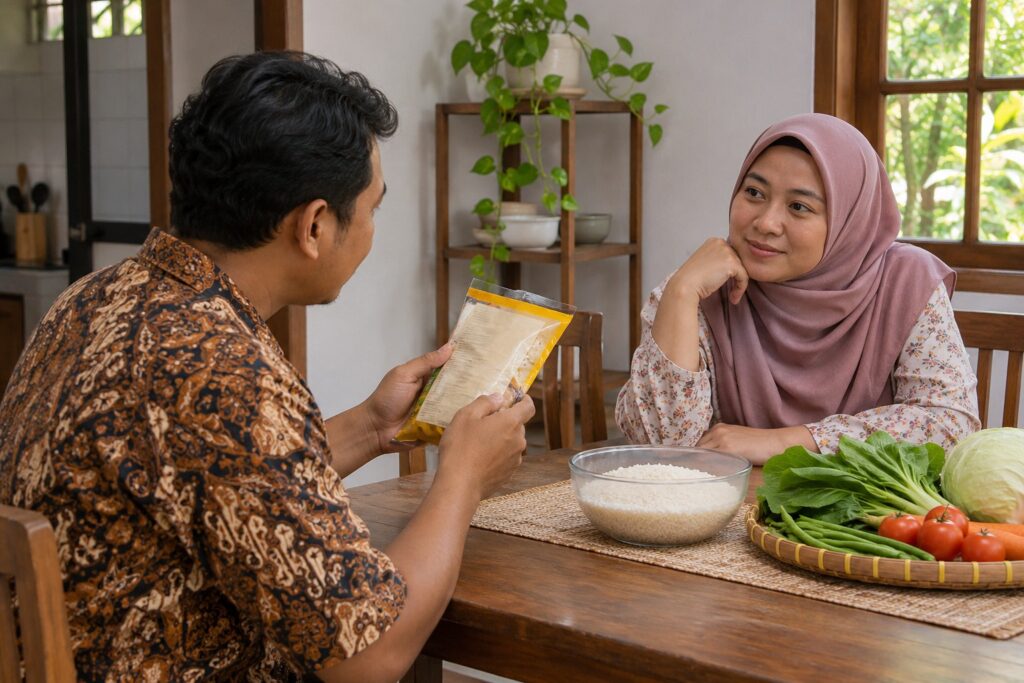
Your host says, “Of course—we’ll make something you can eat.” You appreciate the offer, but still need to discuss the sauce, the cooking utensils and who will put your portion aside. Finding the words can feel harder when the person cooking is someone you care about.
Talking to a host about gluten-free food works best when you make a specific request early and leave room for an honest answer. The aim is to agree on one meal arrangement the host understands and can realistically manage.
Start privately, before shopping and cooking
Contact the person preparing the food while there is still time to discuss ingredients and alternatives. A private message or short call gives both of you space to ask questions without an audience of relatives offering competing advice.
First establish who is cooking. The person inviting you might be coordinating dishes from several households rather than making the meal. Ask, “Will you be preparing the food, or should I speak with someone else about my portion?”
Then explain your actual requirement in plain language. Mention celiac disease only if it applies to you, and identify a wheat allergy or another allergy separately. You do not need to share a detailed medical history or claim a diagnosis to make a clear request.
A useful opening is:
Thank you for inviting me. I need gluten-free food, and I’d like to talk through one possible meal before you shop. Ingredients and preparation both matter for my requirements. Would you be comfortable discussing that, or would bringing my own meal make things easier?
This offers the host a choice before they have committed time and money. Avoid beginning with a long list of restrictions when you have not yet established what they can arrange.
For decisions about the gathering as a whole, including different meal arrangements, see planning gluten-free meals at family gatherings and shared events. Here, the focus is the conversation with the person hosting you.
Explain the ingredient and preparation questions separately
“I cannot eat bread” may be easy to understand, but it leaves the host guessing about sauces, seasonings and handling. Explain that you need to discuss both what goes into your food and how it is prepared and served.
Gluten occurs in wheat, barley and rye. The NIDDK dietary guide also explains that gluten cross-contact can happen during storage, preparation and serving. In practical terms, gluten can be transferred into food through contact with other food or equipment.
You could say:
Could we check the ingredients for my dish, including sauces and seasoning? I also need to discuss the surfaces and utensils used to prepare and serve it, because ingredients are only part of the arrangement.
Keep that explanation connected to the proposed meal. If the host offers chicken, rice and vegetables, start there. Ask about the chicken marinade, the seasoning added to the rice and any sauce or topping for the vegetables.
For an Indonesian family meal, you might ask to see the current packaging for the kecap, stock powder or seasoning mix being considered. These are components to check, rather than categories to declare suitable or unsuitable from their names alone.
Offer a manageable way to exchange information: “Could you send a clear photo of the ingredient list and any gluten or allergen information?” If a homemade sauce comes from another relative, ask whether that person can explain its ingredients. An unanswered question should remain unanswered until you have enough information to decide.
Turn “we’ll be careful” into a concrete arrangement
A reassuring intention becomes more useful when you connect it to a few specific tasks. Ask who will prepare your portion, what equipment they plan to use and how it will remain distinguishable until you eat.
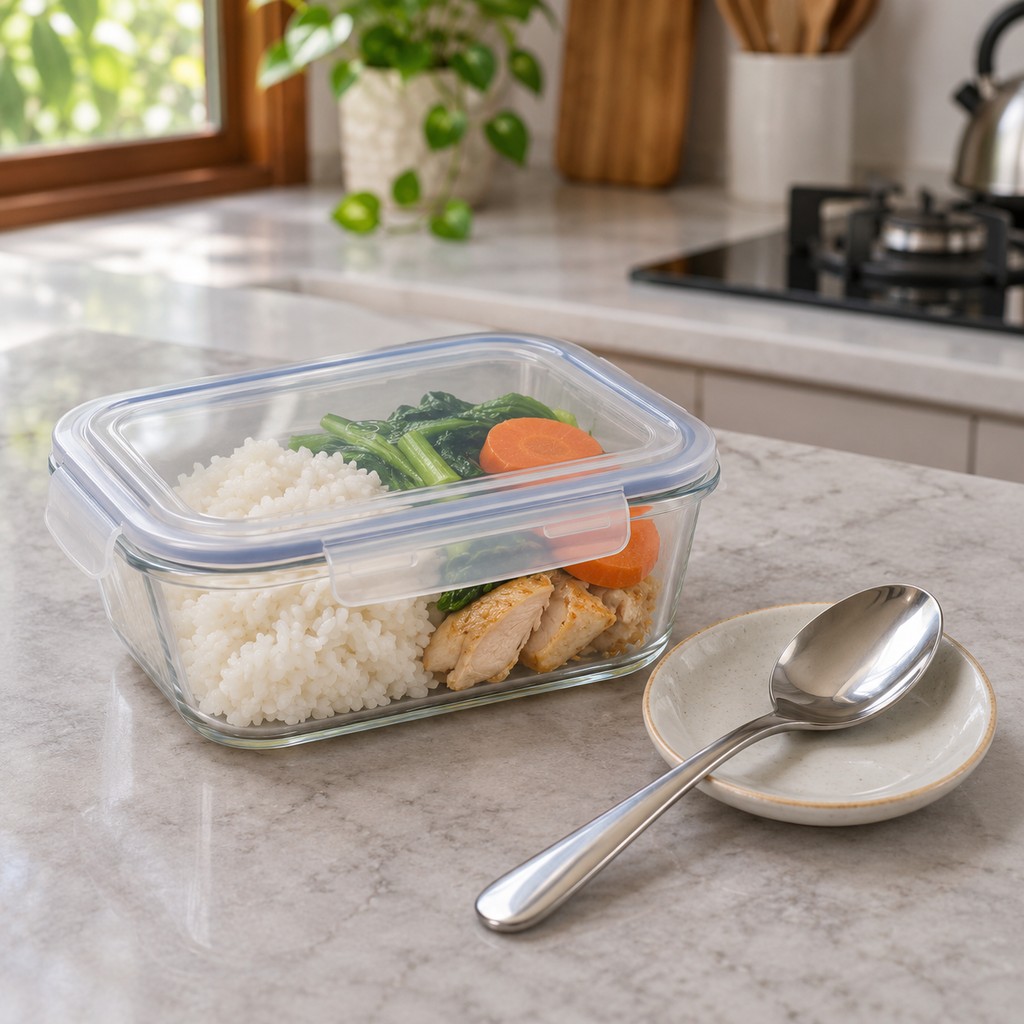
Coeliac UK’s home cooking guidance recommends cleaning preparation surfaces, pots, pans and utensils with hot soapy water. Use that guidance to discuss the work involved in your chosen dish, rather than asking the host to redesign the entire kitchen.
For example:
Would it work to prepare my portion using cleaned equipment and a cleaned work area, then keep it covered with its own serving utensil until we eat? Who would be able to look after that part?
Let the host explain the sequence. They may be able to prepare your portion before working on other dishes, or they may tell you the kitchen will be too busy to manage the request. Either answer helps you plan.
Include serving in the conversation. Ask whether your portion can be plated before communal serving begins, and agree who will identify it. A dish described as gluten-free still needs an understood serving arrangement; the description alone does not explain its handling.
If several relatives help in the kitchen, ask the host to pass the agreed instructions to the person actually preparing or serving your food. You should not have to repeat an unfamiliar arrangement to a new helper while everyone is waiting to eat.
Ask follow-up questions without making it personal
A vague reply often needs a narrower question. Thank the host for the information they have supplied, then identify the remaining detail.
If they say, “There’s no flour in it,” you might respond:
Thank you. Could we also check the sauce and seasoning? Those are the ingredients I still need to understand.
If they say, “We always make it this way,” try:
Could you tell me which ingredients you’ll use this time? A photo of the current packets would help me check the proposed dish.
If they say, “I’ll ask someone to do a separate plate,” ask:
Thanks—who will prepare that plate, and can we make sure they receive the ingredient and preparation details?
Keep your questions about the food and the arrangement. “Could we check this?” is usually more productive than debating whether a relative understands gluten-free eating well enough.
When someone cannot confirm a detail, avoid pressing them to give reassurance. You can say, “That’s useful to know. Let’s choose something we can clarify, or I can bring my meal.”
Give the host a comfortable way to decline
A host may want to include you while lacking the time, information or kitchen capacity to prepare the requested meal. Make it clear that an honest limitation is welcome.
Try:
Please tell me if this is too much to organize that day. I’d be happy to bring my own meal and eat with everyone. Could we agree where I can keep it and whether I’ll need to reheat it?
Bringing food works better when the host knows what you are bringing and what help, if any, it requires. Specify whether it is a complete personal meal or a dish for sharing. Do not leave them assuming your contribution replaces food for the whole table.
You can also acknowledge the social meaning of their offer without changing your requirements:
I really appreciate you wanting to cook for me. I still need these details before deciding what I can eat. If they’re difficult to establish, bringing food lets me join you without adding more kitchen work.
You do not need to promise to taste an uncertain dish to demonstrate gratitude. Thanking someone and choosing a different meal can happen in the same conversation.
Send one short message that preserves the agreement
After the conversation, summarize what you actually agreed. A brief written message helps when shopping, cooking and serving happen at different times or involve different people.
You can adapt this example:
Thank you for talking this through. We agreed on [dish] using [checked ingredients], prepared by [person] with [agreed preparation arrangements]. My portion will be [plated or kept separately] and served by [person]. Please message me before changing an ingredient or the preparation plan. If the arrangement becomes difficult, I’ll bring [alternative], which needs [any storage or reheating arrangement].
Include only details you have discussed. The message should record an agreement, rather than introduce additional instructions the host has never accepted.
For an Indonesian-speaking relative, a shorter starting message could be:
Terima kasih sudah mengundang saya. Saya perlu makanan bebas gluten. Boleh kita membahas bahan, bumbu, serta cara menyiapkan dan menyajikan satu porsi untuk saya sebelum belanja? Kalau sulit diatur, saya bisa membawa makanan sendiri supaya tetap bisa makan bersama.
This is a conversation opener, not a medical translation card. Add your actual requirements and discuss the details in the language you both understand.
Before the meal, ask whether anything has changed. If an ingredient or preparation arrangement is different, return to that specific question rather than treating the earlier agreement as confirmation of the new plan. A useful conversation leaves both of you knowing what will be served, who is responsible and what you will do if the plan cannot be followed.