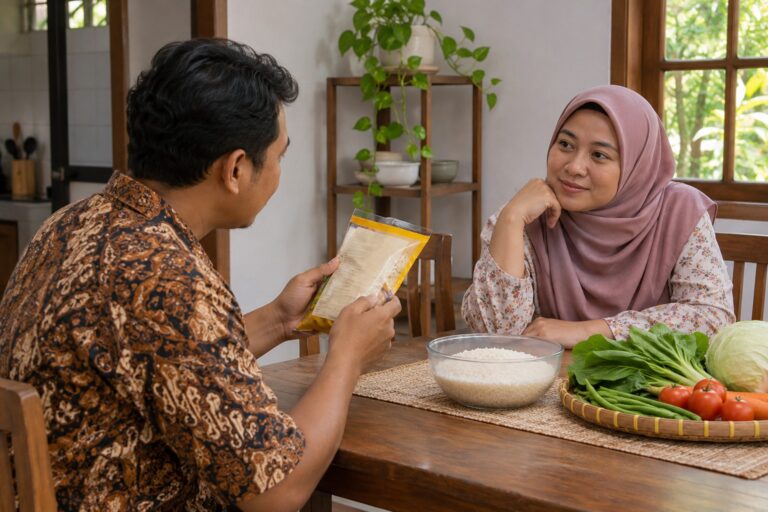
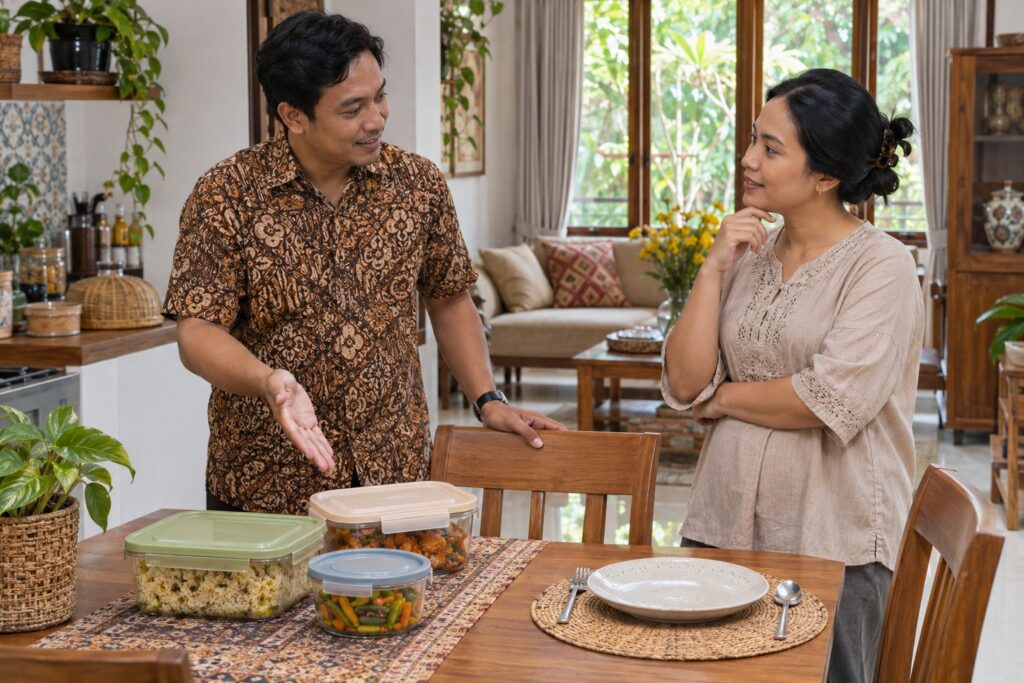
The host has offered to make something gluten-free, several relatives are bringing dishes, and nobody has decided who will serve them. The offer is welcome. What still needs arranging is how your meal will move from ingredients to kitchen to table.
Planning gluten-free meals at family gatherings works best when you agree on a specific meal and the responsibilities around it. A home dinner, wedding buffet and group outing involve different people and different opportunities to ask questions. You do not need to control the entire event, but you do need to understand the arrangement you will rely on.
Start with the host or organizer, choose a workable approach, and establish an alternative before the day becomes busy. That leaves more room to enjoy the gathering without having to resolve every food question at the table.
Define the meal arrangement before discussing dishes
First, establish who is actually responsible for the food. The person inviting you may be cooking, collecting dishes from relatives, ordering delivery or coordinating a caterer. Each arrangement needs a different conversation.
Ask when the meal will be served, whether it will be plated or shared, and who can answer ingredient and preparation questions. For a catered event, ask whether the organizer can connect your request with someone responsible for the kitchen and service.
Then explain your actual requirements. Mention celiac disease or a wheat allergy only if that accurately describes your situation, and identify separate allergies or other dietary needs explicitly. Do not assume that a gluten-free request also communicates halal requirements or another restriction.
Gluten-free planning involves both ingredients and handling. The NIDDK dietary guide explains that gluten cross-contact can occur during storage, preparation and serving. An ingredient list therefore answers only part of the question.
Keep the initial conversation manageable: what meal could work, who will prepare it, and what preparation and serving arrangements are possible? A specific proposal gives the host something useful to respond to.
Choose an approach the host can realistically manage
There are several ways to participate in a shared meal. Choose according to the kitchen, the number of contributors and the information available, rather than assuming that one arrangement suits every gathering.
| Approach | When it may be practical | What still needs agreement |
|---|---|---|
| A shared menu using checked ingredients | A host controls the menu and preparation | Ingredients, equipment, preparation and serving |
| A separately prepared and plated meal | The kitchen can manage an identified portion | Who prepares it, where it waits and who serves it |
| Food you bring for your own meal | The host has limited capacity or unanswered questions remain | Transport, storage, reheating and access at mealtime |
| A shared dish plus a separate personal meal | You want to contribute without relying on the shared table | Which food is for sharing and which portion remains reserved |
A shared menu may reduce the number of different ingredients the host handles, but it does not remove the need to discuss preparation. A separate plate is useful only if the person making it understands the arrangement. Bringing your own food requires somewhere appropriate to keep it and, if necessary, permission to reheat it.
For example, at a hypothetical family lunch, a host might offer to prepare rice, vegetables and a protein dish. You could agree on the exact ingredients and preparation, with your portion plated before communal serving. At a larger potluck with many contributors, bringing a complete personal meal may be easier to organize than checking every dish.
Give the host room to explain limitations. “I cannot manage separate preparation that day” is useful information. It allows you to make another arrangement without turning a generous invitation into an obligation the host cannot fulfill.
Check the proposed meal through its ingredients
Work through one candidate meal, including its sauces, seasoning, coatings, garnishes and accompaniments. A familiar dish name does not establish the ingredients used by a particular cook.
For an Indonesian family gathering, questions might concern the actual kecap, stock powder, seasoning paste or bottled sauce used in the proposed dish. Ask to see the current packaging where the decision depends on a packaged ingredient. Avoid deciding from a brand name, memory or the appearance of the finished food.
Homemade components need the same clarity. If a relative supplies a marinade or sauce, ask who made it and whether the ingredients can be identified. “Made at home” describes its origin; it does not resolve what went into it.
Keep the conversation focused on the meal you intend to eat. You rarely need to investigate every dish at a large celebration. If a component cannot be clarified, discuss a simpler alternative before preparation begins.
Agree that substitutions need another conversation. A checked sauce being unavailable at the shop is a reason to contact you, rather than quietly use a similar-looking replacement. Make it easy to say, “We could not get that ingredient—what would work instead?”
Assign preparation and handoff responsibilities
An agreed menu needs someone to carry out the preparation arrangement. Identify who will check the ingredients, prepare your portion and keep it distinguishable until service. In a busy kitchen, those may be different people.
Discuss the equipment and work area needed for the chosen dish. Coeliac UK’s home cooking guidance recommends cleaning surfaces and cooking equipment and using separate condiments or clean cutlery for shared spreads. Apply those principles to the actual tasks involved, rather than issuing a long list unrelated to the meal.
For instance, if the host plans to prepare your vegetables before assembling bread-based dishes, agree where the vegetables will be kept and which utensils will be used afterwards. The useful detail is the sequence and handoff, not simply a promise to “be careful.”
A short written note can preserve the arrangement:
- The agreed dish and checked ingredients.
- The person responsible for preparation.
- How the portion will be stored or held before service.
- The person who will identify and serve it.
- What happens if an ingredient or preparation detail changes.
For spreads, sauces and food kept in shared containers, our guide to organizing shared condiments and food storage explains the container and utensil routine in more detail.
If you are bringing food, agree on the handoff too. Tell the host whether it is ready to eat, needs refrigeration or requires reheating. Confirm that the necessary facilities will be available rather than arriving with a meal that depends on an occupied oven or inaccessible refrigerator.
Plan serving before the shared table fills up
Serving deserves its own arrangement, especially when guests help themselves. Decide whether your meal will be plated in the kitchen, held separately for collection or placed on the shared table with an agreed serving routine.
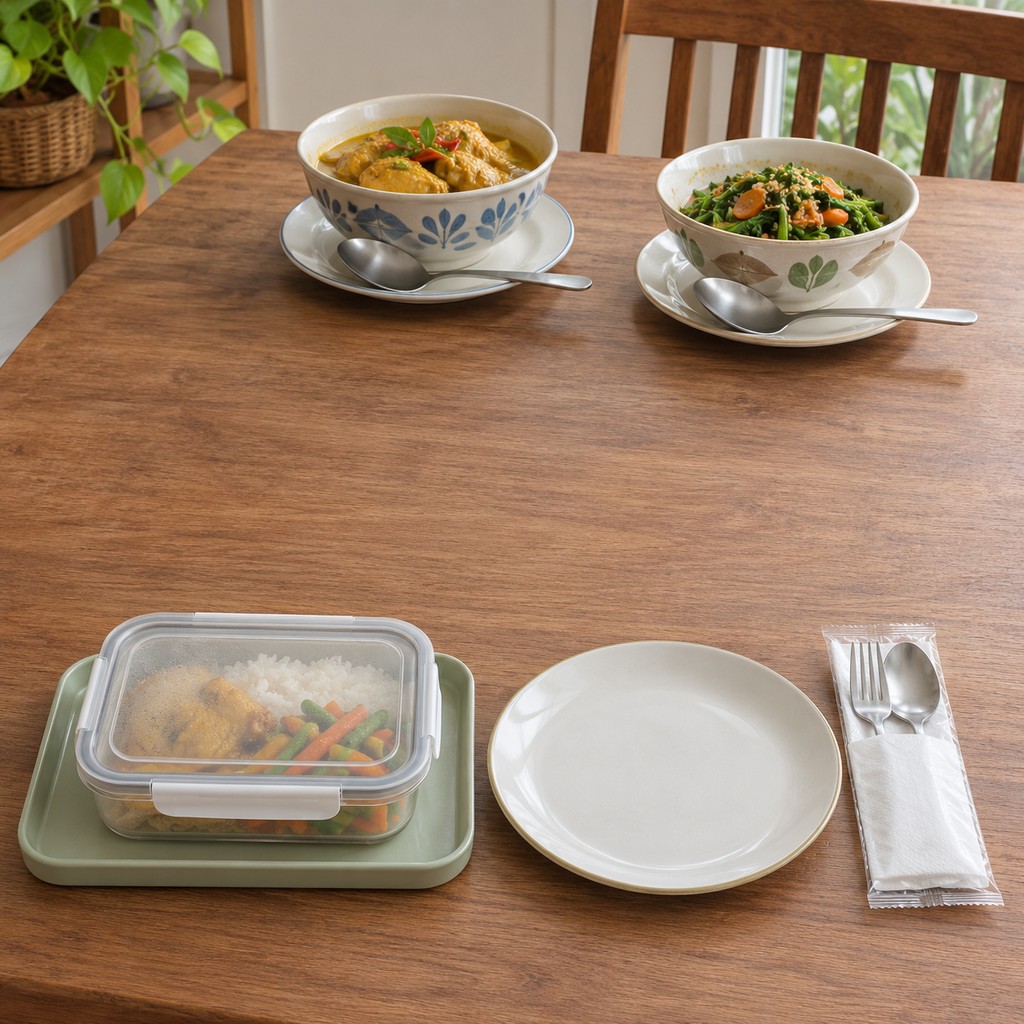
Beyond Celiac’s guidance for entertaining gluten-free guests advises cleaning or replacing utensils used on gluten-containing food and providing separate portions of sauces or condiments. These are practical measures to discuss with the person managing service.
For a family-style meal, explain which utensil belongs to each dish and where your reserved portion will remain. Positioning a dish apart from bread may make the arrangement easier to follow, but distance alone does not establish how it has been handled.
At a potluck, a dish can leave your control once it reaches the table. If you need a personal portion, consider setting it aside before the dish becomes communal. Clarify that the reserved container is your meal rather than another contribution for everyone to open.
Avoid relying on a small label to explain the whole arrangement. A label can identify food, while a brief conversation tells the host or serving helper what to do. Guests should not have to interpret an unexplained color code.
If a used utensil enters a reserved dish or its handling becomes uncertain, tell the relevant person and use the alternative arrangement while the question is resolved. Removing a visible crumb does not establish the suitability of the remaining food.
Make the backup usable at the event
A backup should cover an actual meal gap. A snack may help with a delay, but it may not be what you want to rely on through a long wedding reception or family celebration.
Choose food you have assessed against your requirements and can transport, store and eat under the conditions available. Follow its storage instructions; a gluten-free designation does not replace ordinary food-safety requirements. If refrigeration or reheating is necessary, confirm access in advance.
For catered events, ask whether outside food is permitted and how an independently supplied meal would be handled. Do not assume the venue can refrigerate it, heat it or provide preparation equipment simply because it hosts meals.
Agree on a point at which you will use the backup. That might be when the caterer cannot confirm the preparation arrangement, an agreed meal is missing, or a substitution introduces unanswered questions. Having that decision established can prevent repeated negotiation while everyone else is being served.
Make the alternative socially workable too. Tell the host privately that bringing food is a way to participate without adding kitchen work. You might say, “I’m happy to bring my meal if that makes the day easier. Could we agree where I can keep it and when I can eat with everyone?”
Adapt the plan to the type of gathering
The same planning framework can support different events, but the person responsible and the amount of advance coordination will change. Put your effort where information or responsibility could otherwise be lost.
Family meals and potlucks
At a home gathering, speak with the person doing the cooking rather than relying entirely on messages passed through relatives. If several people contribute, choose the dishes you will rely on and identify their cooks. There is no need to make the entire guest list responsible for your meal.
A potluck contribution can be separate from your personal food arrangement. Bringing enough to share does not require you to rely on that dish after communal serving begins. You can contribute to the table and still keep an agreed portion aside.
Weddings, conferences and other catered events
Ask the organizer how dietary requests reach the caterer and how your meal will be identified during service. A note on an RSVP records a request; it leaves the practical preparation and service questions to be answered.
Confirm the event date, meal and guest name associated with the arrangement. Ask who you should approach on arrival and what happens if the menu changes. For a long event, remember that refreshments and breakfast may be separate from the main meal request.
Group outings and shared restaurant bookings
Before a group commits to a venue, explain which food questions you need answered and whether you may need another meal arrangement. Agree on timing and flexibility so that a late venue change does not leave you with no practical option.
If the gathering involves an overnight stay or a longer journey, the framework for planning gluten-free travel from Indonesia helps connect the event meal with transport, accommodation and arrival food.
Confirm changes briefly on the day
On arrival, find the person named in the plan and ask whether anything has changed. Confirm the dish, any substitutions and how your portion will reach you. This can be a short conversation when the advance arrangement is clear.
If someone offers a different meal, ask about that meal’s ingredients and preparation rather than transferring the earlier agreement to it. Where an important answer remains unavailable, use your alternative without treating uncertainty as confirmation.
A helpful response to an unexpected change is straightforward: “Thanks for letting me know. I can use the food I brought, so you do not need to improvise another dish.” That acknowledges the effort while keeping the meal decision manageable.
The most useful plan is one another person can explain: this is the agreed meal, this person is responsible, this is how it will be served, and this is the alternative if arrangements change. Once those details are settled, the food needs less attention and the gathering can have more.
This is general planning information, not an assessment of an individual meal or medical need. Follow appropriate professional guidance for celiac disease, wheat allergy or other personal dietary requirements.