The alarm goes off late, someone else is making toast, and the breakfast you had in mind still needs cooking. A useful plan accounts for that morning as well as the mornings when everything runs on time.
Planning gluten-free breakfasts starts with choosing a few combinations you can repeat using ingredients you have checked. Then decide what happens the night before, what remains for the morning and what you will eat when the first option falls through. You do not need a different breakfast every day to make the routine workable.
Choose breakfast around your actual morning
Start with the time and equipment available between waking up and leaving home. Count preparation, eating and washing up. A meal that takes little cooking can still be awkward if it needs several containers, a crowded hob or equipment someone else is using.
Choose one breakfast for a morning with almost no preparation time and another for a morning when you can cook. If you sometimes eat after arriving at work or study, treat that as a separate arrangement: check where the food will be kept and what equipment you can use.
Your preferences matter too. If you enjoy a savoury breakfast, you can build the routine around rice or potatoes rather than searching for a replacement breakfast cereal. If you prefer something cold, choose a combination that can stay refrigerated until you eat it. Select quantities according to your appetite and individual dietary needs; these are planning examples, not prescribed portions, same like planning gluten-free meals for shared events.
Build two or three repeatable combinations
Think in components: the main food, something you enjoy alongside it and any finishing ingredients. Keeping the base familiar lets you vary breakfast without starting the ingredient checks again from scratch every morning.
| Breakfast approach | Possible combination | What to resolve beforehand |
|---|---|---|
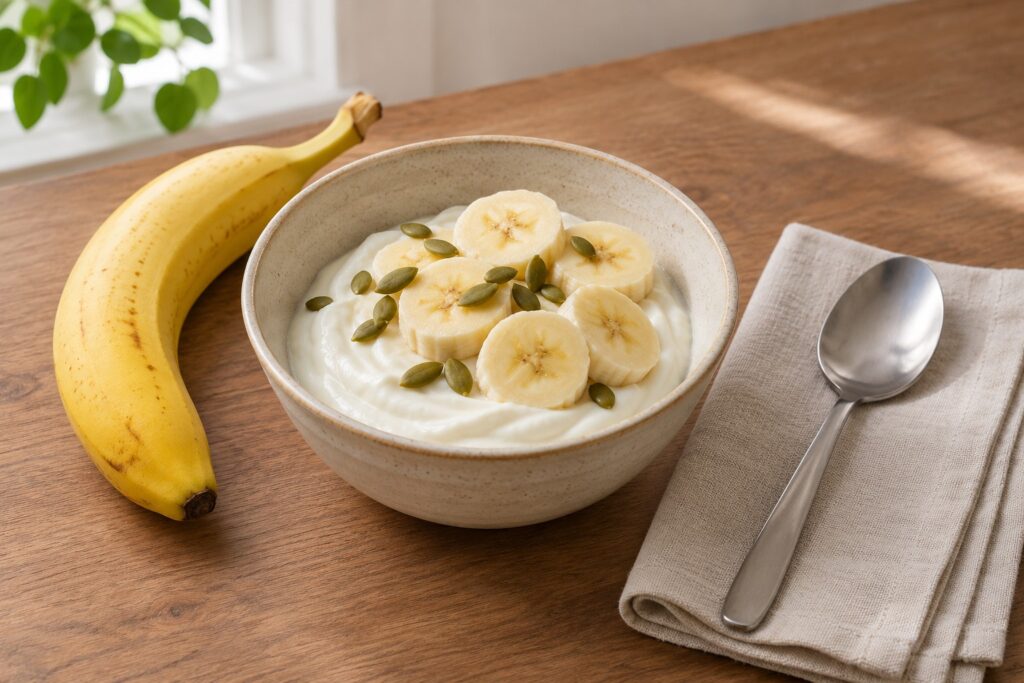
| Cold assembly | Checked plain yogurt, banana and a suitable nut or seed topping | Each packaged ingredient, separate allergies and refrigeration |
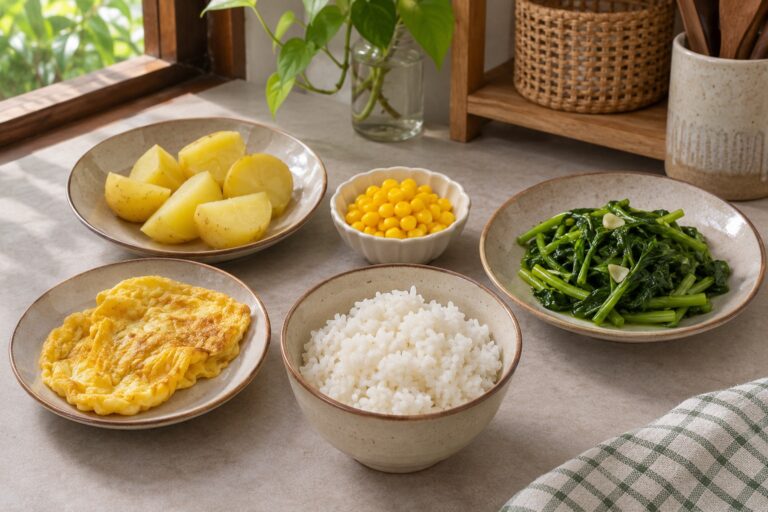
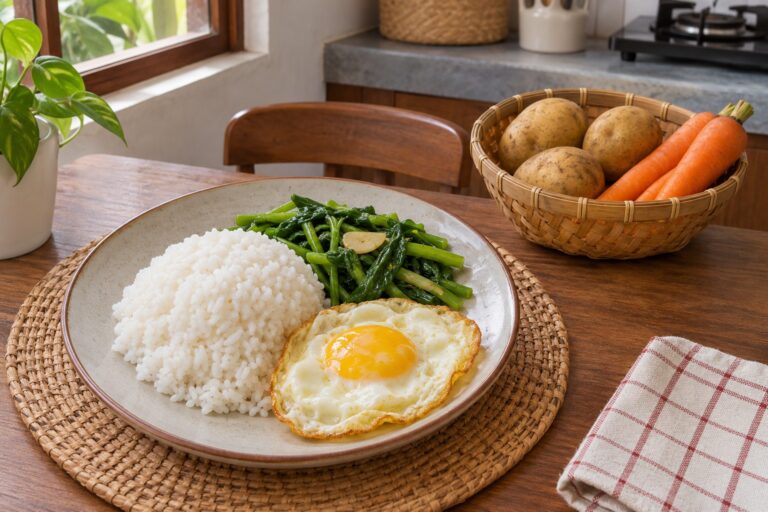
| Simple savoury meal | Plain rice, freshly cooked egg and cucumber | Rice storage and reheating, cooking equipment and any seasoning |
| Bread-based option | Gluten-free bread with a checked spread and fruit | Current bread and spread labels, storage instructions and preparation equipment |
| Warm alternative | Plain potatoes with an accompaniment you already use | Advance preparation, storage and any coatings, sauces or seasoning |
Plain rice and potatoes are naturally gluten-free, but added ingredients can change the assessment. The NIDDK dietary guide distinguishes plain foods from versions with additives or seasonings. A familiar dish name does not tell you everything that went into it.
For an Indonesian breakfast routine, check the actual kecap, seasoning mix, stock powder or topping you intend to use. Keep these decisions attached to the product and preparation, rather than treating every version of a dish as interchangeable.
Oats need their own decision. NIDDK notes that cross-contact with gluten-containing grains is common and advises people with celiac disease to discuss oats with their doctor or dietitian and use gluten-free oats if included. Ordinary oats should not become an automatic shortcut simply because overnight oats are convenient.
Check ingredients before the morning rush
Do the package reading when you shop or put groceries away. Read the current ingredient information and relevant gluten-free labeling rather than relying only on the brand name or a previous purchase. If information is unclear, leave that product out of your immediate breakfast plan while you seek clarification.
Check the extras as well as the main food. Bread may be the obvious purchase to investigate, while a cereal topping, flavoured yogurt, spread or drink powder gets added without the same attention. A shorter list of checked components makes a repeatable breakfast easier to manage.
Keep original packaging available when decanting food into storage containers. You may need its ingredients, storage directions or manufacturer details later. If a replacement product arrives in a grocery order, assess it before it enters the routine rather than assuming it matches the usual item.
Separate dietary requirements still need separate checks. A gluten-free choice does not, by itself, answer questions about milk, nuts or other allergies, or halal requirements.
Move decisions to the night before
The most useful evening preparation removes a specific morning obstacle. Set out clean dishes, choose the combination and put the necessary shelf-stable ingredients together. Keep refrigerated components in the refrigerator until needed.
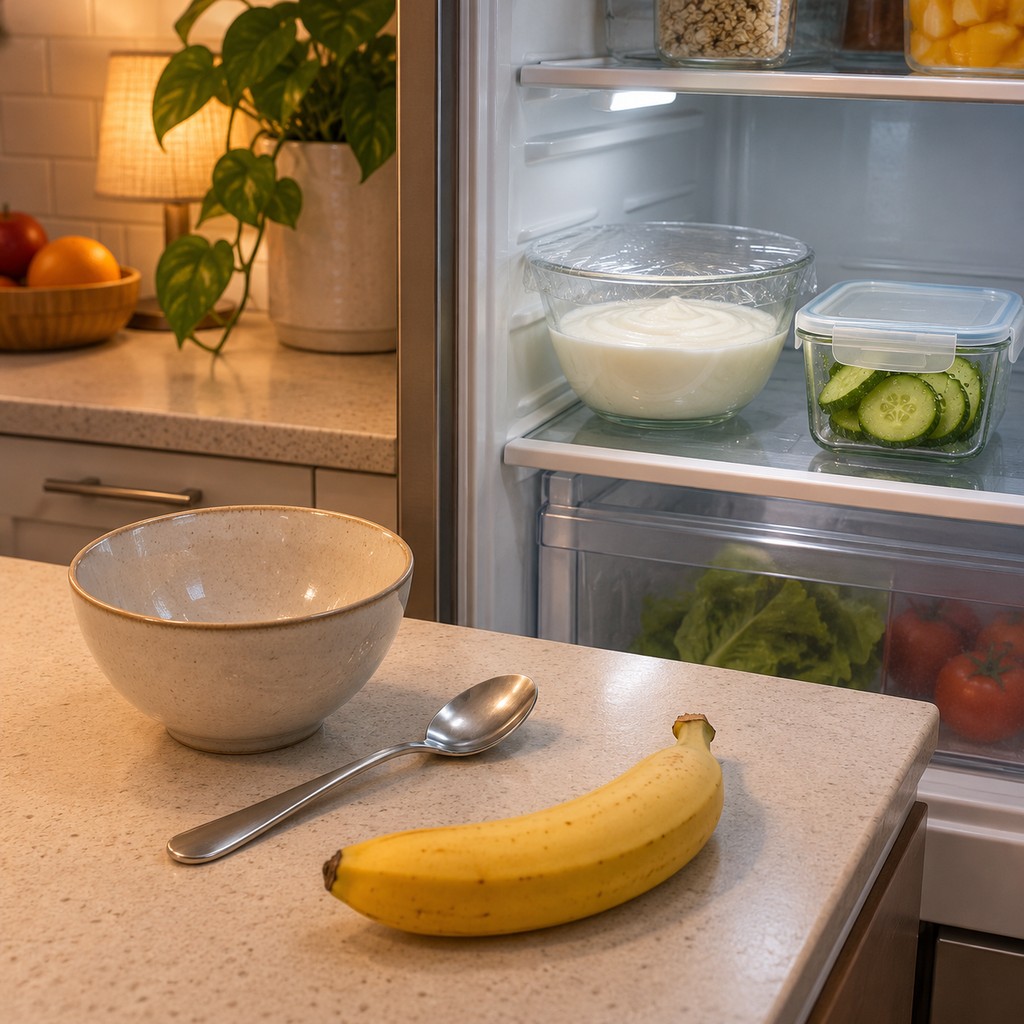
For example, a hypothetical household could alternate a yogurt-and-fruit breakfast with rice and egg. Before bed, the person eating breakfast chooses which one fits the next day’s schedule. On the cold-breakfast morning, assembly is the remaining task. On the savoury morning, the rice storage and reheating arrangement is already settled, leaving the egg to cook.
Avoid preparing a whole week of perishable breakfasts without checking suitable storage guidance for the actual foods. Preparing less can be more practical if it prevents forgotten containers or makes room in a small refrigerator.
Food handling remains important even when every ingredient meets your gluten-free requirements. CDC food-safety guidance recommends refrigerating perishables within two hours, or within one hour when exposed to temperatures above about 32°C. Divide warm leftovers into small, shallow containers and refrigerate promptly rather than leaving them on the counter overnight. Keep the refrigerator at 4°C or below, and reheat leftovers to 74°C.
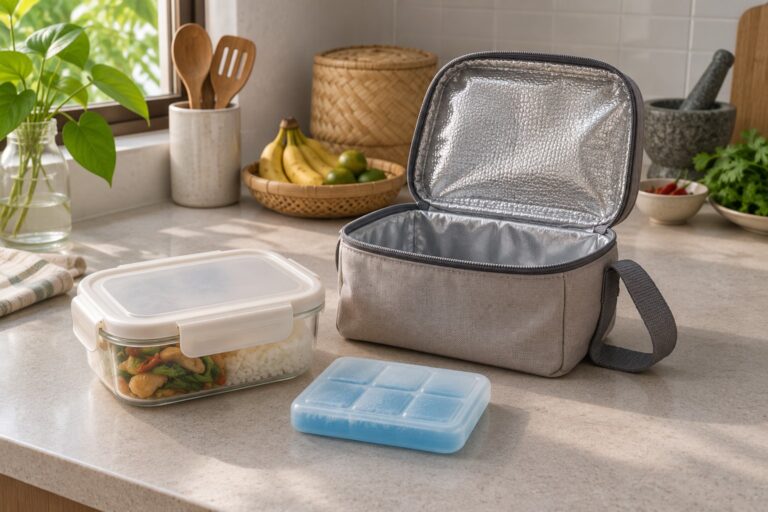
These are US public-health handling recommendations, not Indonesian labeling rules. Follow applicable product storage instructions too. If breakfast travels with you, arrange appropriate cold storage for perishable components rather than assuming the commute ends their storage needs.
Make the shared-kitchen routine specific
Look at the steps your breakfast actually uses: the work surface, spoon, spread container and any cooking or toasting equipment. Agree how those items will be handled when other household members are preparing gluten-containing food.
NIDDK explains that gluten cross-contact can occur during storage, preparation and serving, and recommends separate storage and preparation of gluten-free food in mixed households. Turn that principle into a manageable routine. Keep your breakfast ingredients in an identifiable place, use clean utensils and resolve access to suitable equipment before a busy morning.
A shared spread needs an agreed utensil routine; a jar reserved for your use is another possible arrangement. If bread-based breakfasts depend on an unresolved shared toaster setup, choose your cold or savoury alternative while you establish an equipment plan. Buying gluten-free bread alone does not resolve the preparation step.
Keep the arrangement easy for someone else to follow. “Use this container and this clean spoon” communicates more than a general request to be careful.
Keep a fallback that works without cooking
Choose a backup you can use under the conditions that usually disrupt breakfast. If the problem is an occupied hob, the alternative should not need that hob. If you have no refrigerator at your destination, a refrigerated breakfast is not a complete backup unless you have arranged suitable cooling.
One possibility is whole fruit with a checked shelf-stable accompaniment you already use, such as a suitable nut or seed butter. Check its ingredients, separate allergy suitability and storage instructions after opening. Decide whether it provides the breakfast you want or simply bridges a delay until a meal is available.
Keep the fallback visible in your shopping routine. Replace it after use and choose something you are willing to eat. An emergency option that nobody likes is easy to leave untouched until it is no longer usable.
Adjust the routine where it gets stuck
After a few ordinary mornings, notice what caused friction. Was the meal too involved, was a component missing, or did someone else need the same equipment? Change that part of the arrangement before adding more breakfast ideas.
You might keep the same combination but move ingredient checks to shopping day, choose a breakfast with less washing up or reserve the cooked option for mornings with more time. The aim is a short set of meals you can assemble with clear ingredients and a preparation routine you understand.
These suggestions support everyday planning rather than individualized medical or nutrition advice. The site’s Medical Disclaimer explains those boundaries. For your next busy morning, choose the first breakfast and its fallback before you go to bed.