Dinner becomes harder when every component needs a new decision: which seasoning to use, whether a familiar sauce has changed, what everyone else wants and how much cooking time remains. A routine helps by settling some of those questions before you are hungry.
Building a practical gluten-free meal routine in Indonesia starts with a small collection of meals you can prepare, shop for and adapt. Familiar staples can provide the starting point, but the finished meal also depends on added ingredients and handling. The aim is to make those checks repeatable without turning every dinner into a research project.
This guide concentrates on everyday organization. It does not prescribe portions, diagnose a condition or replace individual dietary guidance.
Start with the meals your week actually needs
Before choosing dishes, identify where your current routine breaks down. Perhaps breakfast is rushed, lunch depends on an uncertain food order, or dinner becomes difficult after a long commute. Solve the recurring gap first rather than designing an entirely new weekly menu.
Write down which meals you normally prepare at home, carry with you or obtain elsewhere. Add the equipment and time available for each. A lunch that requires reheating is only useful if you can access suitable reheating facilities; an elaborate breakfast is unlikely to help on a morning when you barely have time to sit down.
For a hypothetical household, the first priorities might be a breakfast requiring little preparation, a dinner that produces a planned extra portion and an alternative for evenings when cooking is impractical. Another household might need lunches for different work schedules. Neither needs to copy the other’s plan.
Choose a realistic starting commitment. You could establish weekday breakfasts and a few home dinners before expanding the routine. Leave room for preferences: a meal that meets your requirements but nobody wants to eat is unlikely to become a dependable habit.
Build a small set of meal combinations
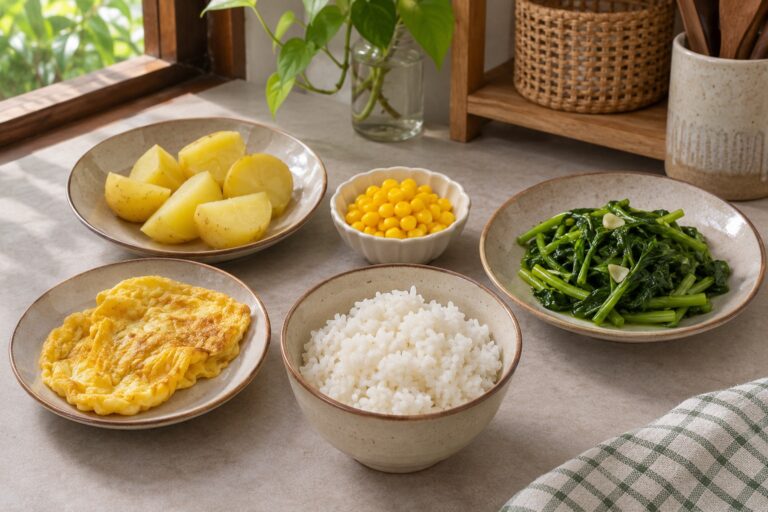
Think in components rather than collecting a long list of recipes. Choose a staple, a protein component, vegetables or fruit as appropriate, and checked seasonings. This is an organizational tool, not an individualized nutrition formula.
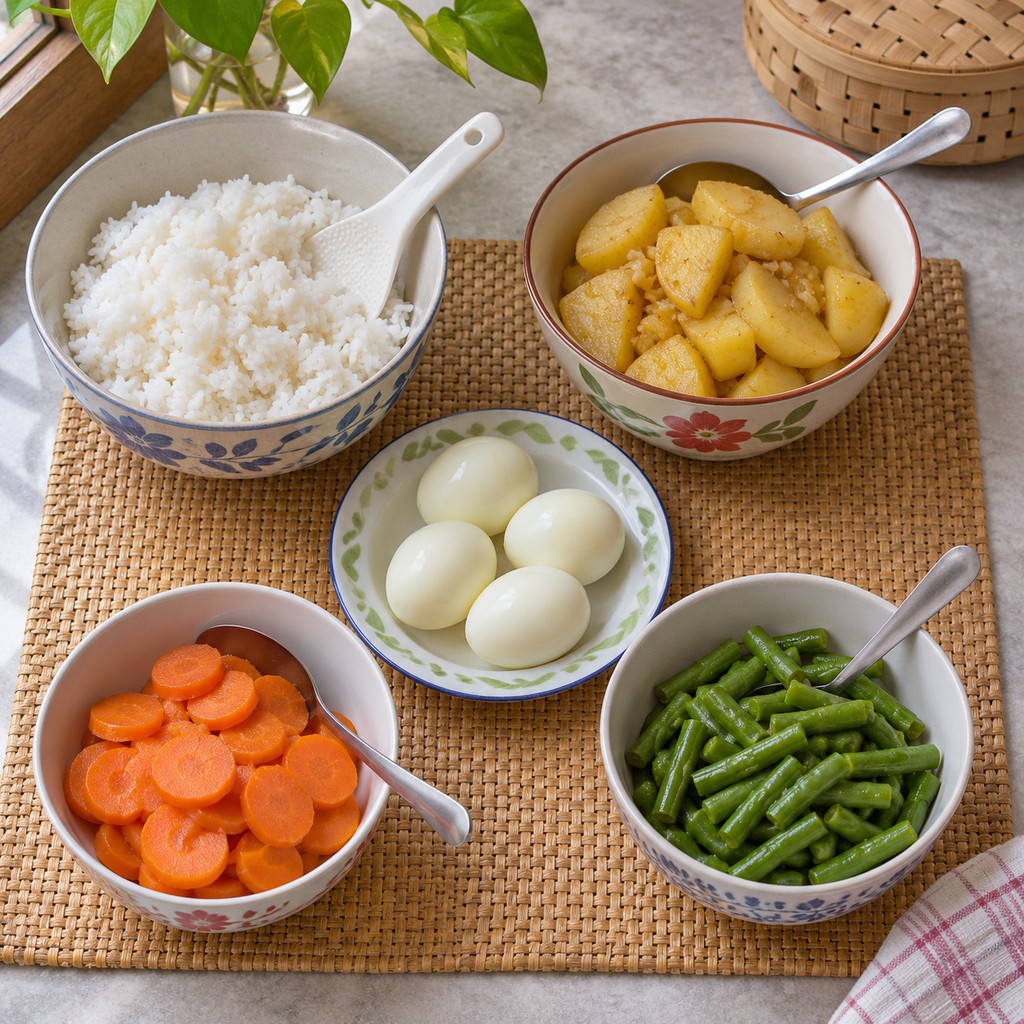
Plain rice and potatoes are naturally gluten-free, as are many unseasoned foods such as vegetables, meat and fish. Added ingredients can change that assessment. The NIDDK dietary guide supports distinguishing plain foods from processed or seasoned versions.
The following combinations are planning examples. Each assumes that ingredients and preparation have been checked for your requirements; none establishes that a restaurant dish or packaged product is gluten-free.
| Meal starting point | Components to organize | Details to resolve |
|---|---|---|
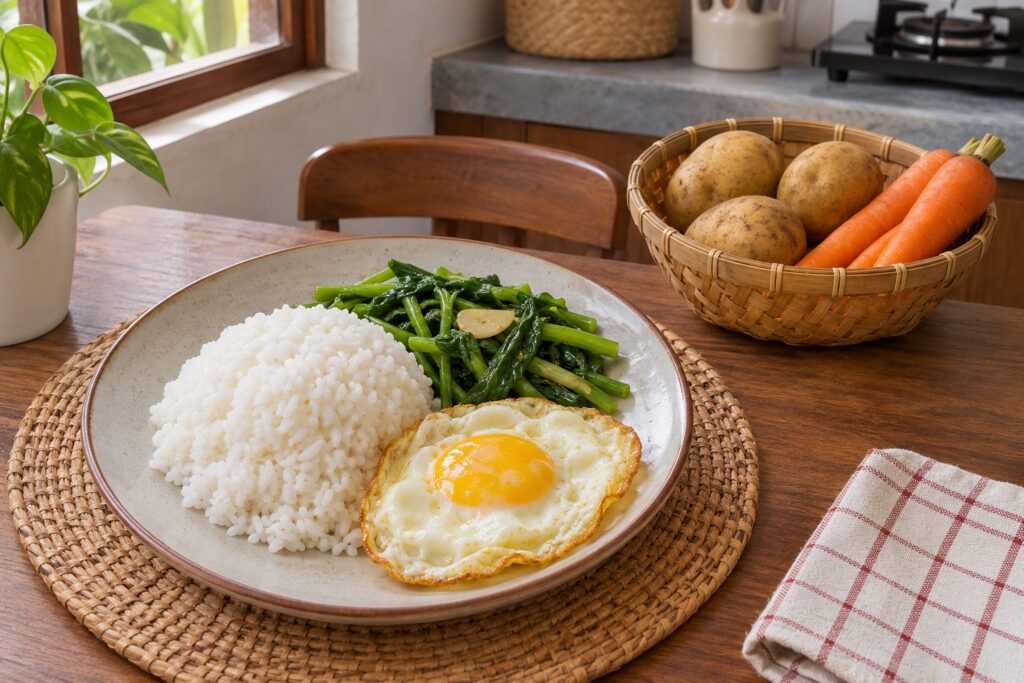
| Rice with egg and vegetables | Plain rice, egg, vegetables and selected seasoning | Cooking ingredients, sauce and preparation utensils |
| Potatoes with fish and vegetables | Potatoes, plain fish and a vegetable side | Coating, marinade, stock and accompaniments |
| Rice with tofu and vegetables | Rice, tofu and vegetables prepared with checked ingredients | Tofu ingredients, seasoning and any previous frying or preparation |
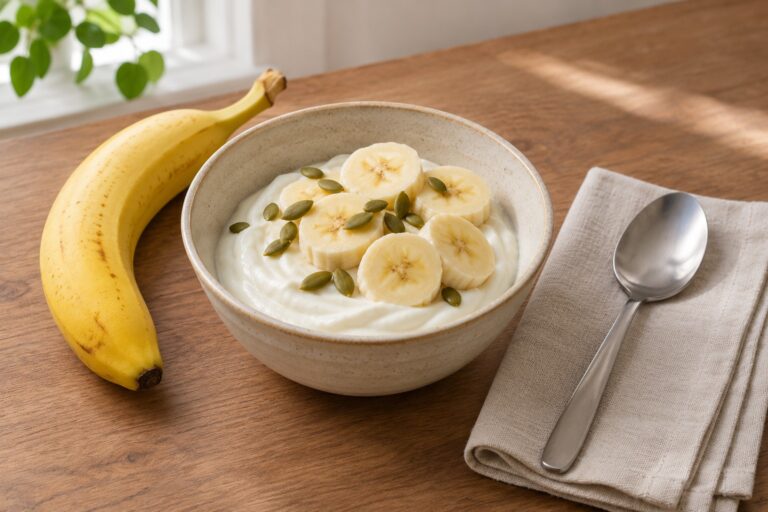
| A simple breakfast plate | A suitable staple, an egg or another chosen component, and fruit | Packaged additions, spreads and shared preparation |
Keep enough overlap to simplify shopping. Vegetables selected for dinner might also fit another meal; a checked seasoning can serve several combinations. Change one component at a time when you want variety, rather than introducing several unfamiliar products into every dish.
The companion guide to using rice, potatoes and other staples develops the staple decision in more detail. Here, the useful question is whether each combination fits your actual week.
Turn ingredient checking into a shopping habit
Give recurring ingredients a clear place in your shopping process. A short note can record the exact product, what information you checked and any unresolved question. Keep “used before” separate from “current package checked.”
For packaged foods, read the current ingredients and relevant gluten-free or allergen information. When information is unclear, seek clarification from the manufacturer rather than filling the gap with an assumption. NIDDK recommends label reading and contacting manufacturers when gluten content is uncertain; its discussion of US labeling rules should not be treated as Indonesian law.
In an Indonesian meal plan, useful items to examine include the kecap, sauces, stock powders, seasoning mixes, coatings and ready-made accompaniments you actually use. Their names alone do not establish a particular product’s composition. Likewise, knowing that a dish starts with rice does not answer what went into its seasoning.
Divide the shopping list into ingredients already selected for the week’s meals and products still needing investigation. If an unresolved item is essential to tonight’s dinner, change the plan before checkout. You can return to researching that product when the meal no longer depends on an immediate answer.
For ingredients sold loose or without enough information, ask what the seller can establish about composition and handling. If the answer cannot resolve your requirements, choose an alternative you can assess. A familiar appearance is not a substitute for missing information.
Make the kitchen arrangement repeatable
A meal routine needs a preparation routine alongside it. Decide where ingredients belong, which utensils you will use and how your portion will move from preparation to serving. Agree on those arrangements with anyone sharing the kitchen.
Cross-contact can introduce gluten during storage, preparation or serving. NIDDK advises separate storage and preparation of gluten-free foods in households also handling gluten. Translate that principle into specific household arrangements rather than relying on everyone to remember a general request to be careful.
For example, identify a storage area for your checked ingredients and serving utensils for the meal. Discuss how shared condiments will be used and what happens when someone prepares bread or another gluten-containing food at the same time. Establish the preparation sequence before the kitchen becomes busy.
You might choose a shared meal base that meets your requirements, with other additions handled separately. That arrangement only works when the ingredients and handling of the shared base are suitable. Calling something the “plain portion” does not settle what went into it or how it was prepared.
Aim for instructions another household member can follow: which ingredients, which equipment and which serving arrangement. A workable routine should remain understandable when the person who usually cooks is unavailable.
Match preparation to storage and your schedule
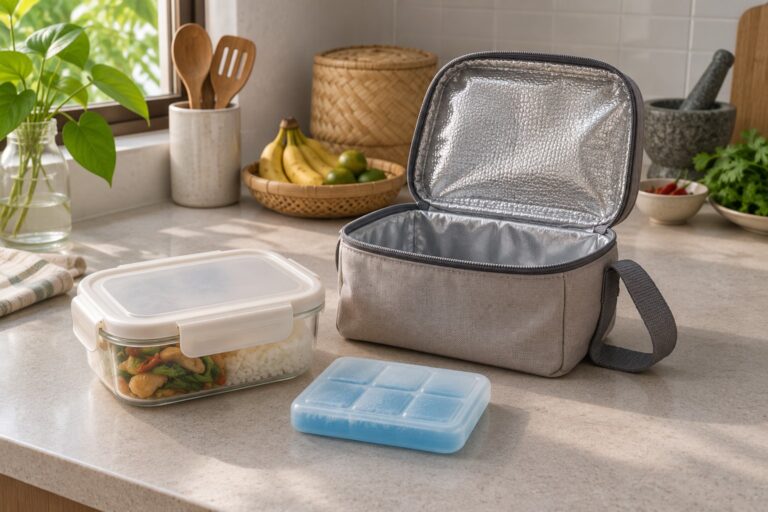
Preparing components ahead can reduce the work needed at mealtime, but make the storage plan before cooking extra food. Consider refrigerator access, transport and when the food will actually be eaten. A large batch is not useful if you lack a suitable way to store it.
The WHO Five Keys to Safer Food advises keeping food at safe temperatures, refrigerating cooked and perishable food promptly, preferably below 5°C, and not leaving cooked food at room temperature for more than two hours. Gluten-free ingredient checks do not replace these general food-safety measures.
Organize preparation around a defined use. If you intend to carry a portion to work tomorrow, establish how you will keep it appropriately chilled during transport and storage. If those arrangements are unavailable, choose a different meal format rather than assuming a container alone resolves the problem.
Label prepared portions with their contents and preparation date so that household members can identify them. Follow applicable storage guidance for the actual food; this guide does not provide a universal refrigerator life for mixed meals.
Start with a modest amount of advance preparation and see whether it reduces effort. Washing or portioning suitable ingredients, organizing equipment and selecting tomorrow’s meal may help even when cooking a large batch does not suit your household.
Include meals outside the home in the same routine
A routine that assumes you will always cook is vulnerable to overtime, traffic and changed plans. Identify which meals regularly happen away from home and decide how you will approach them before they become urgent.
For a restaurant or food order, investigate a specific meal, including sauces, marinades, seasonings, toppings and preparation. Ask what can be confirmed and what remains unknown. A rice-based dish or an offer to omit one ingredient does not answer every question about the finished order.
Save useful details narrowly: the branch, dish, date and arrangement discussed. Treat that information as a starting point for the next conversation rather than a permanent approval of the venue. If the meal changes, the earlier answers may no longer cover it.
Use the same planning habit for occasional travel. Our framework for planning gluten-free travel from Indonesia connects meal arrangements with transport, arrival times and practical alternatives. Your everyday routine can supply the planning method, while the journey still needs its own arrangements.
Keep additional requirements explicit. A gluten-free request does not communicate a separate allergy, halal requirement or vegetarian preference. State what actually applies to you and ask about the proposed meal.
Keep a backup that requires little new work
Choose a backup meal whose ingredients you have already assessed and whose preparation fits the situation most likely to disrupt your plans. A cooking-intensive backup contributes little when the original problem is having no time to cook.
Consider several different disruptions: you cannot reach the shops, your usual product is unavailable, or you arrive home too late for the planned dinner. One alternative may cover more than one situation, but only if you have the ingredients, equipment and storage it needs.
A hypothetical pantry combination might use a checked packaged staple, a suitable canned protein or beans, and selected accompaniments. Product ingredients, preparation instructions and storage after opening still matter. Keep the plan attached to actual products you can assess rather than an abstract list of foods described as safe.
The planned guide to building a gluten-free backup meal from pantry ingredients explores that smaller task. Within the weekly routine, simply reserve a clear alternative and replace supplies after using them.
Adjust the routine around what you use
At your next shopping session, look at the practical results. Which meal was easy to repeat? Which ingredient remained unused? Which order required more investigation than expected? Use those observations to simplify the next plan.
If a meal repeatedly fails because of timing, change the preparation or the meal itself. If a specialty product goes unused, consider whether another checked ingredient would serve the same purpose. Compare usable quantities and effort rather than assuming either specialty products or home cooking will always be cheaper.
Keep some variety across meals, and seek a qualified dietitian’s help if you need individualized advice about nutritional adequacy, multiple restrictions or a medically required diet. This publication’s medical disclaimer explains the limits of its educational guidance.
Your next grocery list should connect to meals you intend to eat: their ingredients, preparation arrangements and an alternative for the busiest day. Once those decisions work in practice, add another combination. A useful routine grows from meals you can keep making.