A bag of plain rice and a packet of seasoned rice may look like two versions of the same dinner shortcut. Yet the second introduces extra questions about ingredients. Potatoes present the same distinction: choosing a whole potato tells you something different from choosing coated wedges or a ready-made potato dish.
Using everyday staples for gluten-free meals becomes more manageable when you separate three decisions: the base ingredient, everything added to it, and how the food is prepared. You can then build variety around familiar foods without assuming that every dish made from them has the same gluten-free status.
Separate the plain staple from the finished product
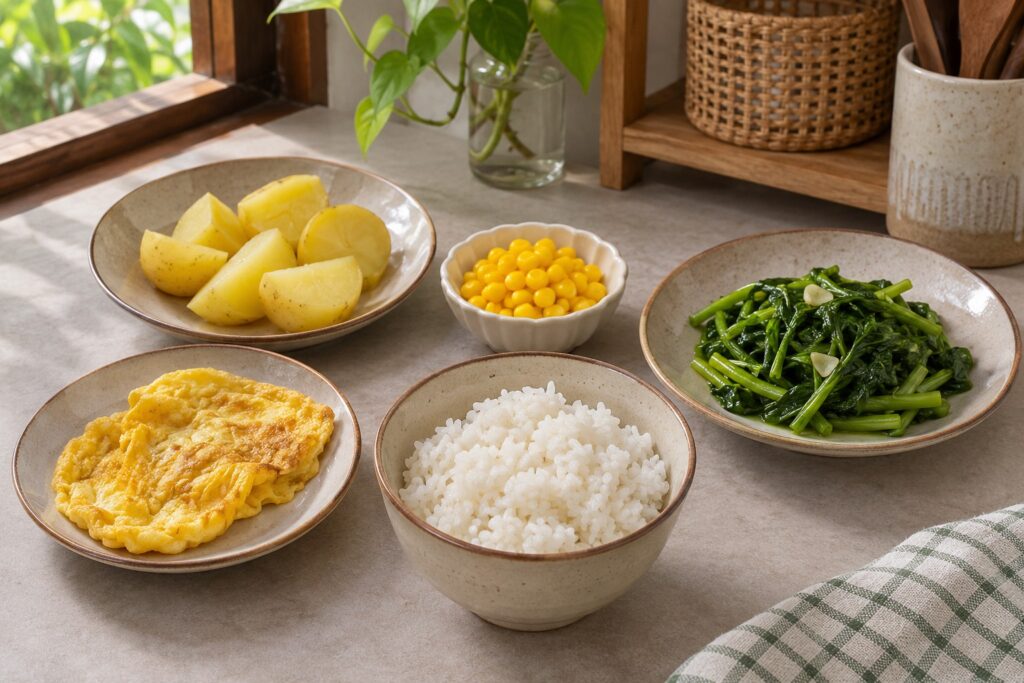
Plain rice and potatoes are naturally gluten-free. Corn and cassava are other options; Coeliac UK’s guide to gluten-free grains and ingredients also lists these alongside alternatives such as quinoa and buckwheat. That describes the ingredients themselves, rather than every packaged food or prepared dish carrying their names.
A practical distinction is whether you are buying a single ingredient or a combination. A whole potato leaves you to choose the cooking ingredients. A potato croquette already includes a recipe, potentially a coating, and a preparation history you need to understand.
| Staple | Straightforward starting point | Versions needing additional information |
|---|---|---|
| Rice | Plain rice cooked with water | Seasoned rice, instant meal sachets, rice cooked in stock |
| Potatoes | Whole potatoes prepared with checked ingredients | Coated wedges, croquettes, instant mash with additions |
| Corn | Plain corn kernels or corn on the cob | Seasoned corn snacks, coated products, corn-based mixes |
| Cassava | Plain cassava prepared appropriately | Seasoned snacks, coated pieces, ready-made cassava dishes |
| Rice or corn noodles | A product with a checked ingredient list | Mixed-flour noodles, seasoning sachets, prepared noodle dishes |
The right-hand column does not mean every example contains gluten. It identifies where the staple’s name stops answering the question. Read the actual ingredients and relevant gluten-free information, and seek clarification when something material remains unclear.
Flour needs its own attention. Rice flour or corn flour is a processed ingredient, even when the source plant is naturally gluten-free. Coeliac UK notes that gluten-free flours can be milled where wheat flour is also handled and recommends choosing flours labelled gluten-free.
Use rice as a flexible base
Rice can stay familiar while the rest of the plate changes. Rather than learning a different rice dish for every evening, start with a plain version you already know how to prepare and vary the accompanying food, texture and checked seasoning.
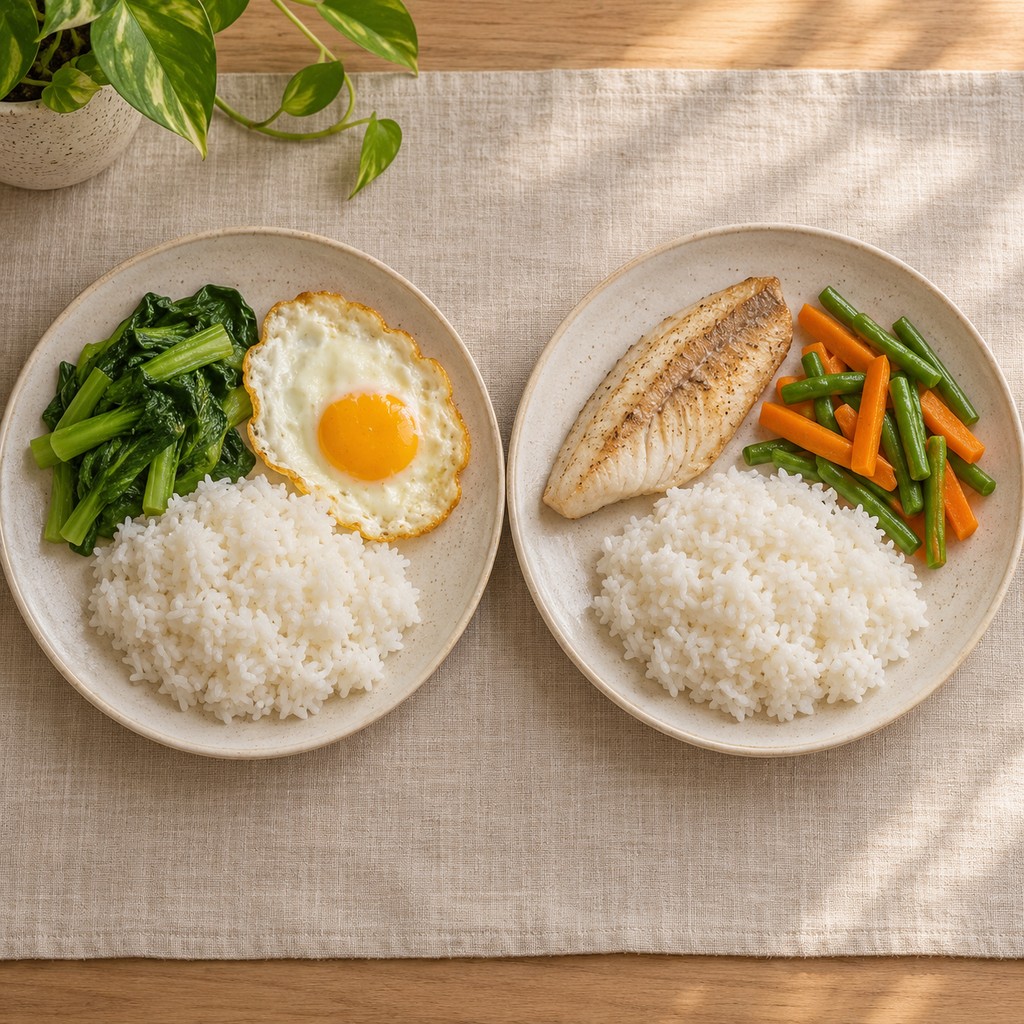
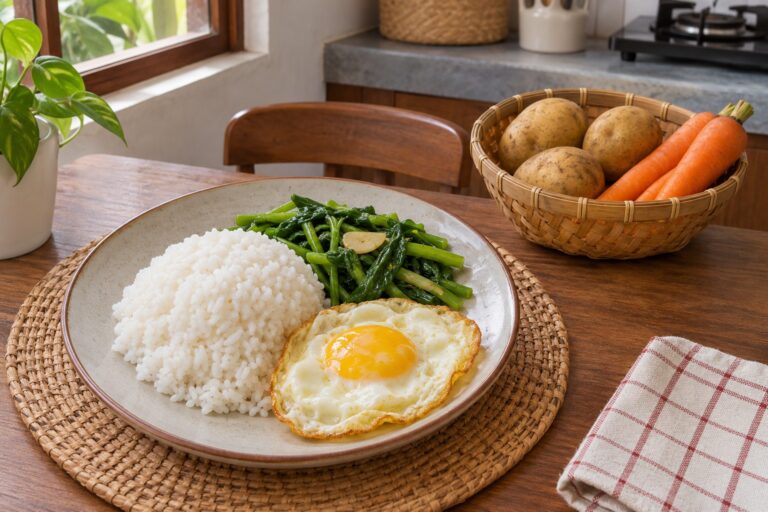
For example, you might pair rice with cooked egg and greens on one occasion, then fish and vegetables on another. These are meal-building examples, not tested recipes or assurances about a purchased dish. The ingredients and preparation of each component still need to fit your requirements.
Keeping rice plain can also make a household meal easier to coordinate. Serve a checked sauce separately so each person can choose how much to add. Establish how serving utensils will be used before putting different additions on the table; a shared base only remains useful if its handling follows the agreed arrangement.
Seasoned rice deserves a separate look. For nasi cooked with stock, coconut milk, spice paste or other additions, identify the ingredients actually used. Coconut milk on a recipe description does not explain the stock powder, and a familiar dish name does not establish the contents of a particular cook’s seasoning mix.
When buying prepared rice, a focused question is more useful than asking only whether the rice is gluten-free: “Is this cooked with water only, or are stock, seasoning mixes or sauces added?” Follow up on those additions and the preparation arrangement as needed.
Let potatoes change the shape of the meal
Potatoes offer a different texture and serving format when another rice bowl feels repetitive. Boiled pieces, a baked potato or a simple mash can each support a different meal without requiring a specialty bread replacement.
Choose the format around how you want to eat. Potato pieces can sit beside a separately prepared protein and vegetables. A baked potato can hold a filling whose ingredients you have checked. Mash can accompany a sauced dish, provided both its additions and the sauce have been assessed.
The useful question is what makes that potato preparation different from a plain potato:
- Mash: identify any stock, seasoning mixture and packaged additions.
- Roasted potatoes: check seasoning and any flour or coating used for texture.
- Fried potatoes: establish the product’s coating and what else uses the frying oil.
- Potato patties or croquettes: ask about binders, breadcrumbs, fillings and coatings.
For purchased fries, “made from potatoes” leaves both formulation and frying unanswered. At home, choosing an uncoated potato preparation gives you fewer added components to investigate, although you still need a suitable preparation arrangement.
Add other staples when they solve a practical need
You do not need a cupboard full of alternatives to make meals varied. Add another staple when it offers something useful: a texture you enjoy, a convenient cooking method or a different way to serve familiar accompaniments.
Corn can work as part of a meal alongside other components. Cassava may suit a meal where you want a different base; use an established, appropriate preparation method rather than treating this article as a cassava-cooking guide. Quinoa or buckwheat are further possibilities if you enjoy them and can obtain products you can assess. They are options, not requirements for a workable gluten-free routine.
Rice and corn noodles can change the format from a plate to a bowl, but check the specific product. The front-of-pack description does not replace the ingredient list, and a seasoning sachet needs consideration separately from the noodles. A noodle bowl also brings in broth, sauce, toppings and preparation equipment.
Avoid replacing one uncertainty with another simply for variety. If a new product’s composition is unclear, you can keep using a familiar checked staple while seeking an answer. There is no need to make tonight’s meal depend on resolving an unfamiliar ingredient.
Check the additions and the route to the plate
A finished meal includes more than its largest ingredient. The NIDDK dietary guide explains that added ingredients can introduce gluten and that cross-contact can occur during processing, storage, preparation or serving.
Apply that distinction to the meal you are actually making. For a rice bowl, trace the stock, kecap, marinade and toppings. For a potato plate, trace the coating, gravy and seasoning. Check current packages rather than relying on a product’s name or a previous purchase. If information is insufficient, ask the manufacturer about the specific product.
Then consider how the components meet. Was a serving spoon used for a gluten-containing dish before it entered the rice? Were potatoes coated on a surface also being used for breadcrumbs? Does the noodle preparation involve equipment used for wheat pasta? These questions identify arrangements to resolve; appearance alone cannot answer them.
For a shared household meal, agree on a clear sequence: select the ingredients, prepare the suitable base using the planned equipment, and serve it with an agreed utensil. Keep additions that do not meet your requirements separate from that base. This is easier for another person to follow than a general instruction to “make mine gluten-free.”
Build variety by changing one component
Start with a staple you can assess and prepare reliably, then change one part of the meal. Switching the vegetable, accompaniment or checked seasoning can produce a different eating experience without introducing several unfamiliar products at once.
A hypothetical rotation could include plain rice with egg and greens, potatoes with fish and vegetables, and checked rice noodles with separately prepared toppings. Each combination needs its own ingredient and handling decisions. The examples illustrate variety rather than prescribing portions or a nutritionally complete plan for every reader.
For the wider work of fitting meals into shopping, household preferences and available time, see building a practical gluten-free meal routine in Indonesia. Here, the narrower decision is which base makes the next meal easier to assemble.
Choose a small set you like enough to repeat. Know what goes into each version and how it reaches your plate. Rice, potatoes and other staples then become useful foundations for different meals, with the remaining questions attached to specific ingredients and preparation steps.