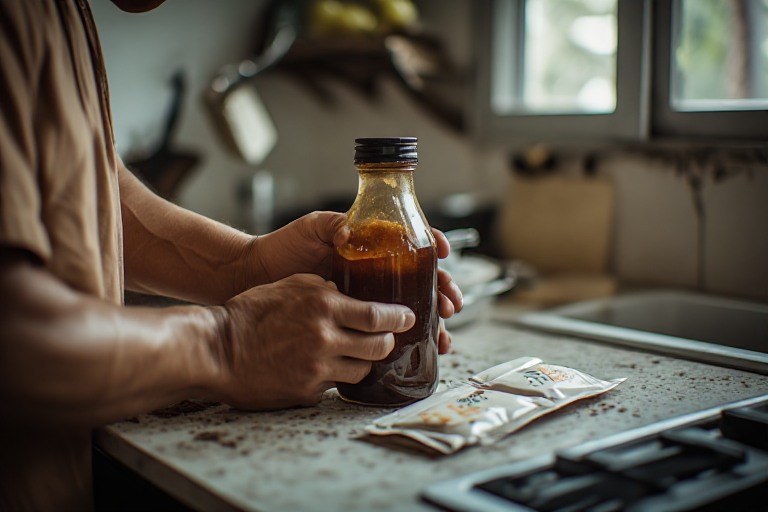
A bottle of kecap sits beside a packet of stock powder, ready for the same pan. You have checked the main ingredients for dinner, but these small additions still need attention. The useful question is what each exact product contains—not whether the finished dish looks wheat-free.
Checking soy sauce for gluten means looking beyond the word soy. Apply the same approach to kecap manis, kecap asin, bumbu packets and seasoning powders: read the current formulation, look for gluten-specific information and identify anything that remains unclear.
For the broader shopping process, use our guide to reading food labels for gluten in Indonesia. Here, the focus is the sauces and seasonings that can be easy to overlook.
Start with the exact bottle or packet
Check the product name, variant and market version before comparing information. A regular sauce, a reduced-salt version and a seasoning made under the same brand need separate checks. An online photograph should match the pack you intend to buy, including any Indonesian supplementary label.
Find the ingredient list, often headed komposisi, and read any ingredients nested in parentheses. Then check allergen information, shared-production warnings and any gluten-free statement. These provide different pieces of information; one should not replace the others.
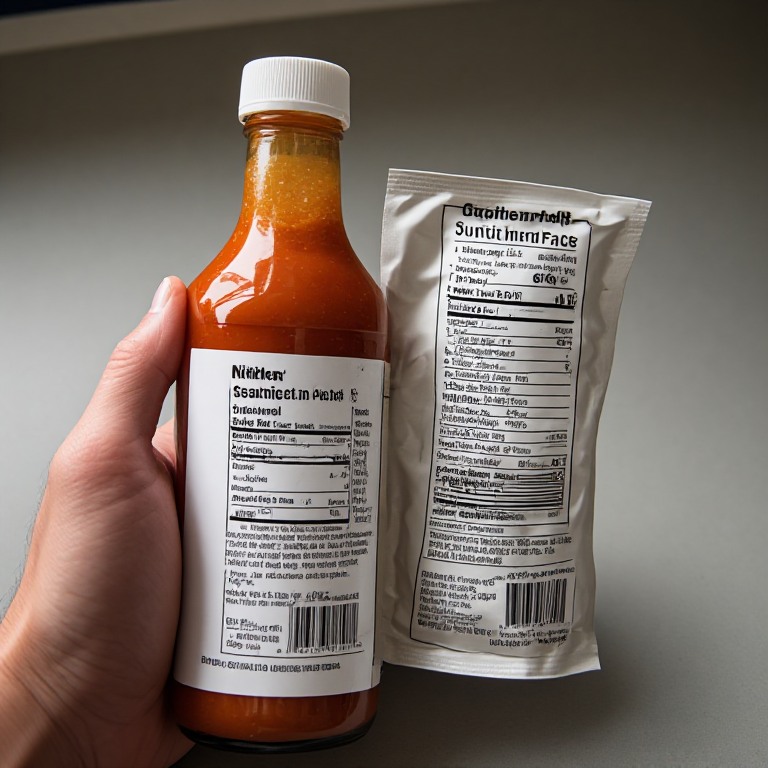
Useful words to recognize include gandum or wheat, tepung terigu or wheat flour, barley or jelai, and rye. Gluten occurs in wheat, barley and rye; sauces and other processed foods can contain ingredients derived from them. The NIDDK dietary guide explains why reading labels matters.
If a small sachet is difficult to read, ask for a clearer image or the information from its outer packaging. A short ingredient list that you can read is more useful than a reassuring description that leaves the actual product unidentified.
Soy sauce: check the ingredients behind the name
Soy sauce can be made with wheat. The US FDA describes conventional soy sauce as ordinarily fermented from soybeans and wheat, while also recognizing formulations made without wheat or other gluten-containing grains. That is a reason to inspect the formulation, rather than classify every soy sauce alike.
Do not treat “naturally brewed” or “fermented” as confirmation that a wheat-containing sauce has become gluten-free. In its explanation of fermented foods, the FDA states that fermentation is not considered a process that removes gluten. Its labeling requirements apply to the United States; they are not a substitute for Indonesian rules.
For your bottle, look for the actual ingredients and a clear gluten-free claim where available. If wheat appears alongside a gluten-free statement, ask the manufacturer to explain the formulation and basis of the claim rather than resolving the apparent conflict yourself. Mention a separate wheat allergy if that is relevant to your requirements.
Apply this same check to tamari. Use the name to locate a possible alternative, then assess the exact product. Likewise, “less salt,” “premium” and a particular sauce colour do not answer the gluten question.
Kecap manis and kecap asin need their own checks
Avoid carrying a conclusion from one kecap to another. The terms manis and asin help identify the type of sauce you are looking for, but they do not supply its complete ingredient list or manufacturing information.
A manufacturer example shows why a blanket rule is unhelpful. The Unilever Food Solutions Indonesia page for Bango Kecap Manis 1.5 kg lists sugar, water, salt and black soybeans. That published list does not name wheat. It does not, by itself, establish a gluten-free claim or explain all cross-contact controls for the pack in your hand.
Use examples like this to understand what a source actually answers. A listed formulation can clarify ingredients for an identified product. It cannot confirm every pack size, market version or future formulation, and it should not become a brand-wide recommendation.
When choosing between bottles, compare the information available for each. If one label names wheat and another has no obvious gluten ingredients but no gluten-free information, those are different findings. Keep the second product’s unanswered questions visible.
Read seasoning mixes as several ingredients combined
A packet described as chicken seasoning, mushroom stock or bumbu nasi goreng still needs a complete label check. The flavour name tells you what the product is intended to contribute, not everything used to make it.
Read through the mixture, including any listed sauce or seasoning components. Use the following as prompts for investigation, rather than a list of ingredients that are automatically unsuitable.
| Wording you find | What to establish |
|---|---|
| Soy sauce or soy sauce powder | Whether its formulation includes wheat or another gluten source |
| Wheat, gandum or tepung terigu | How that ingredient relates to your gluten-free requirements |
| Malt or malt extract | The grain source, particularly whether it is barley-derived |
| Flour or starch without a clear source | What the ingredient is, if that uncertainty affects your decision |
| Hydrolyzed vegetable protein | The named source, or clarification if the source is unclear |
| A seasoning blend without component detail | Whether the manufacturer can clarify relevant ingredients and gluten information |
An unfamiliar technical term is a reason to understand the ingredient, not proof that it contains gluten. Equally, recognizable ingredients at the start of a list do not resolve an unclear component further down.
MSG is a useful example. Monosodium glutamate is not gluten, despite the similar sound of the words. The FDA’s MSG explanation explicitly distinguishes glutamate from gluten. You still need to assess the rest of a seasoning mixture; “no added MSG” does not answer whether that mixture contains gluten.
Ask about the gap, not just whether it is “safe”
When an important detail remains unclear, photograph the front, ingredients, allergen information and batch code. Contact the manufacturer or importer with a question tied to that exact product.

For example:
I am checking this seasoning sold in Indonesia. The ingredient list names soy sauce powder but does not show its ingredients. Does that component contain wheat, barley or rye? Does this exact variant carry a gluten-free claim, and what information is available about gluten cross-contact controls? I have included photographs and the batch code.
Ask only the questions you need answered. If the uncertainty concerns one ingredient, start there. Check whether the reply identifies your variant and addresses the actual question. “No flour added” does not explain a soy sauce component, and “made from soybeans” does not describe the complete formulation.
For a fuller follow-up method, see contacting a food manufacturer about an unclear gluten label.
Keep the sauce decision connected to the meal
At a restaurant, ask which bottle or packet the kitchen actually uses. A familiar product on a table does not identify the sauce in an earlier marinade, stock or premixed cooking sauce. Ask whether staff can check the current packaging and explain where it enters the dish.
Removing a finishing drizzle does not change ingredients already mixed in. Once the ingredients have been clarified, handling remains a separate question: shared utensils and preparation can introduce cross-contact. Our guide to planning a gluten-free restaurant visit in Indonesia places those questions in the wider meal conversation.
At home, keep useful product information with the product name and date, then read the packaging again when buying replacements. If a crucial answer is unavailable, choose an alternative whose ingredients and relevant handling information you can establish. The decision becomes more manageable when you can name what you know and what is still missing.