

An Indonesian sticker covers part of an imported snack’s original label. The seller calls it gluten-free, but the photograph shows only the front. A manufacturer’s website has an ingredient list for something similar—without making clear whether it describes the version sold in Indonesia.
Checking imported food labels for gluten means connecting the available information to the exact pack you intend to use. When something is missing, first identify the gap: unreadable wording, an unclear ingredient, a different market version or conflicting statements. Each needs a different follow-up.
For the complete label-reading sequence, start with reading food labels for gluten in Indonesia. This guide concentrates on what to do when imported packaging does not give you a clear answer.
Establish which product the information describes
Before translating ingredients or comparing claims, identify the product name, flavour, pack size, manufacturer and importer. Photograph the barcode and batch or production code where available. Include the country of manufacture and any market information printed on the pack.
Use these details to compare the package with online information. A matching brand name and front design are not enough to establish that a webpage describes the same formulation. If the website identifies another market, or does not identify a market at all, treat that connection as unresolved.
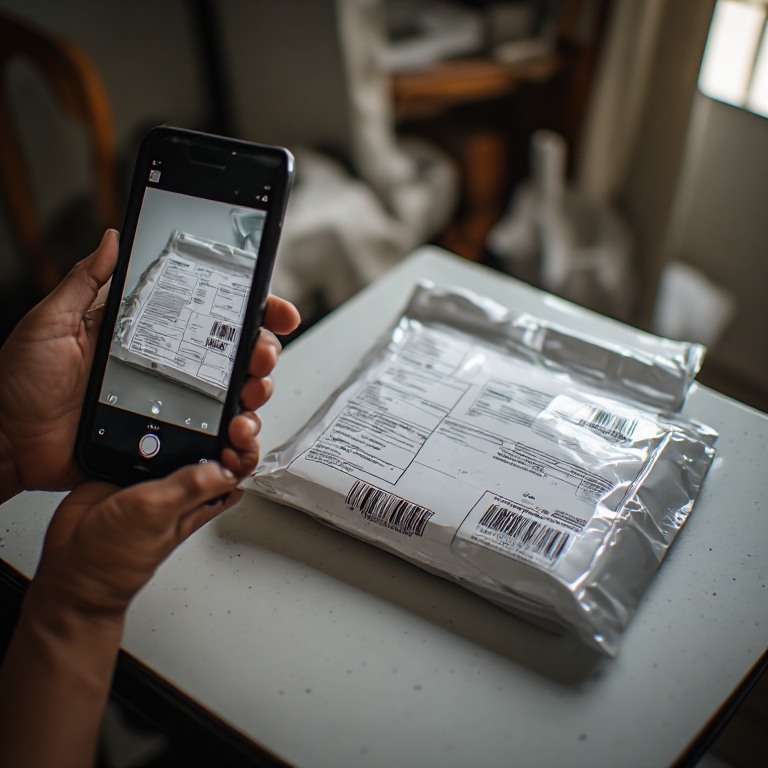
For an online purchase, request photographs of the actual stock: the front, the complete ingredient list, allergen information, supplementary label and identifying codes. A catalogue photograph can help locate an item, but it may leave the important panels out of view.
Read the supplementary label alongside the original packaging
Look for the ingredient list, often headed komposisi, and read the available original-language panel as well. Check whether both identify the same product and variant. Notice whether an ingredient, warning or gluten claim appears on one panel but not the other.
BPOM’s consumer guidance explains that processed foods circulating in Indonesia must carry information in Indonesian, including ingredients and manufacturer or importer details. See its guidance on imported-food labeling. That language requirement does not resolve a gluten question when the information on your particular pack is incomplete or contradictory.
If a sticker obscures relevant wording, ask the importer or manufacturer for the complete original panel and the current Indonesian product information. In a shop, ask staff for help rather than damaging a package to uncover it. For an item already purchased, photograph the visible panels before attempting anything that could tear the information you need.
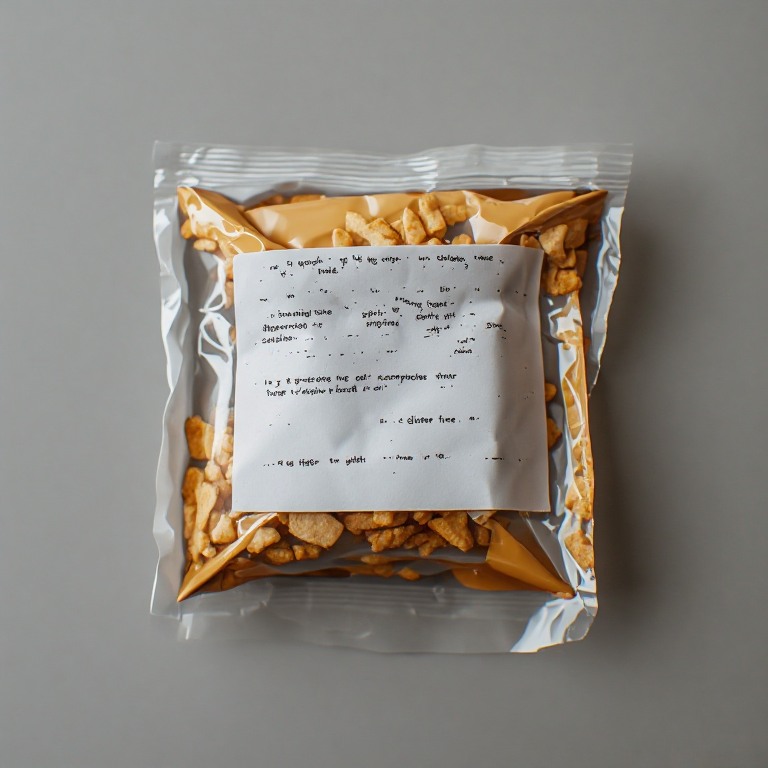
Do not decide that one panel must be correct simply because it is original or translated. If they disagree, describe the discrepancy precisely: for example, “The original ingredient list names barley malt, but I cannot find that ingredient in the Indonesian list.” Keep both images with your question.
Use translation to locate the question
A translation tool can help you navigate an unfamiliar label. Start with a sharp photograph taken straight on, with the full ingredient panel visible. Curved packaging, glare and cropped lines make it harder to establish what the original wording says.
Keep the original text beside the translation. If a crucial ingredient becomes a vague term such as “grain,” “flour” or “malt,” ask for its exact identity or source. A second translation may help reveal a discrepancy, but agreement between tools is not manufacturer confirmation.
Gluten avoidance involves wheat, barley and rye; a wheat-free statement alone does not answer the whole question. MedlinePlus explains this distinction. When translating a relevant ingredient, preserve the specific grain name rather than accepting a broad description such as “cereal.”
An unfamiliar word is not evidence that an ingredient contains gluten. The useful outcome is a focused question you can resolve, rather than a growing list of ingredients assumed to be unsuitable.
Separate a foreign claim from information about your pack
A gluten-free statement on overseas packaging deserves attention, but establish which product and regulatory context it belongs to. English wording alone does not identify the applicable system.
For example, the FDA’s gluten-free labeling questions and answers explain that imported foods subject to FDA regulations must meet its requirements if they carry a gluten-free claim. This concerns foods within FDA jurisdiction; it does not make a US webpage proof of the status of a similarly named product sold in Indonesia.
If the claim appears only in a seller’s description, ask for its basis. Is it printed on the current package? Does an official manufacturer statement identify this exact variant and market? A retailer’s category heading or search tag leaves those questions unanswered.
Likewise, “no wheat added” does not explain all gluten sources or manufacturing conditions. Keep ingredient information, gluten-free claims and shared-production statements separate when comparing what each source actually tells you.
See others: How to Review Ingredient Allergen Information When Suppliers or Products Change
Match the next step to the missing detail
You do not need to investigate every aspect of a product when one clear request could resolve the problem. Use the gap to choose the next step.
| Information gap | Useful next step |
|---|---|
| Ingredient panel is blurred or cropped | Request a clear photograph of the complete panel on the actual stock |
| A sticker hides original wording | Request an unobscured label image from the importer or manufacturer |
| Translation leaves an ingredient unclear | Send the original wording and ask for the ingredient’s identity or source |
| Manufacturer webpage shows another market | Ask whether it applies to the Indonesian pack and provide identifying photographs |
| Original and supplementary panels disagree | Send both panels and request a product-specific explanation |
| Gluten-free wording appears only in the listing | Ask for the package claim or official product-specific source |
For sauces and seasoning components, the companion guide to checking soy sauce, kecap and seasoning mixes for gluten covers ingredient questions in more detail.
Request clarification that can be checked against the package
Contact the importer named on the pack or the manufacturer through an official channel. Attach readable photographs and ask about the particular uncertainty. A short message might say:
I am checking this product sold in Indonesia. The photographs show the variant, barcode, batch code and both label panels. The original panel names an ingredient that appears to be missing from the Indonesian sticker. Could you confirm the complete current ingredient list for this pack and explain the difference? Please also confirm whether any gluten-free statement you provide applies to this exact market version.
If your question concerns shared equipment or gluten cross-contact controls, ask that separately. Confirmation of an ingredient source does not answer a manufacturing question you have not raised.
When the reply arrives, compare its scope with your request. Does it identify the variant? Does it explain the conflicting wording? Does it apply to the stock you photographed? A general brand statement can still leave the product-specific gap open.
The approved follow-up guide, contacting a food manufacturer about an unclear gluten label, explains how to organize a more detailed inquiry and interpret incomplete replies.
Make the purchase decision without filling gaps yourself
Consider a hypothetical imported rice cracker. Its front highlights rice, the seller describes it as gluten-free, and a sticker hides part of the seasoning list. At that point, the missing information concerns the seasoning and the basis of the seller’s claim. Neither the rice ingredient nor the product photograph answers those questions.
If the importer supplies a complete matching label and explains the claim, you have additional information to assess against your requirements. If the answer describes another flavour or simply repeats “made from rice,” the original gap remains.
Where an unanswered question matters to your gluten-free requirements, leave the item unpurchased or set it aside from use while seeking clarification. Choosing an alternative with clearer information is a practical option. Uncertainty does not establish that a food contains gluten, but it also cannot serve as confirmation that it meets your needs.
Keep useful replies with the product photographs and the date. Read replacement packs again, and revisit the information when the variant, packaging or relevant wording differs. A previous answer is most useful when you can still connect it to what you are buying.
You should be able to explain the decision in ordinary language: this information matches the pack, this question has been answered, or this detail remains unknown. That is a firmer basis than choosing whichever label or listing sounds most reassuring.
This article provides general label-reading guidance, not a product certification or an assessment of individual medical needs. For condition-specific dietary requirements, use guidance from an appropriate healthcare professional.