
A cake in the display case has a gluten-free sign, but the same tongs are moving between pastries. Before ordering, you need to know more than the recipe: how was the cake prepared, where has it been kept, and how will your portion reach the plate?
Ordering gluten-free at a bakery or café means following one particular item through those steps. A shared display or kitchen does not, by itself, explain every handling practice. Ask staff what happens to the item you want, then decide whether the answers meet your requirements.
Start with one item and its ingredients
Choose a specific cake, sandwich, pastry or other item to discuss. Ask who can check its ingredients and how it is handled. A person serving at the counter may need to consult the baker, kitchen or supplier.
Include fillings, toppings, sauces and anything added at service. For a sandwich, ask about the bread and each filling; for a cake, include the base, icing and decorations. If an ingredient comes from a package, ask whether staff can check its current packaging. An item described as flourless or made with almond flour still needs its complete ingredients and preparation clarified.
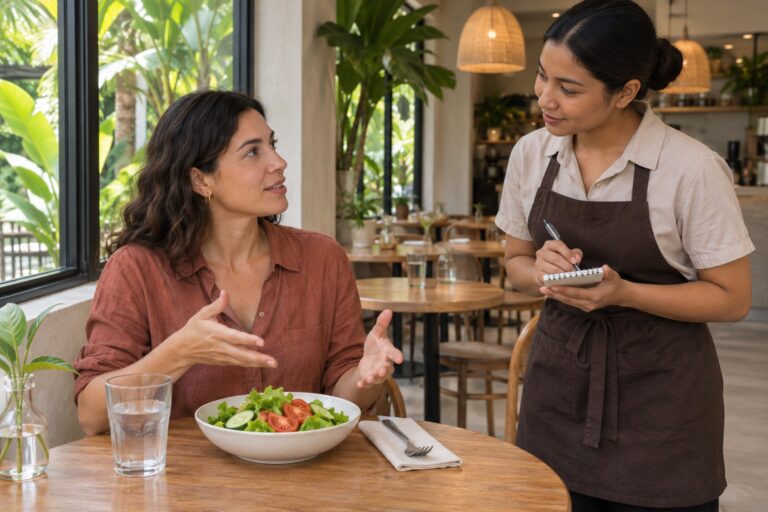
Explain your own needs accurately. If you have celiac disease, say so; if you have a wheat allergy or another allergy, identify it separately. You do not need to claim a diagnosis you do not have. The NIDDK guide to eating with celiac disease recommends asking about ingredients and preparation when eating out, and explains that gluten cross-contact can occur during storage, preparation or service.
Trace the item through the display
Look at how the chosen item is stored and served, then ask staff to explain any part you cannot see. A separate shelf or a gluten-free sign can help identify an item, but neither tells you which utensils have touched it or how it was placed there.
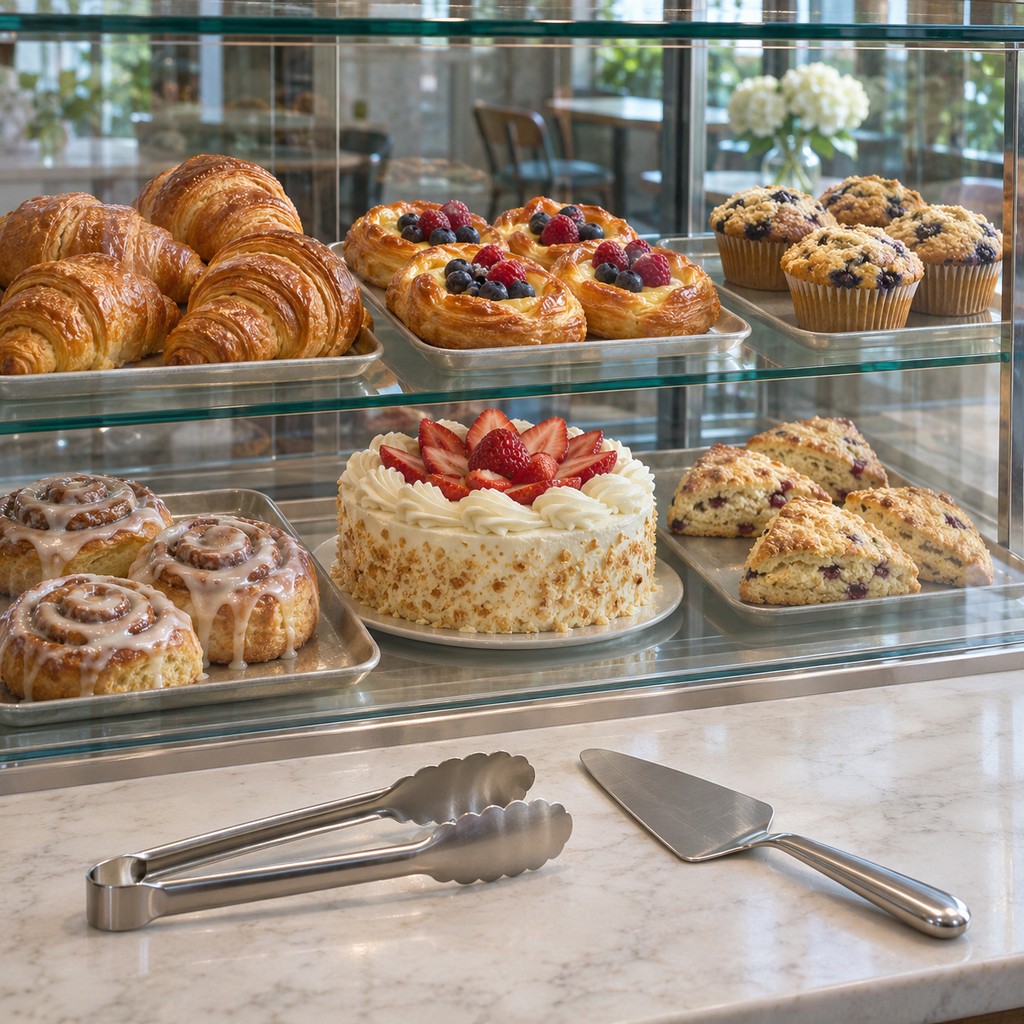
Questions to adapt to the counter include:
- Is the item covered or individually wrapped, and when was it placed in the case?
- Are the tongs, cake server or knife used only for this item, or also for wheat pastries and bread?
- Can a portion be taken from protected stock using clean utensils, if that is how the café can serve it?
- Will it be placed on a clean plate or in a clean takeaway container, away from crumbs during packing?
For example, a hypothetical café might keep a cake on its own tray but cut every cake with the same knife. The separate tray answers a storage question; it leaves the cutting question open. Equally, clean tongs at the counter do not explain what happened earlier in the kitchen.
A wrapped product may reduce the number of handling steps after wrapping. Ask whether it arrived sealed from the producer or was wrapped at the café, and check its current label and the handling before it was wrapped. Packaging alone does not answer every ingredient or preparation question.
Ask where and how it was prepared
A bakery may make different products in the same room, or it may bring an item in from elsewhere. Ask where your chosen item was made and what staff know about the preparation. If it came from a supplier, the café may need to check rather than guess.
For food made on site, focus on the practical route: which work area, trays, mixers, utensils and storage containers were used, and how was the item protected while other products were being prepared? If wheat flour is handled in the area, ask how the bakery separates that work from the gluten-free item, including how it manages flour and cleaning. Coeliac UK’s catering guidance discusses separating preparation, particularly around wheat flour, and using clean or dedicated equipment.
You are asking staff to describe their actual arrangement, not to promise that a room contains no gluten. A reply such as “we bake it first” leaves follow-up questions: where is it kept afterward, what tools handle it, and what happens before it reaches the display? If the answer is unavailable, keep that uncertainty separate from what you do know about the ingredients.
Decide whether warming or assembly changes the order
A suitable-looking item may take another route if you ask for it toasted, heated or assembled. Check whether a toaster, sandwich press, oven tray, knife or preparation surface is also used for bread or pastries containing gluten. Ask what alternative the café can actually provide and how it would handle your portion.
Coeliac UK’s catering guidance recommends separate toasting arrangements for gluten-free bread and addresses clean equipment and trays. Its examples are useful questions for the café, not proof that any particular appliance or workaround is suitable for your order.
Consider a hypothetical sandwich made with checked gluten-free bread. If staff assemble it on a crumb-covered board or warm it in equipment used for ordinary bread, the bread choice alone does not describe the finished sandwich. An unwarmed item may avoid the warming step, but it still needs its ingredients, assembly and serving checked.
Ask about spreads too: a butter or jam container used with the same knife that touched ordinary bread raises a different question from a fresh portion served with a clean utensil. If a topping has already been added, ask whether an alternative portion is available rather than assuming it can simply be removed.
Use a short, specific request
A concise question gives the staff a clear item and route to investigate. For example:
I need a gluten-free option. Could someone check the ingredients in this cake, where it was prepared, and how it is kept and served? Are the knife and tongs also used for wheat pastries? If you cannot confirm those details, please let me know.
An Indonesian starting version is:
Saya perlu pilihan bebas gluten. Apakah staf bisa memeriksa bahan kue ini, tempat pembuatannya, serta cara penyimpanan dan penyajiannya? Apakah pisau dan penjepitnya juga digunakan untuk pastry berbahan gandum? Jika informasinya belum bisa dipastikan, mohon beri tahu saya.
These are conversation examples, not medical translation cards. Add your actual dietary and allergy requirements, and ask staff to explain their understanding if a term is unfamiliar. If you contact the café ahead, identify the branch and the item; confirm the arrangement with the staff serving you because products and practices can change.
Choose an alternative when an answer remains unclear
A useful answer describes what staff can check and what they can do for your specific order. “It is gluten-free” may identify the intended product, while leaving questions about a shared knife, the production kitchen or a proposed substitute. Ask a focused follow-up, and give staff room to say they do not know or cannot accommodate the request.
If preparation or handling cannot be clarified sufficiently for your needs, consider another item whose route can be explained, a packaged option you have assessed, or a backup you brought. If permitted, you might still join others for a drink after checking any relevant ingredients and handling. You can also choose a different venue or eat elsewhere. No café needs to make an assurance it cannot support, and you do not need to resolve uncertainty by guessing.
For the wider process of contacting a venue and keeping a backup meal, see planning a gluten-free restaurant visit in Indonesia. Use guidance from your healthcare professional for your individual needs; this article cannot determine whether a particular order is suitable for you.