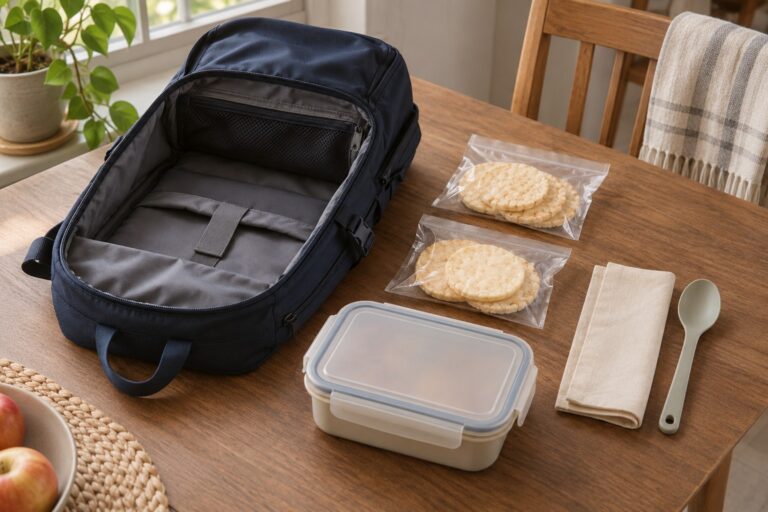
A gluten-free meal appears in your booking, but your itinerary includes a domestic connection, an international flight and a return journey with another operator. Before relying on that request, establish exactly which services it covers.
For gluten-free airline meals, the useful confirmation has several parts: availability on your flight, the request deadline, the recorded meal type and what the airline can explain about ingredients and handling. A booking entry helps document the arrangement; it does not answer every preparation question.
This guide focuses on the flight meal itself. For airport gaps, arrival meals and the rest of your itinerary, use our framework for planning gluten-free travel from Indonesia.
Start with each operating flight
List every flight separately, including domestic connections and the return journey. Record the date, route, flight number and operating airline shown on your itinerary. If the ticket carries one airline’s branding but says another airline operates the service, ask who must receive and confirm the meal request.
For each segment, ask whether a gluten-free special meal is available on that exact service and in your cabin. Establish whether the arrangement covers a main meal, additional meal services and snacks. Do not leave a short connecting flight unexplained simply because the long-haul sector has a meal recorded.

A hypothetical journey from Surabaya through Jakarta and Dubai involves separate food arrangements. Confirmation for Jakarta–Dubai should remain attached to that segment unless the airline explicitly confirms wider coverage. Use the same approach for the journey home.
Keep a compact record:
| Detail | What to establish |
|---|---|
| Flight and operator | Which actual service the answer concerns |
| Availability | Whether the requested meal is offered on that flight |
| Request deadline | The latest submission and confirmation time |
| Meal coverage | Which meals or snacks are included |
| Booking status | Whether the request is recorded and what that status means |
| Unresolved points | Ingredients, handling or additional restrictions still unanswered |
Request early and establish the actual deadline
Ask about the meal when arranging your ticket rather than waiting until departure is close. Obtain the deadline from the operating airline and ask which channel completes the request: its booking system, customer service or your travel agent.
Deadlines belong to a particular airline and service. For example, Emirates’ dietary requirements page states that dietary meals can be booked through Manage Your Booking up to 24 hours ahead of the flight. It also notes availability restrictions for some dietary meals in Economy on flights under two hours. This is an Emirates example, not a deadline or availability rule for every departure from Indonesia.
If a deadline is close, ask for the exact cutoff in the relevant time zone. Save the confirmation with the passenger name, flight details and meal description. Where the system shows only “requested,” ask whether further confirmation is needed and what remains uncertain.
If you encounter conflicting airline pages, send the relevant links to customer service and ask which instructions apply to your booking. Use the earlier deadline for your planning while seeking clarification; do not assume the more convenient version controls.
Ask what the meal name actually means
Use the airline’s exact meal name when discussing the request. Emirates, for example, calls its option a “Gluten-Friendly Meal” and uses the code GFML. Ask your own airline to explain the meal description associated with its booking code rather than treating the letters as a universal preparation standard.
Separate two questions: what ingredients are excluded, and how the meal is prepared and handled. A useful conversation can cover sauces, seasoning, bread, desserts and any separately supplied accompaniments, as well as the main dish.
Ask focused questions the airline can pass to its catering team:
- What ingredient information is available for the requested meal?
- What procedures address gluten cross-contact during preparation, packing and service?
- Are the catering facilities shared with foods containing gluten?
- How is the special meal identified and kept distinguishable until delivery?
- Which details cannot be confirmed before departure?
The distinction matters in practice. Emirates states that its gluten-friendly meal excludes gluten-containing ingredients, while its caterers are not dedicated, certified gluten-free facilities. Its policy also explains that special meals are produced in facilities handling allergens and does not guarantee meals completely free of allergenic ingredients or traces. Read those statements together rather than turning the menu description into an assurance about every preparation step.
Cabin crew may have limited information about a meal prepared elsewhere. Ask detailed preparation questions before flying, and retain any unanswered points in your plan. The absence of an answer should remain an uncertainty rather than becoming an assumed guarantee.
Communicate additional requirements separately
If you have celiac disease, describe that accurately when discussing your needs. If you have a wheat allergy or another food allergy, state it separately and ask the airline to address that requirement directly.
Do not assume a gluten-free request also covers dairy, eggs, nuts or another restriction. Likewise, ask whether gluten-free requirements can be combined with a vegetarian, halal or other meal requirement. Obtain an answer about the proposed meal instead of assuming that selecting two preferences creates a combined option.
The same applies when booking for a child. Ask how the airline will record both the dietary requirement and the child’s meal arrangement, and what will actually be supplied.
A concise message could read:
I am travelling on [date], flight [number], from [origin] to [destination]. Please confirm whether a gluten-free meal is available for this passenger and segment, the request deadline, and whether the request is confirmed in the booking. What information can you provide about ingredients and procedures to reduce gluten cross-contact during preparation and service? I also need [separate requirement, if applicable]. Please explain any limitations and whether other meal services or snacks are covered.
Add only the information relevant to your requirements. There is no need to send a detailed medical history with an ordinary meal enquiry.
Reconfirm after changes and before eating
After a flight change, rebooking or operator change, ask whether the meal arrangement applies to the replacement service. Include any newly added connection. Keep the updated reply alongside the revised itinerary so you are not relying on confirmation for a flight you no longer take.
At check-in, ask staff to confirm the recorded meal request. Once on board, let cabin crew know you requested it and ask how they will identify your meal. Coeliac UK’s travel guidance recommends arranging gluten-free meals at booking, double-checking before departure and making yourself known to staff on arrival.
When the meal arrives, confirm that it is the requested option before opening or mixing its components. Read available labels on separately packaged items and ask about an unexpected bread roll, sauce or dessert. Appearance alone cannot establish the ingredients or handling history.
If something conflicts with the information you received, pause and ask staff to clarify. Removing a questionable item does not explain whether it has already contacted the rest of the meal. Where staff cannot resolve a point that matters to your requirements, use your alternative food arrangement rather than relying on a guess.
Carry an alternative you can actually use
Choose backup food that fits your dietary requirements and can be eaten without depending on unconfirmed onboard facilities. Before packing it, ask the airline about bringing and eating your own food and whether any storage, heating or other handling would be available. Build the plan around the service it actually confirms.
Coeliac UK recommends taking food or snacks for the journey and keeping emergency snacks for delays or cancellations. Think beyond replacing one missing tray: include the connection and the time before your next realistic meal opportunity.
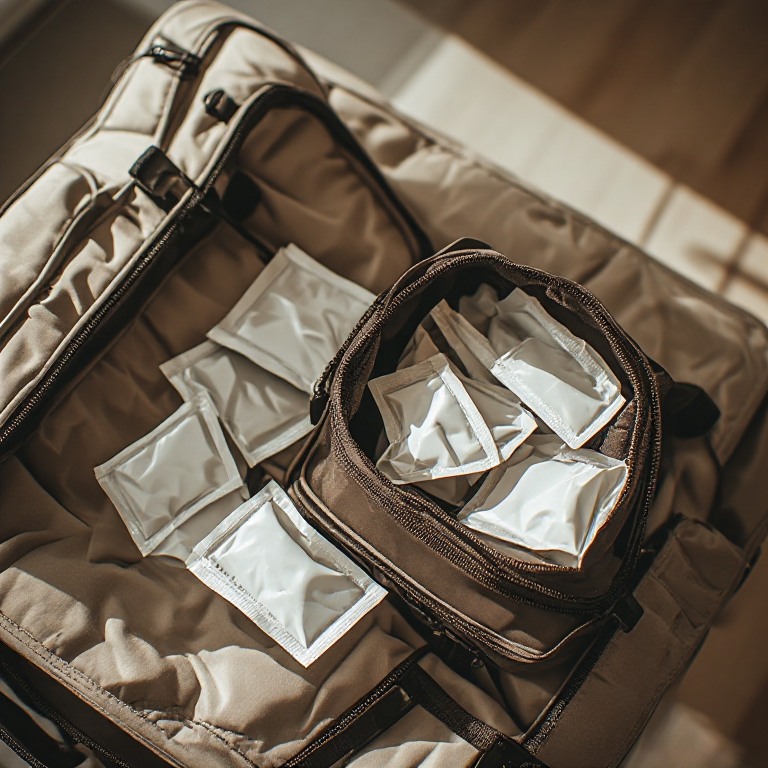
Check current security requirements for your departure and transit airports, plus official customs and biosecurity guidance for the destination. Permission to carry something onto an aircraft does not establish permission to take the remainder into another country. This guide does not establish item-specific permissions for your route.
Keep packaged-food information available rather than relying on a remembered claim. Our explanation of gluten-free claims and allergen statements helps distinguish the different questions those statements answer.
Before leaving, you should be able to identify which flights have a recorded arrangement, what that arrangement includes and what remains unknown about the food. Pair that information with a usable backup. You can then respond to a changed meal or itinerary without having to solve the whole food plan at the boarding gate.