A grocery store may be close to your Orlando accommodation on a map but awkward to reach after a long flight, particularly if you have luggage, a delayed arrival or no confirmed place to store chilled food. Plan the stop around the journey you will actually make and the first meals you need to cover.
For the rest of your stay, planning gluten-free meals for an Orlando visit from Indonesia connects groceries with dining and your itinerary. Here, the focus is the first shopping trip and how to make it manageable.
Choose a stop that fits your arrival
Start with your accommodation address, expected arrival time and transport. Look for a store you can realistically reach on the way or after checking in. Check the exact branch’s current opening hours and route before relying on it; a store’s presence elsewhere in Orlando does not establish that it is convenient for your journey.
If you are using a rental car, consider whether you can carry your luggage and groceries together and go directly to your accommodation afterward. If you are using a hired car or other transport, establish whether a stop is possible, how long you can spend there and how you will make the onward trip. For a walking trip, consider the route and what you can comfortably carry.
Save the store address and a second option that you can actually reach. If a late arrival makes a full shop uncertain, keep the first evening’s food arrangement separate. A shop that has already closed cannot serve as the only dinner plan.
Decide what the first shop needs to cover
You do not need to stock the entire stay while tired. Make a short list for the first evening, breakfast and a backup meal, then buy more after you know the accommodation and your schedule. Divide the list by how the food will be used:
- Ready to eat: options you can assess against your dietary needs and eat without relying on unconfirmed equipment.
- Shelf-stable: foods that fit your requirements and can be kept without refrigeration until opened, according to their instructions.
- Chilled or frozen: items to buy only when the journey and storage arrangements support them.
- Meal components: foods that require a confirmed utensil, appliance or preparation space.
For example, a traveller arriving late might plan a checked, shelf-stable breakfast and a ready-to-eat backup for the first evening. If the room has a usable refrigerator and the journey permits it, they can add chilled items. If not, the initial plan still works without them.
Online listings can help you identify products to look for, but availability and formulations can change. Check the exact branch where possible, and read the package you actually receive or pick up. Have another type of food in mind if a particular product is unavailable.
Read the US package in front of you
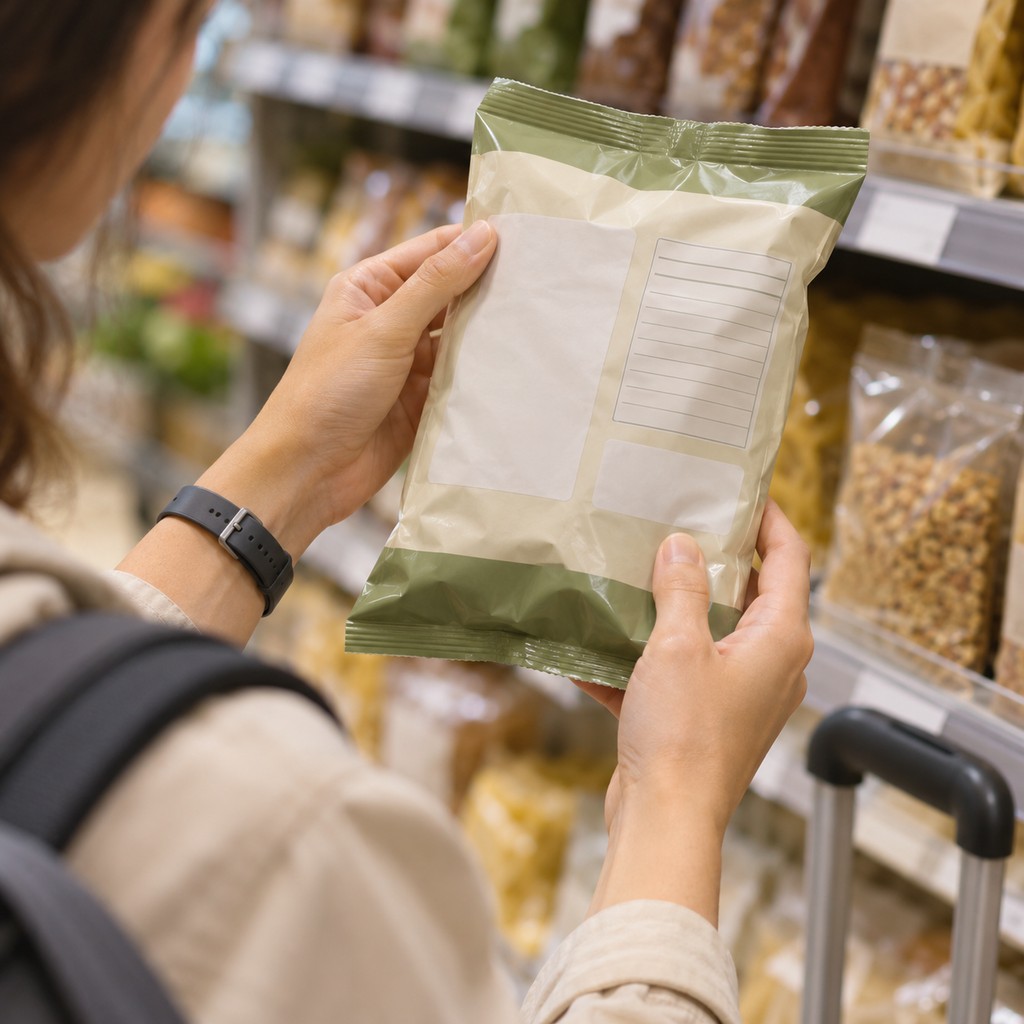
A familiar brand or food name does not establish that the US product has the same ingredients as one you have bought in Indonesia. Read the current ingredient list, any allergen statement and any gluten-free claim on each relevant package. Check separate allergies or other dietary requirements as well.
For foods covered by the US Food and Drug Administration’s rule, a gluten-free claim is voluntary and has defined conditions, including that any unavoidable gluten must be below 20 parts per million. The rule also places restrictions on ingredients derived from gluten-containing grains. The FDA’s questions and answers explain the scope and conditions; this is a US framework, not a rule to apply automatically to products sold in Indonesia.
A wheat allergen declaration is useful information, but a product described as wheat-free is not necessarily gluten-free: gluten can also come from barley or rye. Conversely, an ingredient list without an obvious gluten-containing grain does not by itself answer every question about cross-contact or whether a product suits your needs. If a label is unclear, use the manufacturer’s current information or contact the manufacturer; choose another option if the detail you need remains unresolved.
Pay particular attention to mixed or seasoned foods, sauces and coatings rather than judging them by the main ingredient alone. For oats, check the specific package and decide according to your own needs and any relevant professional guidance. A gluten-free claim does not address unrelated allergies or other restrictions.
Match purchases to storage and preparation
Before shopping, ask your accommodation about the facilities in your exact room: whether a refrigerator is available and usable, where food can be stored, and which microwave, sink, cookware or utensils you may use. A listing that mentions a kitchenette does not answer all those questions. If facilities are shared, ask how they are accessed and consider how you will keep your food and utensils separate from gluten-containing food.
Buy refrigerated or frozen food only if you can maintain the storage conditions on its label during the trip and at the accommodation. Pick up chilled items near the end of the shop and travel directly to suitable storage. FoodSafety.gov’s food-safety guidance advises refrigerating perishable food within two hours, or within one hour when exposed to temperatures above 90°F (32°C). These are outer limits, not a target for leaving food in a warm vehicle; refrigerate sooner when possible.
For a shared microwave or counter, consider what the food or its container may touch. Keep your portion covered as appropriate for the appliance, use utensils you can assess and avoid sharing spreads or condiments where crumbs may have been introduced. If you cannot establish an arrangement that meets your needs, choose a food that does not depend on that equipment.
Make a workable alternative
If shopping after arrival is impractical, ask the accommodation whether it accepts grocery deliveries, where orders are collected and whether chilled items can be held appropriately. Confirm the delivery window and what happens if your flight or check-in is delayed. An online order still needs a plan for substitutions: review the actual products and their current labels before relying on them.
For an in-person stop, decide when to leave if the journey has taken longer than expected. A smaller first purchase can cover breakfast and a backup while leaving the main shop for another day. If the branch is closed or its stock does not meet your requirements, use the separate food arrangement you established instead of assuming the next shop will solve the problem immediately.
Food carried from Indonesia may have helped during the flight, but do not assume every remaining item can be brought into the United States. Check current entry requirements for the actual food before departure and make the arrival plan independent of anything whose admission is uncertain.
A useful first shop ends with food you can assess, transport and store, plus a clear next meal if the original plan changes. It can be small; its job is to make the first part of the stay easier to manage.
This article provides general educational information. For advice about your individual medical or dietary needs, consult an appropriate health professional; see our medical disclaimer.