A tea or coffee order can become a different product once a flavored powder, syrup and topping are added. The name on the menu describes the drink you will receive, but it may not tell you which packaged ingredients went into it or how the equipment is shared.
When checking gluten in drinks, start with the exact drink and work through its components. A packaged powder needs its own label check; a café drink also needs questions about the ingredients and preparation used for that order. You do not need to assume every addition contains gluten, but a familiar base does not answer for the finished drink.
Start with what is actually in the cup
List the base and every addition you intend to have. Depending on the order, that may include a milk or plant-based drink, a flavored powder, syrup, sauce, pearls, jelly, cream, cookie pieces or a finishing drizzle. Ask whether the café uses a premixed base that already contains flavoring or sweetener.
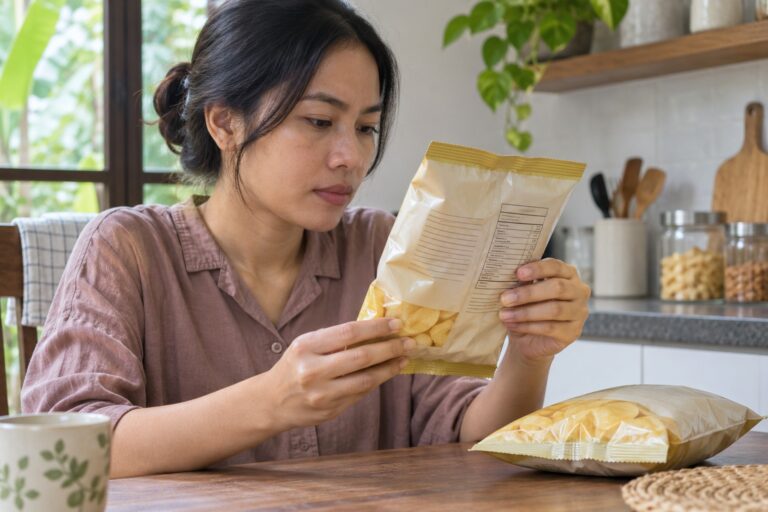
For a packet at home, check the full name, flavor and market version. Read the ingredient list, any gluten-free claim and allergen information on the current package. In Indonesia, komposisi or bahan can help you find the ingredients; gandum means wheat, while tepung terigu identifies wheat flour. An imported product may also have a supplementary label. If the information is incomplete or difficult to understand, request a readable, product-specific explanation.
Gluten occurs in wheat, barley and rye, including ingredients derived from those grains. The NIDDK guide to eating gluten-free also notes that processed foods can contain grain-derived flavorings, starches and other additions. An unfamiliar ingredient is a question to investigate, not automatic proof that it contains gluten.
Powders and premixed bases
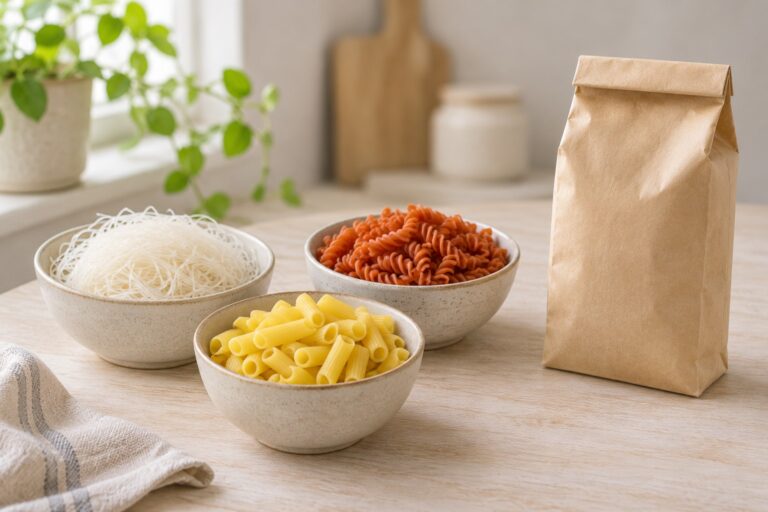
Chocolate, malt-flavored, cereal and other drink powders can be mixtures rather than a single ingredient. Read the complete list, including any components shown in parentheses. A product described by its flavor on the front can have a different formulation from another flavor in the same range.
| What you find | What to check |
|---|---|
| Malt or malt extract | Identify the grain source. Barley malt is relevant to a gluten-free decision. |
| A cereal or grain blend | Establish which grains are included and whether the finished product has a gluten-free claim. |
| Flavoring or a premixed component with unclear details | Ask the manufacturer what it contains and what information supports any gluten-free claim. |
| A powder supplied in a large bag at a café | Ask staff to check the actual bag or product information for the flavor used in your drink. |
The U.S. FDA explains that barley malt extract and malt syrup are derived from barley. Its discussion of gluten-free claims applies to foods under its U.S. labeling rule; do not assume the same legal interpretation applies to a product sold in Indonesia. If the label says only “malt” and its source is unclear, ask about the exact product instead of guessing.
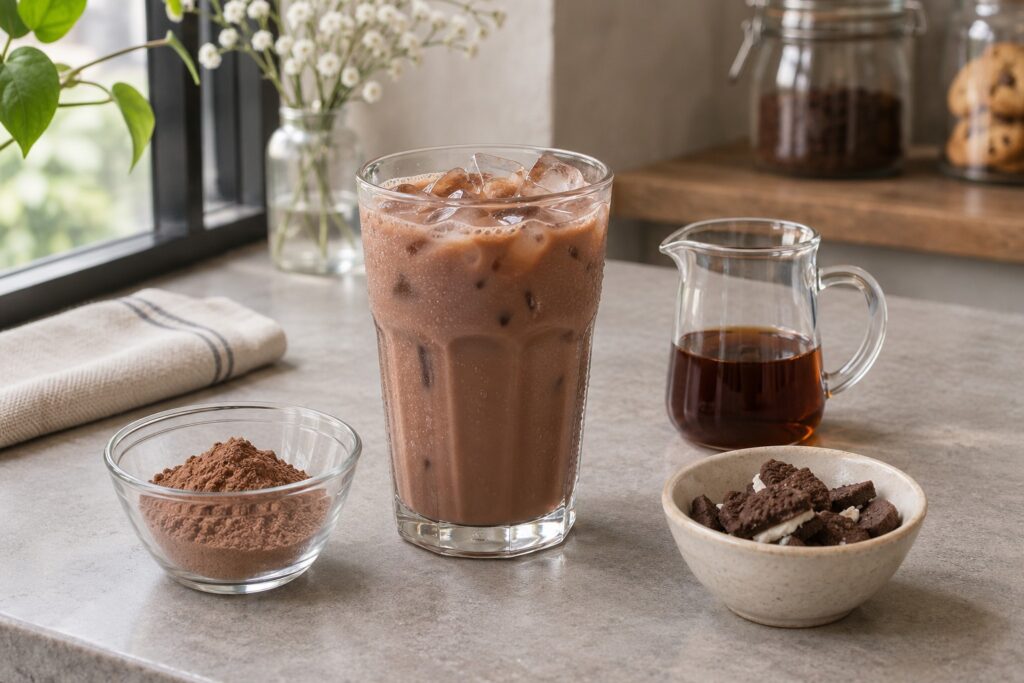
A hypothetical iced chocolate illustrates the distinction: the milk may be easy to identify, but the café’s chocolate powder could be a blend. Ask about that blend before drawing a conclusion from the milk or the drink’s name.
Syrups, toppings and add-ins
A syrup name such as vanilla or caramel describes a flavor, not a complete ingredient list. Check the bottle or ask for its current product information. Do the same for sauces and drizzles, which may be separate products from the syrup used in the base.
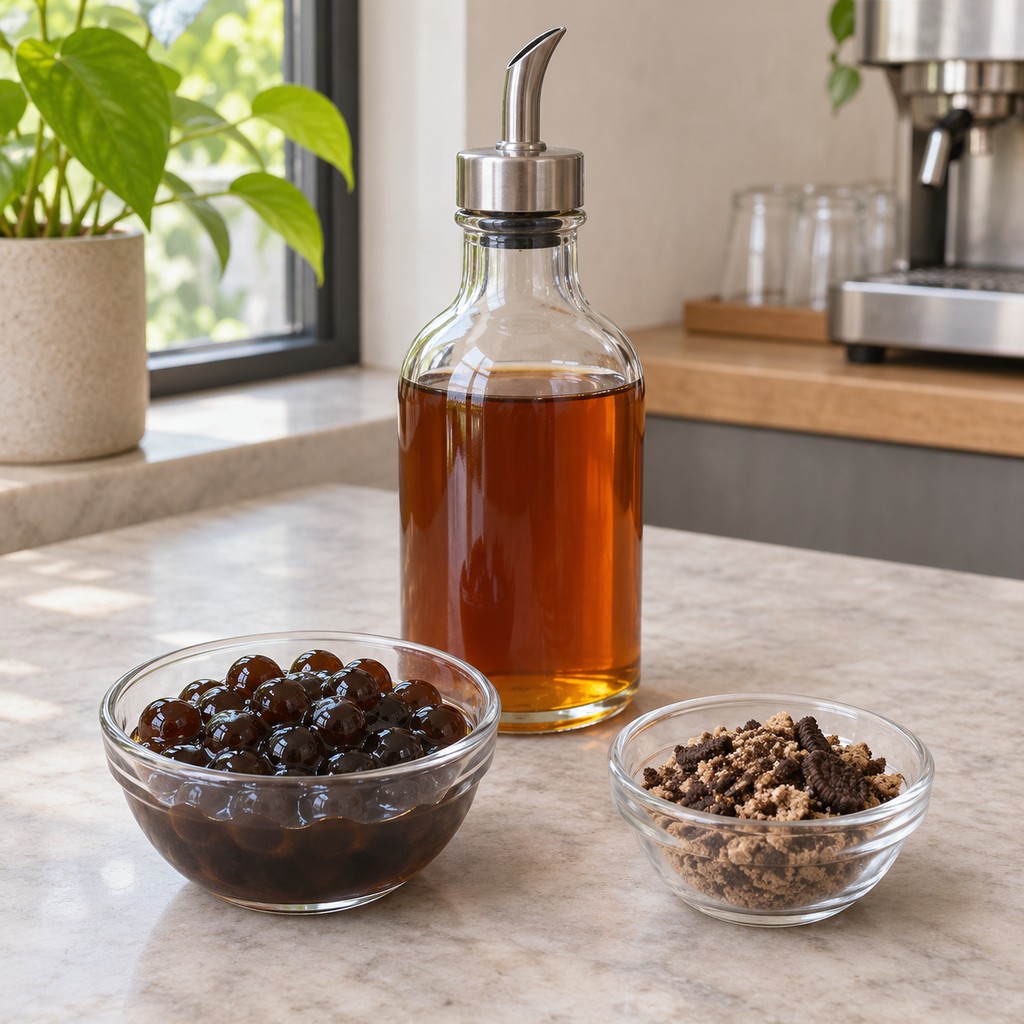
Toppings need their own check. Cookie crumbs and wafer pieces call for particular attention to their ingredients; pearls, jellies, foam and flavored creams also need product-specific information rather than assumptions based on appearance. If a topping comes from a packet, ask staff whether they can identify the product and check its label.
Removing an optional topping can simplify an order only if staff can confirm what is already in the drink and how it will be prepared. For example, leaving cookie crumbs off the top does not answer whether a cookie-flavored premix was blended into the base. If an ingredient has already been mixed in or placed on the drink, ask for a fresh preparation that meets your needs rather than relying on its removal.
Read claims and ingredient information together
A gluten-free statement, ingredient list and allergen warning each provide different information. Check all of them for the exact product. A “wheat-free” statement alone does not address barley or rye; equally, an ingredient list without an obvious gluten-containing grain does not by itself explain manufacturing cross-contact.
For a product sold in Indonesia, establish which market version you have and what standard a gluten-free claim is intended to meet. A U.S. FDA explanation can help interpret its own jurisdiction, but it does not establish an Indonesian labeling rule. A label from a different country or an old online photograph may describe a different version.
If a claim appears inconsistent with an ingredient or warning, ask the manufacturer to explain the specific wording for that product. The guide to contacting a food manufacturer about an unclear gluten label explains how to identify the package and separate formulation questions from questions about production controls.
Ask how a café prepares the order
Once the components are clear, preparation is a separate part of the decision. Gluten can move through cross-contact when a gluten-containing food or ingredient contacts food intended to be gluten-free; NIDDK notes that this can happen during preparation or serving. In a drink setting, the practical questions depend on what else the café handles and how it uses its equipment.
Ask about the steps that apply to your order:
- Which powder, syrup and topping products will be used, and can staff check their current packaging?
- Is the blender, shaker, scoop or jug shared with drinks containing cookie pieces or other gluten-containing ingredients? How is it cleaned between uses?
- Are toppings kept and served with separate utensils, or can crumbs transfer between containers?
- Can the requested drink be prepared without an unclear component, using the café’s available handling arrangements?
A useful question identifies the drink and your requirement: “Could you check the ingredients in the chocolate powder and tell me how the blender and topping scoops are handled? I need to avoid gluten.” If you also have a wheat allergy, explain that separately so staff understand the full request.
Staff may be able to show the packaging but not confirm a supplier’s manufacturing controls, or they may not know how equipment was handled earlier. Acknowledge what they can establish and keep the unanswered part visible. If the information or preparation arrangement does not meet your needs, choose another drink you can assess or wait until you have a clearer answer.
Keep the answer tied to the product and order
For a packaged mix, save the product name, flavor, package photographs and any dated manufacturer reply. When you buy it again, compare the current label and market version: a previous answer does not automatically cover a changed formulation or another flavor.
For a made-to-order drink, repeat the relevant questions when ingredients or preparation may have changed. The goal is a manageable decision: know what went into the cup, understand what the available information covers, and choose an alternative when a necessary detail remains unresolved.
This guide is general education, not individual medical advice. If you need help applying gluten-free requirements to your health, consult an appropriate healthcare professional.